Follicle stimulating hormone or FSH is one of the important hormones in regulating the menstrual cycle and fertility of women. During menopause, changes in the level of this hormone can be a sign of reduced ovarian function. Measuring FSH helps doctors assess the stage of menopause and ovulation-related disorders. An increase in FSH is usually accompanied by a decrease in estrogen production and can exacerbate menopausal symptoms. In this article, we will examine the amount of FSH in menopause, the effective factors and its detection methods.
How much does FSH change during menopause?
The level of FSH in premenopausal women is usually between 4 and 20 milliunits per milliliter (depending on the type of laboratory kit). As menopause approaches, the ovaries produce less estrogen. This decrease causes an increase in FSH levels to stimulate the ovaries. During menopause, FSH usually ranges from 25.8 to 134.8 milliunits per milliliter.
Increasing FSH level is a sign of decreased ovarian function and the end of regular ovulation. These changes can be associated with menopause symptoms such as hot flashes and night sweats.
English text: Ovulation and menstruation occur monthly in many people during their main reproductive years. This process tapers off during perimenopause, the transitional stage that happens before menopause. Farsi translation: During the prime years of fertility, ovulation and menstruation occur monthly in many people. This process gradually decreases during perimenopause, the transitional stage before menopause.
An increase in FSH usually indicates a decrease in ovarian function, but does not mean the complete end of ovulation.
Relationship of FSH with ovulation and fertility
FSH is a hormone that stimulates the growth of ovarian follicles and is critical for ovulation. The appropriate level of FSH indicates the ability of the ovaries to produce eggs and sex hormones. An excessive increase in FSH in menopause indicates a decrease in the number of follicles and the end of normal fertility.
Decreasing FSH in young women can mean a disturbance in the pituitary-ovarian axis. Examining the level of FSH along with LH and estrogen provides a more accurate picture of the fertility status. Doctors use this information to plan fertility or hormonal treatments.
factors affecting FSH level
The level of FSH or follicle stimulating hormone is affected by several factors that play an important role in the health of the ovaries and ovulation. Age is one of the main factors, and as menopause approaches, FSH levels naturally increase. The body's hormonal status, such as a decrease in estrogen or progesterone, can change FSH levels.
Chronic stress and psychological conditions are also related to the temporary increase or decrease of this hormone. Taking medications such as hormone therapy or fertility drugs can affect FSH levels. Chronic diseases such as ovarian failure or thyroid disorders also cause changes in FSH levels. Finally, lifestyle, nutrition and body weight are also effective on the normal regulation of FSH.
Decrease in estrogen production as menopause approaches
Appropriate hormonal level and normal functioning of ovaries
Decreased ovarian function and reduced number Follicles
Young age with normal ovulation ability
End of regular ovulation in menopause
Disruption of pituitary-ovarian axis
Premenopause and menopause (FSH above 30-40)
Temporary hormonal fluctuations in some Conditions
Ovarian failure
Effects of certain drugs or hormonal conditions
Increasing age
Balanced hormonal status (sufficient estrogen and progesterone)
In this table, the reasons for increasing and decreasing FSH levels have been examined.
Symptoms associated with increased FSH
Increased FSH levels in women are usually associated with symptoms that indicate hormone test changes and approaching menopause. One of the most common symptoms is irregular or stopped menstruation, which can manifest as long periods between periods or heavy or light bleeding. Hot flashes and night sweats are also related to increased FSH due to decreased estrogen.
Vaginal dryness, decreased libido and mood changes such as irritability or anxiety are other common symptoms. Some women may experience sleep disturbance or excessive fatigue. Changes in skin and hair, such as dry skin or hair loss, can also be associated with increased FSH. Also, increasing FSH can affect bone health.
FSH test and its measurement method
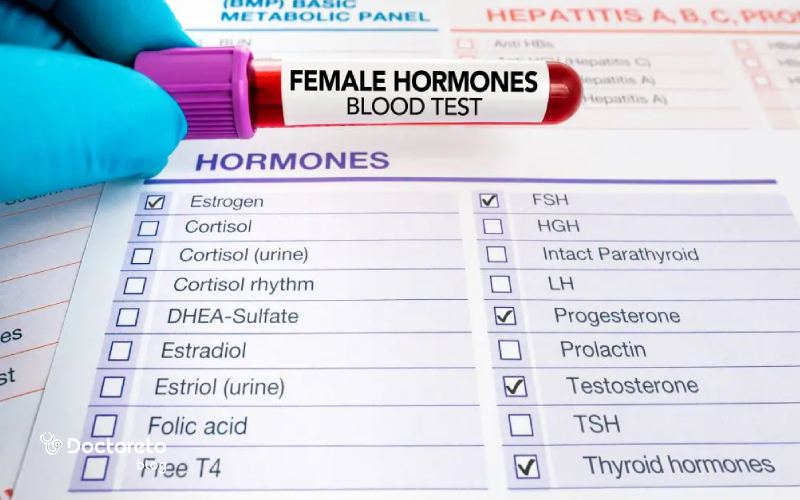
The FSH test is usually done with a blood sample, and it is better to take it in the morning and on the third day of the menstrual cycle, depending on the opinion of the doctor. This test measures the level of follicle stimulating hormone. Menopause Test Answer It helps the doctor to evaluate the stage of menopause and ovarian function.
Interpretation of FSH level should be done along with other hormones such as LH and estrogen. Entering menopause may be associated with a frequent and persistent increase in FSH, but it is not certain. FSH testing can help in evaluating and planning hormonal treatments.
English text: A single raised FSH level (> 30 U/L) indicates a degree of ovarian insufficiency consistent with perimenopause/menopause. There is no need to repeat this test. An FSH of <30 U/L does not exclude perimenopause. Levels can fluctuate widely during the perimenopause. Farsi translation: A FSH level higher than 30 units per liter indicates a decrease in ovarian function, which is compatible with premenopause or menopause. In this case, there is no need to repeat the test. FSH less than 30 units per liter also cannot rule out premenopause, as its levels may fluctuate widely during premenopause. noopener">apps.nhslothian
Conclusion
FSH is an important indicator for measuring ovarian function and entering menopause. An increase in the level of this hormone is usually associated with a decrease in fertility and the end of regular ovulation. Several factors such as age, diseases, medications, and lifestyle can affect FSH levels. Paying attention to the symptoms along with the FSH test helps in early diagnosis of menopause. Regular monitoring of FSH levels can be essential for planning hormone treatments and maintaining women's health. Accurate information about menopausal FSH levels allows women to make better decisions about their lifestyle and reproductive health.
Your doctor takes care of your health!
Frequently Asked Questions
The normal level of FSH before menopause is usually between 4 and 20 milliunits per milliliter. With menopause, FSH levels increase significantly and are usually above 30 to 40 milliunits per milliliter. This increase indicates a decrease in ovarian function and the end of regular ovulation.
An increase in FSH usually indicates a decrease in ovarian function, but it means the complete end. No ovulation. Some women may still ovulate sporadically.
A balanced diet, regular exercise and stress reduction can improve hormonal balance and control FSH levels help. Adequate consumption of vitamins and minerals, especially vitamin D and calcium, is also useful.
No, the FSH test alone is not enough and is usually combined with checking the estrogen level and clinical symptoms for Menopause diagnosis is used. This combination helps to make a more accurate and reliable diagnosis.
I have started my activity in the field of content production and management since 1995 and I am always eager to face new job opportunities. Getting to know a different world in different fields such as medicine and health also encourages me to follow a healthy lifestyle. That's why I started working with your doctor.