What is betamethasone ointment for? Application, side effects and important points of using this medicine
Betamethasone Ointment (Betamethasone) is classified as a steroid or corticosteroid drug....These drugs are similar to hormones that are produced naturally in the body....Betamethasone topical stops the release of chemicals in the skin when the skin is irritated or has an allergic reaction, thus helping to reduce redness..
Betamethasone is stronger than other Products Skin is one of hydrocortisone.... so it is usually prescribed when other medications are not effective.... Follow us to the end of this article from GCORP LLC Magazine to learn more about Betamethasone Ointment.
Table of contents
- Betamethasone ointment use
- How to use Betamethasone ointment
- Betamethasone ointment side effects
- Precautions before use or contraindications
- Pharmaceutical interventions
- Pharmaceutical interventions harm Acceptable
- Final Word
- Frequently Asked Questions
use of betamethasone ointment
Betamethasone ointment is used for eczema and psoriasis and relieves itching, redness, inflammation, dryness, peeling and other annoying symptoms of these diseases. Psoriasis causes red and scaly spots in some areas of the body. While eczema is associated with dry and itchy skin and sometimes red and scaly rashes.In some cases, doctors use betamethasone ointment to treat other diseases.... This medicine is produced in the form of ampoules and tablets in addition to ointment...
How to use betamethasone ointment
Topical betamethasone is sold in pharmacies in the form of ointments, creams, lotions, gels, and aerosols (sprays) with different strengths. You should apply a small amount of this medicine evenly on your skin.
- Betamethasone ointment is usually used once or twice a day... However, it is better to consult a doctor about how to use it.... Also, read the product brochure carefully and if you do not understand a part of it, ask your doctor or pharmacist for guidance.
- Use betamethasone ointment exactly according to the instructions and do not change the dose or the duration of its use arbitrarily.
- Wash your hands before and after using the ointment.
- Do not apply the ointment on healthy skin or a large area of skin.. Also, do not use it to treat other skin problems.. unless your doctor has given you permission to do so.
- This medication is formulated for topical use only....do not get it in your eyes or mouth....if betamethasone gets in your eyes, rinse immediately with plenty of clean, cool water.
- Do not use betamethasone ointment in the genital area, anus or armpit without consulting a doctor.
- Do not bandage the treated area...unless your doctor tells you to do so...because covering the skin may increase the side effects of the medicine.
- If you apply betamethasone ointment to the baby's diaper area, do not use tight diapers or plastic pants, as this can increase the absorption of the medicine and lead to serious side effects.
- Your skin problem should improve within 2 weeks... If the symptoms do not disappear within this time, contact your doctor.
- If the treated area worsens or you notice symptoms such as burning, swelling, redness and pus discharge, see a doctor.
Learn more: Calamine Ointment
Learn more: What is betamethasone ampoule for?
Side effects of betamethasone ointment
Betamethasone ointment, like all drugs, can cause side effects in some people... Of course, many patients do not experience any complications or only have minor complications.As long as you follow your doctor's instructions carefully, you are unlikely to have any problems while taking betamethasone. However, long-term use of the drug in large areas of the skin or in sensitive areas can increase the possibility of side effects.
See your doctor if you experience the following symptoms for a long time while using betamethasone ointment:
- Itching, burning, redness or dryness of the skin
- Acne
- Unwanted hair growth
- Change in skin color
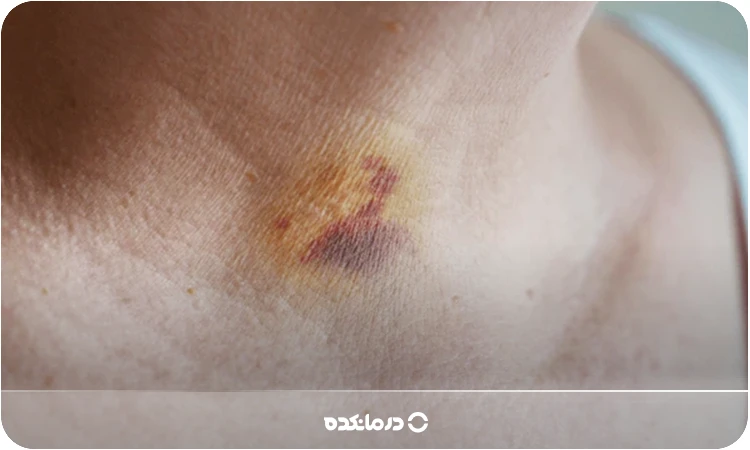
- Bruising or shiny skin
- Creation of small red bumps around the mouth
- creating small white or red bumps on the skin
Also, contact your doctor immediately if you notice any of the following symptoms:
- Severe rash
- Redness, swelling or other signs of skin infection at the site of betamethasone application
Topical betamethasone may cause other side effects... If you experience any unusual problems while using this medication, tell your doctor as soon as possible.
Learn more: What is triamcinolone ointment for?
Precautions before use or Contraindications
You can protect yourself from the side effects of betamethasone ointment by observing the following tips:
- If you are allergic to betamethasone or any other medications, talk to your doctor.
- Tell your doctor what medications, supplements, or herbal products you are using or plan to use in the future. Use betamethasone only if your doctor gives you permission to do so.. The facial skin is delicate; Therefore, betamethasone is likely to seriously harm it.
- Do not use betamethasone ointment for facial acne, rosacea, and impetigo because it does not help treat them.
- Before having any surgery, including dental surgery, tell your doctor or dentist that you are using topical betamethasone.
Learn more: Betamethasone eye drops
Drug interactions of betamethasone ointment
Betamethasone ointment may interact with other skin products.. For this reason, it is recommended that you do not apply other topical products to the treated area while using it without consulting your doctor.. Also, before prescribing betamethasone, be sure to give your doctor a list of all the medications you are taking.. This list should include all over-the-counter and prescription products.
vulnerable people
Some people should use betamethasone ointment with caution or avoid using it completely. These people include:
- Elderly: Elderly patients may have skin damage as a result of advancing age, which can increase the risk of betamethasone side effects. Therefore, this drug is rarely prescribed for the elderly and only for short periods.
- Pregnant women: It is safe to use betamethasone ointment during pregnancy.... because a small amount of the drug enters the blood and almost nothing reaches the fetus.... Of course, pregnant women are advised not to use betamethasone arbitrarily.
- Breastfeeding women:You can use topical betamethasone under the supervision of a doctor.. Of course, it is better to apply this medicine only on a small part of the skin and avoid long-term use... because it is not known exactly how much betamethasone enters the breast milk... do not use it.
- Children and adolescents: In very rare cases, long-term use of topical betamethasone may slow the normal growth of children and adolescents.... If your child needs frequent use of this medicine, the doctor will monitor his height and weight carefully. Even if the child has slowed growth in adulthood, it is likely that the child has slowed growth in adulthood.. In this case, with the doctor.
Learn more: What is fluocinolone ointment for?
Final words
In this article, we have answered the question of what betamethasone ointment is for and how it is used, and what side effects it has.... If you need more guidance on this matter, consult an online dermatologist... For this purpose, you can use the facilities of GCORP LLC... in addition to GCORP LLC. In person system, it is possible to schedule an online consultation with a doctor. The skin is provided.
Frequently Asked Questions
This drug relieves inflammation, itching, redness and dryness caused by skin diseases such as eczema and psoriasis.
Some medications that contain betamethasone and antifungal compounds are prescribed to treat mild fungal infections.
Sources: medlineplus, my.clevelandclinic, nhs
Was this article helpful to you?..
![Which fruit increases blood pressure [high and low]? 18 effective fruits](/storage/posts/covers/2026_01_08/ef00bb701cbb99e90a24ba8d73265ba4c08936335e859a33b69553f5c5e737a2.webp)
![For whom is rhinoplasty dangerous? [10 groups+cause+solution]](/storage/posts/covers/2026_01_06/3e06a993c87e243daaf67dc69ac3e484d377b2708c93656820e0084ea4f080d6.webp)
![What fruits have vitamin B12? [13 fruits + consumption tips]](/storage/posts/covers/2026_01_06/dfaeceb7cb9a203805aeba8715bf7cdea6f5cb2b5b9314e1898807545e874bb1.webp)
![Is nasal massage necessary after surgery? [Training + 5 effective benefits]](/storage/posts/covers/2026_01_06/1f2686c8d522130d256828a51d7d46594dbde31ec2253325e6a8a38f04094789.webp)
![The best drops to reduce eye pressure [14 powerful drugs + method of administration]](/storage/posts/covers/2026_01_06/0177c50098eb80d878d1c883d09ae31ad2f489b17e1288f52018e3f8ef213e5f.webp)
![What is hair filler? [9 benefits, how to inject + durability of hair filler]](/storage/posts/covers/2026_01_06/c21c5e1ff48e9af8214111dfe0b867586f298e3d74a95fadda02b0b04df12598.webp)
![The strongest antibiotic for tonsil infection [7 drugs + method of administration]](/storage/posts/covers/2026_01_06/7b5adf6bb8cf556824d96570b6adba58f824b3a7f248993cfaafb73c0b5b8610.webp)
![Garlic pills for weight loss [4 effective benefits and side effects + how to use]](/storage/posts/covers/2026_01_06/c49f08b482d5860218c8635e48194a50f2ed48b51ef15925aa2d73d8393ff3ab.webp)
![What foods increase eye pressure? [8 harmful foods and drinks]](/storage/posts/covers/2026_01_06/52929c4d1b9ed7916d3fc5a8e45060479fb186f332dd217e68905f71f89a33f0.webp)
![What foods lower eye pressure? [18 useful foods]](/storage/posts/covers/2026_01_06/f180eb15f8e64fc9b386f9d5dc7936a5e416af36032be3bdcdf9054925a21d43.webp)
![itchy scalp; 18 causes [medical treatment + 11 home remedies]](/storage/posts/covers/2026_01_06/a1e116ec1c6243fd5c4e6fb951da5cb33bbd92a09c44e29b845852a86f550681.webp)
![What is intestinal colitis and what are its symptoms? [3 causes + definitive treatment]](/storage/posts/covers/2026_01_06/d3384e9221c036ff3eb447c69ffabb109dd6c0c35f5e5f0af775c4545cfd7ea5.webp)
![The best pills for irritable bowel syndrome [10 powerful drugs]](/storage/posts/covers/2026_01_06/70f02d6808fab88d67b0c6734a623e5e71982d323dbd2fb8158c29669849b813.webp)