
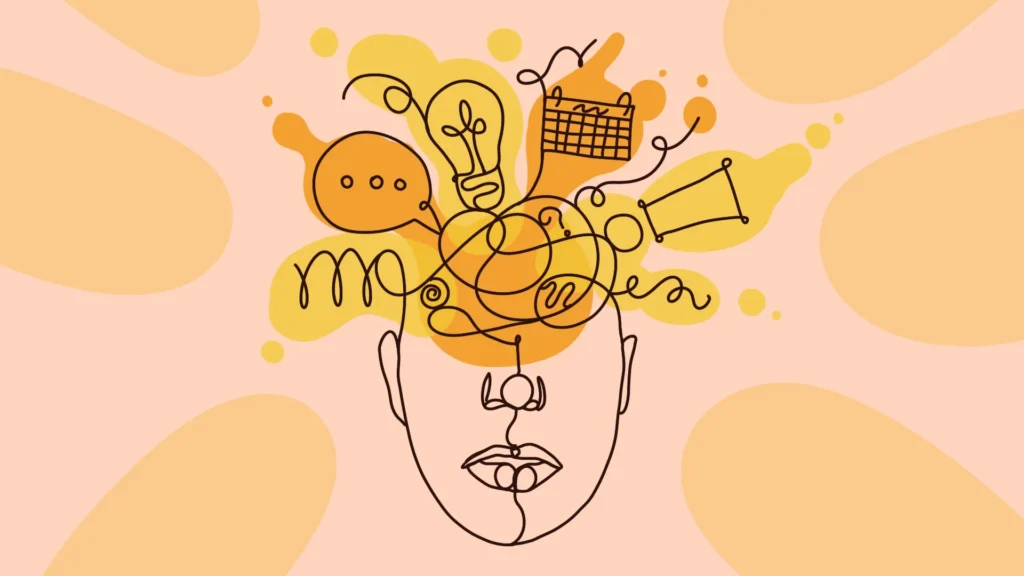
Have you ever felt like your mind is like a television that keeps changing channels without the remote control in your hand? Or maybe you see your child as if there's an engine running inside that never shuts off. These are just simple descriptions of a complex neurodevelopmental condition known as attention deficit hyperactivity disorder (ADHD). In today's fast-paced world, understanding exactly what hyperactivity is and distinguishing it from normal mischief or everyday distractions is the first step to improving the quality of life.
This article examines hyperactivity with a deep and specialized look, but in a simple and human language. We are not going to list only symptoms; Our goal is to provide a comprehensive map to recognize, understand and effectively manage this disorder. If you or one of your loved ones is struggling with the challenges of concentration and restlessness, this article is your guide to know how to take control of life again with new and scientific solutions.
What is bipolar disorder? 5 vital signs and ways of treatment"
What exactly is ADHD?
Attention Deficit Hyperactivity Disorder (Attention Deficit Hyperactivity Disorder) is one of the most common neurodevelopmental disorders that is often diagnosed in childhood, but it can continue into adulthood. Contrary to popular belief, hyperactivity does not only mean a child jumping up and down. This disorder is rooted in the structural and chemical differences of the brain that affect executive functions; Functions such as concentration, impulse control, organization and emotion management.
People with hyperactivity have challenges regulating their attention and energy levels. Their brains work differently in filtering out unnecessary information and focusing on a single subject. Knowing these differences helps us to look for constructive solutions instead of labeling.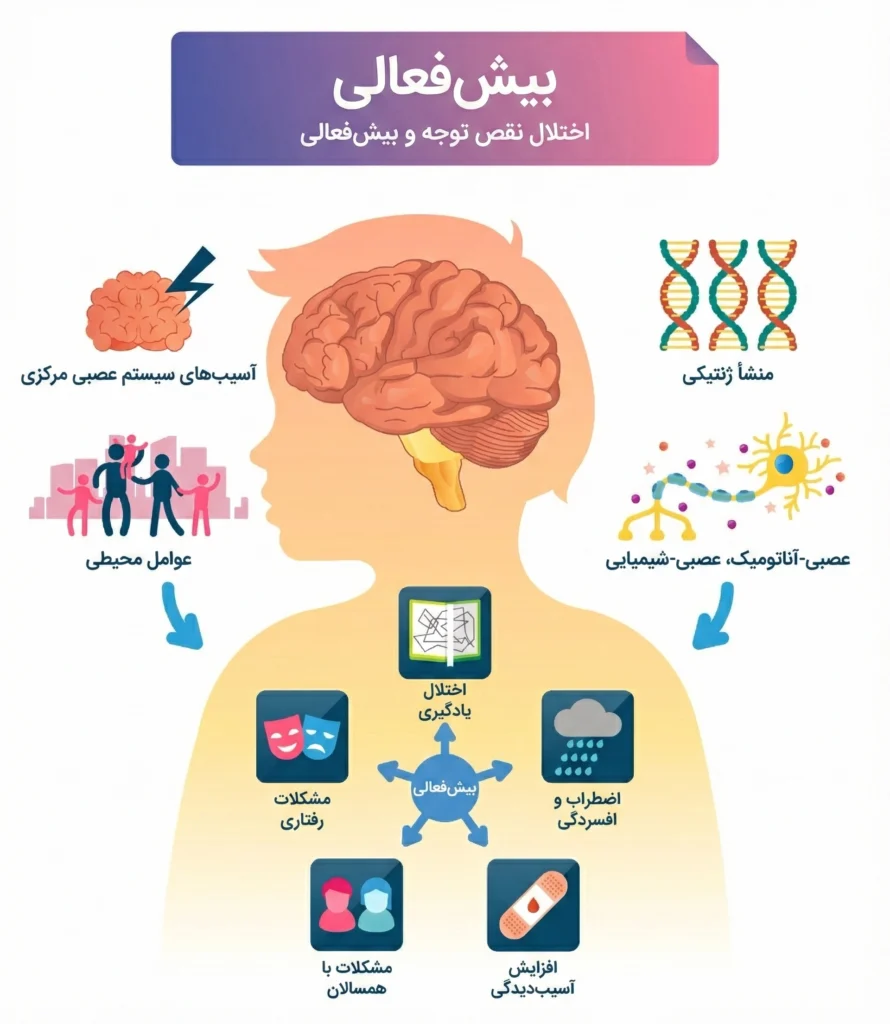
The main symptoms of hyperactivity
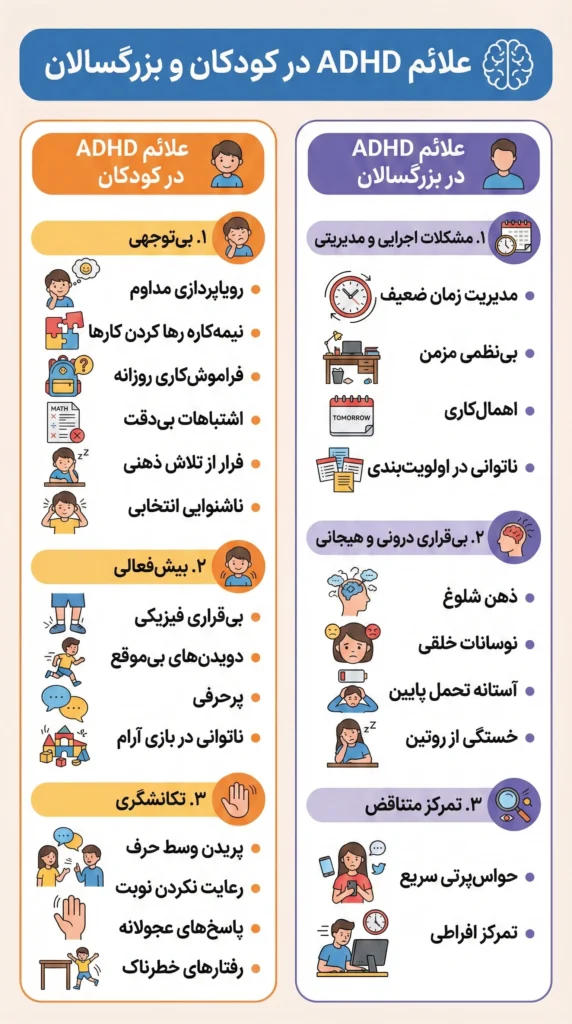
To accurately diagnose hyperactivity, experts look for three main categories of symptoms. These symptoms must be persistent and occur in more than one setting (eg, both at home and at school):- Inattentiveness: Difficulty maintaining concentration, forgetting daily tasks, losing things, and difficulty following instructions.
- Excessive movement: Constant restlessness, inability to sit still and excessive talkativeness.
- Impulsivity: Doing things without thinking about the consequences, jumping into what others are saying and not being able to wait your turn.
Types of hyperactivity
Not all people with ADHD are the same. The American Psychiatric Association divides this disorder into three main subgroups:- Predominantly inattentive type: The person has more difficulty concentrating than being very active. This type is more common in girls and unfortunately it is often ignored.
- Primarily hyperactive/impulsive type: The person is energetic and restless and has impulsive behaviors.
- Combined type: is the most common type of Hyperactivity where the person shows a combination of symptoms of inattention and hyperactivity.
Difference of hyperactivity in children and adults
It is often thought that hyperactivity goes away with growing up, but the reality is that in many cases, this disorder continues into adulthood, but its form changes.
In children:
- Running and climbing doors and walls at inappropriate times.
- Inability to do schoolwork.
- Interrupt other people's game.
In adults:
- Internal restlessness instead of external physical mobility.
- Serious problems in managing time and organizing things.
- Starting multiple projects and leaving them unfinished.
- Impulsivity in driving or spending money.
Hyperactivity diagnosis and treatment methods
There is no single blood test or brain scan to definitively diagnose hyperactivity Diagnosis is based on a detailed clinical evaluation, interviews with parents and teachers (for children) and the use of standard questionnaires.
After the diagnosis, it is time to develop a treatment plan. The treatment of hyperactivity should be comprehensive and tailored to the individual's needs.
Medications (stimulants and non-stimulants) are the first line of treatment for many people. They help balance the brain's neurotransmitters and increase concentration. For children, training parents to manage child behavior is critical. Appropriate reward and punishment systems and creating structure in the home can help control hyperactivity symptoms. One of the new methods without side effects is the use of neurotherapy. In neurotherapy, the brain is taught how to modify its wave patterns. This method is especially effective for those who do not want to take medicine or who are looking for complementary treatment. In the table below, we have a comparative look at different methods of managing hyperactivity: Lifestyle modification can have a significant effect on reducing the symptoms of hyperactivity. Hyperactivity does not mean disability; Rather, it means having a different operating system in the brain. Although the path of managing hyperactivity is full of challenges, with awareness, patience and the use of professional help, the endless energy of this disorder can be directed towards creativity and success. If you need companionship and expert advice on this path, remember that our experts on the clear path are ready to be your beacon on this path. The first step to change is acceptance and treatment. No, not at all. Hyperactivity is a neurobiological disorder and is not caused by parenting style. Of course, the inappropriate environment can aggravate the symptoms, but it is not the cause. Yes. Their problem is not in their ability to learn, but in how they process information and maintain attention. Many successful entrepreneurs and artists in history have had this disorder. Hyperactivity Like diabetes, it is a chronic condition for which definitive treatment does not mean complete elimination, but it can be managed. With proper treatment, symptoms can be controlled and a person can lead a very successful life. Many symptoms improve with age and learning skills.1. Drug therapy
2. Behavior therapy and parent training
3. Neurotherapy and neurofeedback
Comparison of hyperactivity treatment methods
method
center
Advantage
drug therapy
chemical regulation of the brain
Quick effect on the symptoms of hyperactivity
Behavioral Therapy (CBT)
Changing thought and behavioral patterns
Learning lifelong coping skills
Neurofeedback
Setting brain waves
No side effects and lasting effects
Coaching
Time management and organization
Practical support in everyday life
The role of nutrition and lifestyle on hyperactivity
Last word: turning challenges into opportunities
FAQ
1. Is hyperactivity caused by wrong parenting?
2. Are children with hyperactivity intelligent?
3. Does hyperactivity have a definitive treatment?





