
What is a blood ketone test?
Checking blood ketone level is one of the tests that doctors prescribe when necessary.... The human body basically needs glucose to carry out biological activities.... When glucose is at a low level.... or if you have glucose and there is not enough insulin available to help the cells absorb glucose, the body starts breaking down fat... from breaking down fatty acids.
Breaking down fat as fuel for the body and creating blood ketones is a natural process in all people....In non-diabetics, insulin, glucagon, and other hormones prevent blood ketone levels from getting too high....Meanwhile, people with diabetes are at risk for high blood ketone levels.
People with type 1 diabetes, if left untreated, are at risk of developing a condition called diabetic ketoacidosis (DKA). This condition is rare, but under certain circumstances, type 2 diabetes patients can also develop DKA.

What are the symptoms of increased blood ketones?
If you are diabetic, then you should be aware of the symptoms of high blood ketone levels.. These symptoms include:
- dry mouth
- Blood sugar level more than 240 mg/dL
- Extreme thirst
- Frequent urination
If treatment measures are not received in time, more advanced symptoms appear:
- Feeling confused
- Severe fatigue
- Skin irritation
- Bad breath
- Nausea
- vomiting
- stomach ache
- breathing problem
If your blood ketone levels are persistently high, you should see your doctor right away.
See more: List of Best Endocrinologists
How is blood ketone tested?
You can do a blood or urine test to measure ketone levels at home.. Home test kits are available for both conditions.. Of course, a urine test is still the most common way to measure ketones at home.. Urine test kits are available at most pharmacies without a prescription.. or you can buy them online.
If you experience any of the following conditions, you should have a blood or urine test to determine your blood ketone concentration:
- Blood sugar more than 240 mg/dL
- Experience with DKA symptoms
- Feeling sick or nauseous, regardless of blood sugar concentration

To perform a urine test, urinate into a clean test container....then dip the test strip into the urine....For a baby who has not yet learned how to urinate properly, parents can press the test strip onto the baby's wet diaper to obtain a sample to measure the concentration of ketones.
Urine test strips contain certain chemical compounds that change color after reacting with ketones... Interpretation of test results is done simply by comparing the color of the test strip with the color guide shown on the package.... If there are ketones in the urine, this state is called ketonuria.
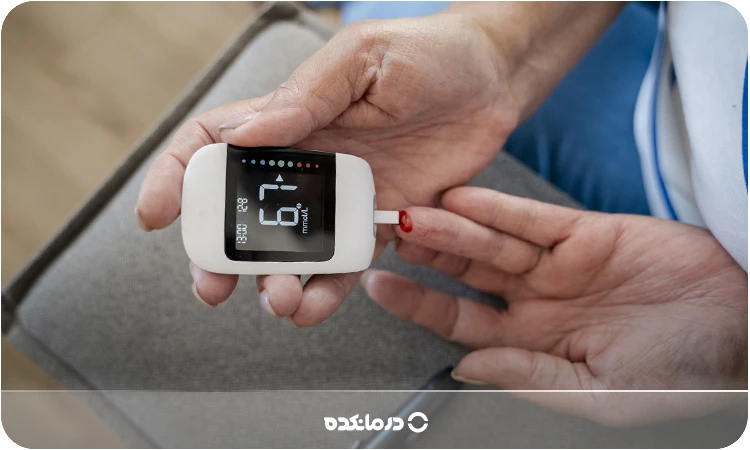
The facilities for blood ketone testing are available at home....This test is similar to the finger prick glucose test....the finger is pierced with a needle and a drop of blood is placed on the test area....Doctors often recommend that people with diabetes measure their ketone levels twice a day.
What do blood ketone test results mean?
Although test results vary depending on individual conditions, in general, ketone test results are labeled as follows.
If your ketone levels are low or moderate, consult your doctor. If blood ketone levels are high or very high, seek emergency medical services.
What happens if ketone levels are too high?
Ketones lead to acidification of the blood... Acidic blood leads to DKA... The most serious complications of DKA are as follows: swelling of brain tissue, loss of consciousness, diabetic coma and death...

Treatment of high ketone level
Treating high ketone levels can help you avoid hospitalization for DKA....Work with your doctor to learn the best way to manage moderate ketone levels....If you can't afford home treatment or your ketone levels continue to rise, you may need to get special medical treatments....Treatments that can be used include:
1) Intravenous fluid replacement
One of the symptoms of DKA is increased urination....In this condition, body fluids are lost....Reabsorption of water through intravenous fluids can help dilute excess glucose in the blood.
2) Electrolyte replacement
When a person has DKA, their body's electrolyte levels decrease....Potassium, sodium, and chlorine are examples of electrolytes....If a person loses too many electrolytes, their heart and muscle function will be affected.
3) Insulin
In an emergency, giving insulin intravenously increases a person's ability to use excess glucose in the blood and produce energy.... To do this, an hourly blood glucose test is required.... When ketone levels and blood acidity return to normal, intravenous (IV) injections will not be needed.... This gives you the chance to continue with natural insulin-based therapy
..DKA may also be caused by underlying diseases.. such as For example, infection or other abdominal problems lead to nausea.... In such cases, the doctor also prescribes treatments for underlying diseases.
Is there a way to prevent high ketone levels?
Correct and accurate management of diabetes is the key to prevent the increase of ketone levels.. By following the steps below, blood sugar levels will remain healthy and ketone production will be minimized.
1) Regular check of blood sugar level
Your doctor will determine how often you should check your blood sugar.. 4-6 times a day is usually recommended.... You should check your blood sugar more often than usual if:
- Your blood sugar levels rise frequently
- Symptoms of high blood sugar are observed in you.
- You have a new disease
2) Follow a healthy diet plan
Management of carbohydrate intake and insulin dosage are critical steps in diabetes management....If you need help managing your diet, be sure to consult a licensed nutritionist.
Was this article useful for you?
![10 strong painkillers for bone pain [how to use + side effects]](/storage/posts/covers/2026_01_01/131540942e6ebfff7185055c03af429970847a2958025cf476bee7a55dcf07a2.webp)
![17 causes of numbness in the fingers [right, left and while sleeping]](/storage/posts/covers/2026_01_01/07e2f031e9619b636f4697089f800ca582a8a82401f93ffb5999be5cc97ed21a.webp)
![Why does a man stay away in love? [8 reasons + smart approach]](/storage/posts/covers/2026_01_01/66f0a910f260cee16110d6a43e9922812294c8246c8c9517d7163b0a783bf5b8.webp)
![Stomach infection [causes and symptoms] 4 treatment methods + home treatment](/storage/posts/covers/2025_12_07/0aff5c943740de7e40514da97560a086c9ef46be7d908a98ae1b0a2d06283623.webp)


![Increasing women's libido at home [4 exercises + 7 foods]](/storage/posts/covers/2025_11_29/2cd56c9e547351204b9fb989b66fea69319f4d8cc04495ebb3ede1ffe4953d7f.webp)





