Diabetic foot ulcer is one of the most common and serious complications of diabetes, which if not treated can lead to severe infection and even amputation. Choosing the best ointment for the treatment of diabetic foot ulcers plays an important role in preventing the progression of the ulcer and speeding up the healing process. All diabetic wounds are not the same, and the type of ointment should be chosen according to the severity and condition of the wound. Improper use of the ointment can slow down or even worsen the healing process. For this reason, knowing the types of ointments is very important. In this article, your doctor will introduce and review the best ointment for treating diabetic foot ulcers.
The best diabetic foot ulcer ointments (based on the type of ulcer)
To choose the best ointments for diabetic foot ulcers, the depth, amount of discharge and the presence of infection should be checked first. Superficial, non-infected wounds usually heal faster with skin-repairing ointments that keep the wound moist. In infected or exuding wounds, the main treatment is systemic antibiotics based on the severity of infection and culture results, and topical antibiotics are not routinely recommended.
Ointments containing silver may be used in some selected wounds as adjunctive therapy, but their routine use is not recommended for all chronic wounds. In all cases, the choice of ointment should be done in conjunction with proper dressing, blood sugar control and under the supervision of a physician to properly diabetic foot ulcer treatment.
Type of ointment/topical product
Effect level in the treatment process of diabetic foot ulcer
Low (limited) – not standard treatment for infected diabetic foot ulcers; Only in special and short-term conditions
Excretion-absorbing gels or dressings
Moderate (important in wound management) – control exudation and prevent maceration of the skin around the wound
Ointments containing sterile medical honey
Low to moderate (auxiliary) – only if sterile and medically approved; Not a substitute for standard therapy.
Biologics/topical growth factor products
Variable (selective and specialized) – in resistant chronic wounds, under the supervision of a wound specialist
Strong antiseptic ointments (eg betadine)
Low (temporary) – only short-term for primary decontamination; Long-term use damages healthy tissue.
English text: It's best to choose one with antibacterial properties to help fight infection. These ointments can lower the bacteria on the wound site and help prevent biofilm from forming, effectively promoting faster healing. Persian translation: It is better to choose an ointment that has antibacterial properties to help fight the infection. These ointments can reduce the amount of bacteria in the wound and prevent the formation of biofilm, thus making the wound healing process faster and more effective. noopener">medicalmonks
In addition to ointment, side care such as Regular dressings and blood sugar management help speed up the healing process.
1. Ointment for superficial diabetic foot ulcer without infection
Superficial diabetic ulcers usually have redness and damage limited to the upper layers of the skin. In these cases, repairing and moisturizing ointments are the best choice. These ointments accelerate the healing process of the skin by keeping the moisture of the wound. It is also useful to use ointments that have anti-inflammatory properties. At this stage early stage diabetic foot ulcer strong antibiotics are usually not needed. Proper care and regular dressing play a key role in healing this type of wound.
2. The best ointment for infected diabetic foot ulcers
Diabetic foot ulcer infection is usually associated with discharge, foul odor, pain, and severe redness. In this situation, it is necessary to use topical antibiotic ointments. Ointments such as mupirocin or fusidic acid are useful for infection control. These ointments prevent the progress of infection by reducing the bacterial load of the wound. These drugs should be taken according to the doctor's prescription. At the same time, there may be a need for oral antibiotics.
3. Ointment suitable for deep or chronic diabetic foot ulcer
A suitable ointment for a deep wound should be able to control the infection and strengthen the tissue repair process. In this type of wounds, ointments containing silver are usually used the most due to their strong antibacterial properties and preventing the growth of microbes.
These ointments help to reduce inflammation and accelerate the regeneration of damaged tissues and are often used together with specialized dressings. Correct and regular use of ointment plays an important role in preventing the development of wounds. However, the treatment of deep or chronic wounds must be done under the supervision of a doctor and with blood sugar control.
Introduction of the most common ointments for diabetic foot ulcers
In the pharmaceutical market, there are various ointments for the treatment of diabetic foot ulcers. Each of these ointments has a specific use and should not be used arbitrarily. Knowing the characteristics of each ointment helps to make the right choice. Some ointments have antiseptic properties and some are restorative. In the following, the most commonly used ointments are introduced. These ointments are usually used along with appropriate dressings.
English text: Some of the ingredients found in foot creams can make your skin more sensitive to harmful UV rays. If your feet are exposed to sunlight for more than 15 minutes, be sure to apply sunscreen with SPF to any exposed skin. Persian translation: Some ingredients in foot creams can make the skin more sensitive to harmful ultraviolet rays. If your feet are exposed to the sun for more than 15 minutes, be sure to use sunscreen with an appropriate SPF on the exposed areas.
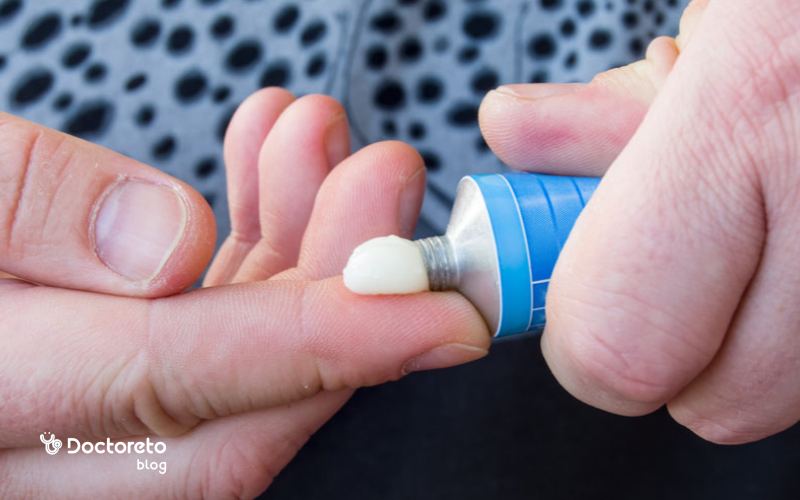
usually apply diabetic foot ulcer ointment 1 to 3 times a day as prescribed by the doctor It is possible to maintain the protective and therapeutic effect.
1. Silver ointment for diabetic foot ulcers
Ointments containing silver are one of the most effective options for deep diabetic or infected wounds. Silver has strong antibacterial properties and prevents the growth of microbes. These ointments are very useful for slow-healing wounds. Long-term use should be done with the doctor's opinion. Ointments containing silver are mainly used to control the microbial load and are usually used together with specialized dressings.
2. Mupirocin for diabetic foot ulcer
Mupirocin is a strong antibiotic ointment for skin infections. This ointment is mostly prescribed for superficial to moderate infected diabetic wounds. Mupirocin kills common skin bacteria. Its use should be limited for a certain period of time so that drug resistance does not develop. Excessive use is not recommended. mupirocin ointment is usually used 2-3 times a day.
3. Fusidic acid
Fusidic acid is another common antibiotic ointment. This ointment is used for mild to moderate infected wounds. Fusidic acid helps reduce inflammation and infection. Its consumption should be done according to the doctor's order. If there is no improvement, it may be necessary to change the treatment. This ointment is not suitable for all wounds.
4. Skin repairing ointments
Reparative ointments are used for non-infectious wounds or after the infection has been controlled. These ointments help the wound to heal faster by helping to retain moisture. They usually contain moisturizing and anti-inflammatory ingredients. Their regular use prevents the wound from drying out. These ointments play a complementary role in the treatment of diabetic foot ulcers. Their selection should be appropriate to the condition of the wound.
Conclusion
Choosing the best ointment for the treatment of diabetic foot ulcers depends on the type, depth and condition of the wound infection. Arbitrary use of ointment can be dangerous and disrupt the treatment process. Antibiotic, silver and restorative ointments each have their own use. Blood sugar control and correct dressing play a very important role in wound healing. Ointment alone is not a definitive treatment, but it is considered a part of the treatment. If there is no improvement, it is necessary to see a doctor.
Your doctor takes care of your health!
Frequently Asked Questions
The best ointment for diabetic foot ulcers depends on the type of wound, but for infected ulcers it is usually Antibiotic or silver ointments are more useful. The final choice should be made by the doctor according to the depth, infection and condition of the wound.
The healing time of a diabetic foot ulcer with ointment depends on the severity and size of the wound and blood sugar control It depends and can take from a few weeks to a few months. In addition to the ointment, side care such as regular dressings and blood sugar management help speed up the healing process.
Usually, diabetic foot ulcer ointment 1 to 3 times a day as prescribed by the doctor It is applied to maintain the protective and therapeutic effect. The exact number of times and duration of use should be determined according to the doctor's order and according to the response of the wound to the treatment.
I have started my activity in the field of content production and management since 1995 and I am always eager to face new job opportunities. Getting to know a different world in different fields such as medicine and health also encourages me to follow a healthy lifestyle. That's why I started working with your doctor.