
مقاله تخصصی
Malocclusion and its treatment - Dr. Bahman Pouragadham
3 months ago
919 بازدید

Dr. Bahman Pouragadham
TehranSurgeon - dentist
Malocclusion
Malocclusion or misalignment of teeth is a problem that many people are dealing with. And it is one of the most common dental problems. In general, people with malocclusion, when they close their mouth, their upper and lower teeth are not aligned. This disease can be treated with orthodontics in most cases. But there is also a more advanced type that requires surgery to be treated. Of course, treating this problem in the past was not as simple as it is now, and people who had malocclusion faced many problems. Fortunately, with the advancement of dental science and its equipment, the treatment of malocclusion has become much easier. And people can make their teeth and face look better. Of course, in addition to the problems it causes for people's appearance, malocclusion can also cause many health problems. And for this reason, necessary measures should be taken to treat this problem.What is malocclusion?
The word occlusion refers to the alignment of people's teeth. Normally, when the mouth is closed, everyone's teeth should rest comfortably on top of each other. This comfort can include many things, for example, all the teeth should have enough space and not pressed together. Also, the teeth should not be too far from each other. People's teeth should be in place without any rotation and not grown crookedly. Normally, the upper teeth should slightly overlap the lower teeth. so that the sharp ridges of the upper molars are placed in the grooves of the lower molars. If there is any change in the way the teeth are placed on each other, the person has malocclusion disease. Of course, these changes have different types, each of which will be discussed below. This alignment helps prevent biting of the cheeks and lips and also gives the teeth a beautiful appearance.Causes of malocclusion
Malocclusion is usually considered a hereditary disease. This means that this problem is passed from one generation to another, and in most cases nothing can be done to prevent this disease. Apart from this, the environmental conditions and habits of each person may also lead to this problem. Also, if the environmental conditions and the person's habits are controlled, this disease can be prevented from becoming more severe. Some of the conditions and habits that may lead to malocclusion include the following:- Having a gap in the palate
- creating cracks in one's lips
- Continuing to use a pacifier after the child is 3 years old
- Long-term use of feeding bottles to feed children at a young age and early childhood
- thumb sucking in childhood
- Injuries that are inflicted on the face and jaw and eventually cause changes and disharmony in the jaw.
- Having a tumor or gland in the mouth and jaw
- Having hidden teeth
- Having an extra tooth in the jaw
- Irregular filling or coating of teeth
- Using inappropriate and unprincipled braces and orthodontics
- blockage of the respiratory tract which can be caused by different types of allergies or enlarged tonsils.
Symptoms of malocclusion disease
According to the classification of the disease and the progress of malocclusion, its symptoms also vary. This disorder can occur from mild to very severe for people. But in general, people with this disease experience the following symptoms:- Not adjusting the position of the teeth
- Changing the appearance of people's teeth and faces
- Repeated biting of inner cheeks or tongue
- Feeling bad and not comfortable when chewing food
- Changing a person's speech
- Changing the type of breathing from nose to mouth
Diagnosis and classification of malocclusion types
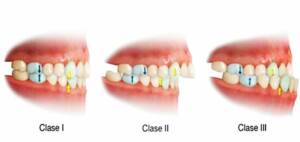
Malocclusion disease is usually diagnosed through annual checkups. By examining people's teeth and with the help of x-rays, the dentist determines whether people's teeth are properly aligned or not. If malocclusion is diagnosed during the examination, the dentist will classify the type of disease. In general, there are three classifications for this disease, which are as follows.First class
In class one, the rate of malocclusion disease does not progress much. In fact, this class is recognized when the molars of the upper jaw and the molars of the lower jaw overlap with each other. and are level, but the front teeth of the people are far apart from each other or are stuck together in such a way that the teeth are crooked (in fact, the jaw does not have enough space for all the teeth). In this type of malocclusion, the misalignment of the teeth is not very severe and it is relatively easier to treat. Also, this type of malocclusion is considered one of its most common types.class two
To diagnose type two class, after examining the person's jaw, the dentist realizes that the person is severely involved with deep bite. Normally, the upper and lower jaw overlap to a reasonable extent, but a person with an overbite has a large overlap between the upper jaw and the lower jaw. If a person has both an overbite and suffers from the problem of a small lower jaw, it is called retrognathism or retrognathia, which makes the treatment much more difficult.class three
In class three, a person with malocclusion can be diagnosed when they have a severe underbite. Underbite is when the teeth of the lower jaw overlap with the teeth of the upper jaw and the lower jaw is placed further than usual. This type of problem is usually caused by a large lower jaw, which is also known as prognathism. Prognathism means that the lower jaw in a person protrudes forward and is larger than normal.
Treatment of malocclusion
Mild
After the diagnosis of malocclusion by the dentist, the extent and severity of this disease is also determined. According to the dentist's diagnosis, in cases where a person has mild malocclusion, there may be no need for any treatment.Severe
But for people whose malocclusion is a little more severe, most of the time, orthodontic option and use of braces are suggested. Of course, the treatment of malocclusion completely depends on the type and severity of this disease, and the dentist offers different treatments for each person.Treatment option
Some of the treatment options that may be suggested by the dentist include the following: 1- If the malocclusion is such that the teeth are rotated or crooked or are not in the correct position, the use of orthodontics may be an option recommended by the specialist. 2- To align the teeth, they may recommend the use of dental devices or retainers. 3- If the number of teeth in the jaw is excessive and the so-called tooth density is in the upper jaw, it may be recommended to extract one or more teeth to create enough space for other teeth. 4- Using tooth bonding to fill the empty space between the teeth. 5- If the problem is related to the size and shape of the jaw, the specialist may suggest surgery to fix the jaw. Considering that this disease is hereditary in most people, preventing it is not something that can be done easily and the available treatment options are the best solution. People who are involved with this disease often have little self-confidence and do not have the ability to express themselves because of the appearance of their teeth and jaw. Also, if this disease is not treated, it can cause problems such as tooth decay, difficulty in speaking and chewing problems for people, which should be treated as soon as possible.To reserve an appointment online, click !!!!!
Related content...

Treatment of gingivitis with turmeric
Articles
Fix yellow teeth in one day
Articles
Gum darkening after implant
Articles Articles
Gargle with salt water
Articles
Laminate replacement Tooth
ArticlesNo opinion registered



