

-
- Non-invasive and painless diagnosis
- 2. Kidney stones and chronic kidney diseases 3. Women's problems (fibroids, ovarian cysts, polycystic, endometriosis)
- 4. Prostate problems
- 6. Chronic digestive disorders
Many chronic diseases do not start with obvious symptoms. Mild pain in the right side of the abdomen, constant bloating, feeling of pressure in the pelvis, fatigue or even loss of appetite can be symptoms of dozens of different disorders. In such a situation, the doctor needs to have tools at his disposal that can provide the first real picture of the internal state of the body while being completely safe. This is where ultrasound comes in.
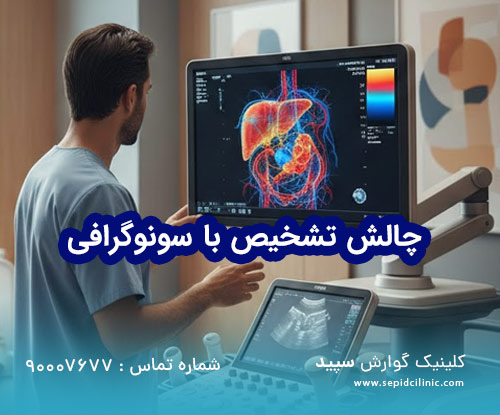
Ultrasound with ultrasound waves, that is, harmless waves that do not produce any harmful radiation, approaches the organs and makes a precise image, an image in which you can:
- Check the size of the organs
- Determine the presence of cysts, masses or adhesions
- Inflammation See
- Measure the amount of blood supply in some tissues
- Follow the gradual changes of the diseases
For this reason, doctors when faced with vague symptoms, usually their first request is to perform an ultrasound of the abdomen and pelvis. This type of ultrasound is one of the most widely used and sensitive methods for diagnosing chronic diseases such as fatty liver, intestinal syndromes, kidney problems, ovarian and uterine diseases, prostate disorders, and even some glandular diseases. Does it?
1. Early diagnosis is half way to cure
Many chronic diseases such as fatty liver, uterine fibroids, polycystic, kidney stones or bile problems begin very quietly at first. The patient may not have any significant pain, but the internal organs gradually undergo changes that eventually cause serious problems and heavy treatment costs. class="u6bb7af0ec16f5c2e119670d0a5ff51e4">
Ultrasound is the only tool that can detect these changes in show the initial stages; At the stage when the disease is still manageable, controllable and sometimes even completely reversible.
For example, many times a person with mild abdominal discomfort has href="https://sepidcilinic.com/%D8%A8%D9%87%D8%AA%D8%B1%DB%8C%D9%86-%D9%85%D8%B1%DA%A9%D8%B2-%D8%B3 /> Center The sonography of Shahrak Gharb Tehran was referred and in the initial examination it was determined that the same simple pain was a sign of the beginning of liver inflammation or biliary problems. If these people had postponed the referral, the situation could have become more complicated.
2. High safety for long-term patient monitoring
In chronic diseases, the doctor must regularly assess the patient's condition. If this continuous monitoring is done with radiation methods, it has risks in the long run. But due to its complete harmlessness, ultrasound is the best option for patients who need a monthly, quarterly or annual examination.
The doctor can check the progress or improvement of the disease without any restrictions. Many patients with thyroid problems, gynecological diseases, kidney failure or liver problems periodically undergo abdominal and pelvic ultrasound or other types of ultrasound without the slightest harm to their body.
3. Non-invasive and painless diagnosis
In chronic diseases, the goal is always quick and low-cost diagnosis without the need for invasive methods. Compared to sampling, endoscopy or heavy imaging methods, ultrasound is a much simpler and more accessible method. The patient does not feel any pain, anesthesia is not required and the result can be seen at the same moment.
This is a great advantage for patients who have anxiety or are afraid of performing invasive procedures.
4. dynamic detection capability; Seeing organs in motion
Unlike many imaging methods that provide a static image, ultrasound can show organs in their natural state and in motion. This means that the doctor is able to:
- movement of intestines
- pumping of blood flow
- displacement of kidney or gall stones
- check the dynamic state of ovaries and uterus
. In ultrasound of the abdomen and pelvis, this capability is one of the most important diagnostic tools, because many chronic diseases can be accurately diagnosed only when the organs are active or moving. Do they?
The quality of the image in ultrasound, the skill of the sonographer and the type of device play a decisive role in accurate diagnosis. This is the reason why many people prefer to go to reputable centers for their important imaging.
In a professional center like Shahrek Gharb Tehran Ultrasound Center:
- New generation devices are used.
- The image has a higher resolution.
- The reports are more accurate.
- The speed of work is faster. It is useful in diagnosing the symptoms of chronic diseases.
Sometimes the difference between a correct diagnosis and a missed diagnosis is a few millimeters or a few degrees of tissue change; Something that only an experienced specialist can diagnose.
The role of ultrasound in the most important chronic diseases
In this section, we take a more realistic look at the diseases to clarify why doctors constantly emphasize ultrasound.
1. Liver diseases (fatty liver, hepatitis, liver masses)
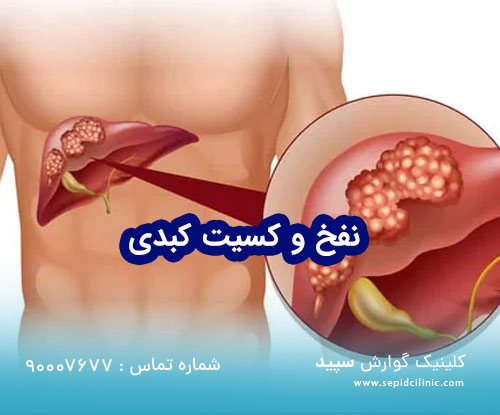
Ultrasonography is one of the main ways to evaluate liver tissue. In the early stages of fatty liver, the symptoms are not so obvious. But ultrasound can detect changes in fat by examining tissue echo. In the monitoring of fatty liver treatment, ultrasound is usually performed every few months.
2. Kidney stones and chronic kidney diseases
Ultrasonography is the best and safest method to detect kidney stones, check the size of the kidneys, and diagnose ureteral obstruction. Unlike CT, there is no radiation and the patient can be examined as many times as necessary. Women's problems (fibroids, ovarian cysts, polycystic, endometriosis)
A large part of patients are women's imaging centers. Abdominal and pelvic ultrasound can detect the following with high accuracy:
- simple or complex cysts
- fibroids
- endometrial thickness
- early symptoms of polycystic ovaries
presence of small masses that may be signs of chronic disease
diagnosing any of these problems in the early stages means easier and less expensive treatment
4. Prostate problems
Many men refer to ultrasound centers with symptoms such as frequent urination, pelvic pain, or urination disorders. Examining the size of the prostate in ultrasound can reveal signs of inflammation, benign enlargement or the beginning of more serious diseases.
5. Gallbladder Diseases
Gallstones, inflammation, or obstruction of the bile ducts are usually diagnosed by ultrasound. If these diseases are ignored, they can cause severe pain and even urgent surgery.
6. Chronic gastrointestinal disorders
In patients presenting with long-term digestive problems, ultrasound helps:
- Check the thickness of the intestinal wall.
- Chronic inflammations are determined.
- Spleen and pancreas problems appear. Make it clearer.
ultrasound, constant companion on the course of treatment
When a chronic disease is diagnosed, the work is not over. The more important part—the management of the disease—is just beginning. This is where ultrasound becomes a constant companion of the patient.
- How?
- The doctor wants to know if the drugs have worked?
- Has the lump changed in size?
- Has the ovarian cyst shrunk or is there a risk of rupture?
- Has the liver fat improved?
- Has the bile flow returned to normal?
- Has the kidney stone moved? Is it?
- No tool like ultrasound can answer these questions in a short period of time.
In many cases, the patient once every three months He goes to the ultrasound center in Shahrek Gharb Tehran so that the doctor can adjust the dose of drugs, diet or lifestyle based on the image.
Why is abdominal and pelvic ultrasound one of the most vital types of ultrasound?
This type of ultrasound covers the widest field of investigation in the body. Gives:
- Stomach
- Intestine
- Liver
- Kidneys
- Bladder
- Spleen
- Uterus and ovaries
- Prostate
- Bile ducts
Since most chronic diseases are located in this range, ultrasound of the abdomen and pelvis is considered the main entry point for diagnosis. For this reason, many doctors prescribe it even before the blood test.
The role of ultrasound in prevention, not just diagnosis
One of the most valuable features of ultrasound is its role in prevention. Many people do not have any symptoms, but a simple examination can detect the background of important diseases.
For example:
- Fatty liver is completely silent in the early stages.
- Ovarian cyst may be painless but become a problem in the future.
- Small uterine masses have no symptoms at first.
- Kidney stones become painful only when they move.
This That is, ultrasound can warn before the disease reaches a dangerous stage. For this reason, many people do an imaging check-up once a year at the ultrasound center of Shahrek Gharb Tehran. Knowing that the organs are healthy and the situation is under control, reduces a large part of the anxiety.
Ultrasound has the advantage that:
- The result is immediately visible
- The patient sees the images
- The doctor explains what he sees at the same moment
- The patient's doubts are resolved
This experience is especially valuable in abdominal and pelvic ultrasound. is, because patients usually have wrong ideas about the problems in this area. Why is ultrasound an essential tool for the diagnosis and management of chronic diseases?
If we want to summarize everything we have said in a few points, ultrasound is an essential tool because:
- It is safe and without radiation.
- It is repeatable and suitable for long-term monitoring of the disease.
- It provides valuable information accurately and quickly.
- It is non-invasive and painless.
- Low cost and It is available.
- It is necessary to diagnose a wide range of chronic diseases.
- It helps the doctor manage and adjust the course of treatment.
- It gives the patient peace of mind and assurance of the treatment process.
And most importantly, in many chronic diseases, the first and most important step in diagnosis is ultrasound of the abdomen and pelvis. For this reason, referring to specialized centers such as Shahrek Gharb Ultrasound Center of Tehran can play a decisive role in quick diagnosis, prevention of disease progression and choosing the best course of treatment.