
Knee joint fracture - its symptoms and treatment Dr. Majid Ghorbanzadeh
Knee joint fracture
- Dr. Majid Ghorbanzadeh
- March 7, 1403
Knee joint fracture is a condition in which one of the bones forming the knee joint (femur bone, tibia bone, patella bone) breaks due to a fall, accident or sports activities. This fracture is accompanied by severe pain, swelling, inability to move the knee and bruising. Knee fracture is a common problem that affects approximately 1% of […]


A fracture of the knee joint is a condition in which one of the bones that make up the knee joint (femur bone, tibia bone, patella bone) breaks due to a fall, accident or sports activities.
This fracture is associated with severe pain, swelling, inability to move the knee and bruising.
Knee fractures are a common problem, accounting for approximately 1% of all fractures.
Kneecap, the bone that covers the knee joint, usually occurs as a result of a traumatic injury, such as falling or hitting the kneecap.
In some cases, a patellar fracture can be associated with damage to the tendons and ligaments of the knee due to the initial impact to the knee.
Patella fracture can be simple or hard and complex, some fractures require surgery to repair.
In this situation, the process of diagnosis and treatment of knee fracture should be done quickly. Otherwise, there will be irreversible consequences.
Recovery in these cases can be long and side effects are common.
Quick access
ToggleApplied anatomy of the patella
 Practical anatomy of the patella
 The patella is located in front of the knee and behind it, the articular part of the lower end of the femur connects with it.
The most important muscle that causes the movement of the knee is the quadriceps muscle.
By contracting this muscle, the knee straightens and the person can
The muscles are connected to the bones by tendons or ligaments and cause the joint to move and exert force on it.
The quadriceps muscle is also connected to the upper part of the tibia by its tendon, but the patella is in the path of this tendon.
The part of the tendon that is above the patella is the quadriceps tendon and the part below it is the It is called the patella.
The part behind the patella and in front of the lower end of the femur is covered with cartilage, and the patella in this part is in the form of a groove and has the ability to move up and down.
The patella is actually like a shield and protection in front of the knee and absorbs the blows that are hit from the front.
If these blows are severe, it can cause the fracture of the kneecap.
These fractures are about one percent of all fractures in the body and occur twice as often in men as in women.
This fracture is more common between the ages of 20 and 50.
Patella fracture may be in the form of a fracture line without displacement or fractures with multiple fragments or with other forms.
Types of knee fractures
Note that the shape of the fracture It refers to something that a person or a doctor can see visually.
If its types are not visible to the eye and require radiography for identification.
The following types of knee joint fractures can be mentioned:
Stable fracture of the knee or without displacement of the kneecap
When the broken bone does not move out of its normal position, it is called a stable fracture, that is, the bone is broken but without movement. It remains there and this is a good sign.
In this type of fracture, the bone fragments remain in contact with each other without movement or with a movement of one or two millimeters.
On the contrary, the fracture is unstable when the displacement is more than two millimeters.
Unstable fracture of the knee
In this type of fracture, the broken bone is out of its normal state.
In such a way that the two ends of the connected bone separate from each other, this fracture requires surgery to connect the two ends and restore the bone to its previous shape.
Comminuted knee fracture
If the bone breaks and is divided into 3 or more pieces, it is known as a comminuted fracture.
If the bone fragments are limited to two pieces, it is known as a non-comminuted fracture.
Surgery Orthopedics is necessary to repair the bone and prevent the fragments from moving.
Unlike the fractures mentioned above, the risk of complications is higher with a comminuted fracture.
A hairline fracture that is just a simple crack in the bone. is often seen as a result of stress in runners and is rare and difficult to diagnose.
Fracture with displacement of the kneecap
In this type of fracture, the patella is broken and the bone pieces are out of their normal position.
The surface of the joint, which is usually smooth, may also be damaged.
This type of fracture often requires surgery (non-emergency, within 10 to 15 day) to put the bone pieces back in place.
Patella fracture without falling out of the kneecap
In this type of patella fracture, the patella is broken into two parts.
Hairline fracture of the kneecap
Hairline fracture is just a simple crack in the bone.
Hairline fracture is also known as stress fractures and is rare and rare in the kneecap.
This fracture occurs in athletes such as marathon runners, which is due to overuse of the knee.
Fracture below the knee
Tibial plateau fracture is a fracture of the larger leg bone below the knee, which is broken in the knee joint itself. It involves the ligaments, muscles, tendons, and skin around the knee.
Closed fracture of the knee
A fracture of the kneecap is considered closed if the broken pieces of the patella do not pierce the skin.
Open fracture of the knee
In this type of fracture, the skin over the bone is torn.
The fracture or pieces of bone penetrate the skin. or something penetrates your knee from the outside.
In open fractures of the kneecap, the bones come out of the skin and a complex scar is formed.
Open fractures often affect the surrounding soft tissues and may take longer to heal.
Open fractures are very serious because when the skin breaks, the risk of scarring and bone infection increases, to prevent infection, immediate treatment is required.
Causes of knee joint fracture
 Does osteoporosis cause knee joint fracture?
 Bone fractures in different parts of the body is a serious injury and complication that you must treat.
Otherwise, the function of the body's movement system is disturbed and adjacent tissues may be destroyed in addition to the bone damage.
One of the most important reasons for knee joint fractures should be mentioned is falling and direct pressure on the knee area.
When people are thrown from high surfaces and the knee directly hits hard objects, such concrete hits, knee fracture occurs.
The joint, bone and nearby tissues will definitely be damaged.
Performing some sports activities such as running, jumping and even activities that require more mobility can be a cause of knee joint fracture.
When severe blows are inflicted on the knee, in addition to joint damage, bone fracture or tearing of tissues and tendons may occur.
Among the other causes of knee joint fractures, we can mention car accidents.
Injuries caused by gunshots and sudden events such as the rapid stretching of the quadriceps muscle can cause this injury. be the knee.
Does a cruciate ligament tear cause a joint fracture?
Many people think that a knee joint fracture is related to a cruciate ligament tear.
When severe blows are inflicted on the knee area, the possibility of cruciate ligament injury increases, and when this occurs, the knee joint may also be affected.
But remember that If the cruciate ligament is torn, there will be a clicking sound when the knee is moving, and swelling and inflammation will appear quickly.
Generally, the rupture of the cruciate ligament is not the definitive cause of knee joint fracture, but if you do not take immediate action to treat this condition, it can affect the health of the knee joint.
Does osteoporosis cause knee joint fracture?
Surely you know that osteoporosis and disease It is a concern that may affect people from middle age onwards.
Knee fracture symptoms include: If you break your knee in an accident, you will have the following symptoms: Different parts are affected by a knee fracture: The femur bone is located above the knee and from the hip bone to The knee is stretched. This fracture is more common in the elderly, and it also occurs in young people as a result of an accident. When this happens, the person feels severe pain and cannot put pressure on the knee or put their weight on this member. At the same time, its shape changes and may be crooked or appear shorter than the other leg. This bone is located at the bottom and in front of the knee. Fractures in this area are common and serious and are sensitive to injury and impact. In such a way that a person cannot bend his leg when moving and has severe pain, swelling and bruising. The tibia bone or tibia or leg is located in the lower part of the knee and with severe pain, The inability to walk and move is accompanied by instability. A fracture in this part occurs if a high-intensity impact is made. This bone, which is located in the lower part of the knee next to the tibia or tibia and is thinner than it. This part is damaged due to a strong impact in sports on the outside of the leg. Most fractures in this area are caused by tearing ligament Cruciate or tibial fracture is accompanied. The specialist doctor uses the following methods to diagnose your knee fracture: The doctor will ask you about any recent trauma, such as sports injuries, car accidents, or falls. To diagnose a knee fracture, a thorough clinical examination allows the doctor to assess the severity of the injury. The doctor will examine the knee. examines and examines changes in the skin such as cracks or bone edges. During the examination, the doctor may apply pressure or bend and straighten the leg to determine whether doing these things causes pain or deformity in the leg. In particular, the doctor only needs to notice a swollen and painful knee to refer the patient to a medical imaging center for imaging.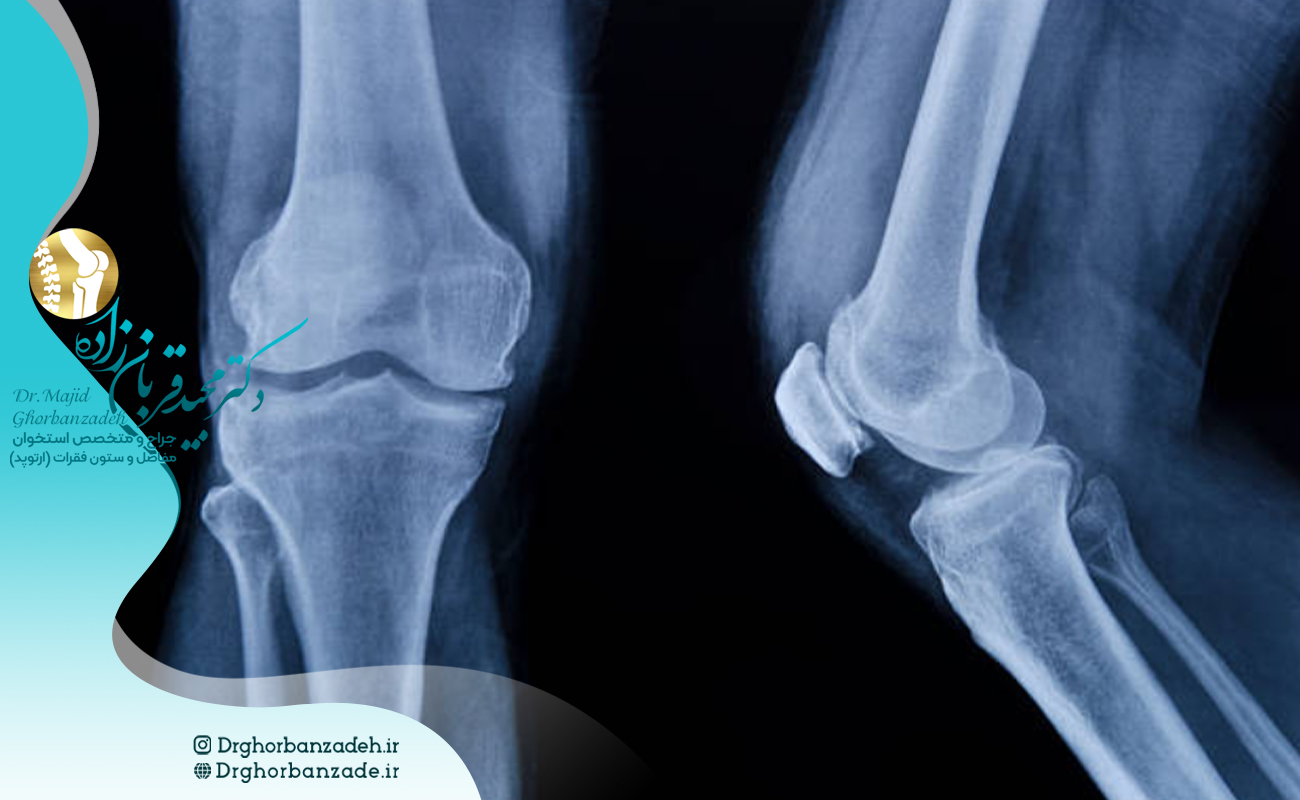 Knee fracture symptoms
Symptoms of knee fracture in Accident
What parts are affected by a knee fracture?
Fracture of the femur bone
Bone fracture Patella
Tibia bone fracture
Fibula bone fracture
Diagnosis of knee fracture
 Diagnosis of knee fracture
 Medical history review
Physical examination
Imaging
It is done with a top view, front view, and oblique view, which allows the identification of knee fractures.
Often, a radiographic examination is sufficient to confirm the doctor's diagnosis and confirm the fracture, either at the level of the tibial plateau or the patella.
For tibial plateau fractures, a CT scan may be performed to assess the depth of the plateau depression.
If ligament damage is suspected, the patient is referred for further examinations such as MRI to detect soft tissue or small fractures.
How Prevent knee joint fractures?
Taking care of the body is the most important thing that everyone should do, and they should take care of their health from a young age so that in middle age they do not face problems such as bone fractures, decreased bone density, and damage to joints and tendons.
With a few simple solutions, you can prevent bone and knee joint fractures and you will always have the normal functioning of this sensitive part of the movement system.
If you are looking for a solution to maintain the health of the knee joint, you must prevent the occurrence of diseases such as osteoporosis.
Remember that if you use safety equipment while doing sports or activities related to your job, you will not be exposed to fractures.
It is important to strengthen the body and prevent various diseases such as Knee arthrosis and bone wear prevent joint fractures.
Remember that gender and genetics are an effective factor in the occurrence of the disease.
Usually, women are exposed to osteoporosis more than men due to the vast hormonal changes they experience during pregnancy and menopause.
It is important to use various supplements before middle age to reduce knee injuries and joint destruction. Do not use harmful substances such as cigarettes and all types of tobacco and even tobacco.
Remember that by having a healthy diet and taking bone-building and strengthening supplements, you help prevent these complications.
Treatment of knee joint fracture
 Treatment of knee joint fracture
 When a knee joint fracture occurs, the first step is to find out the cause of the injury.
By solving the main problem, they can provide conditions for recovery.
In the first step, the experts They use other diagnostic methods and try to determine the cause, severity and location of the injury with bone density tests and various types of imaging.
Certainly, having this information will lead to better treatment conditions.
It is important to visit doctors who have sufficient expertise and skills in this field to improve this problem. Other factors are different. If this disease is not treated properly, it can lead to various knee problems in the future. These treatments include:
Rest
You will go home with a cast, splint, or knee brace during recovery to help keep you immobile after breaking your knee.
Don't forget the important role of rest and avoiding putting weight on your knee.
Your doctor will tell you how much weight you can bear and how much you can bend your knee. Bend over.
The doctor will tell you how long you need to stay in bed before you can walk again.
This period may be longer or shorter depending on the severity of the knee fracture.
Knee Fracture Casting
If the knee joint fracture is definitively declared after diagnostic procedures, specialists will use a cast to heal the fracture.
By using plaster, the movement of the knee is limited, and when the leg is in a fixed position, the fusion of fractures and the repair of damaged tissues are better and faster.
Knee fracture and platinum
Platinum can be used in the treatment of knee fracture, in such a way that it is used with screws, pins and wires to hold the large parts of the patella.
In fractures that The degree of crushing is very high, removing part or all of the kneecap may be necessary and surgery Knee joint replacement will be done.
slow to preserve and reattach the kneecap as much as possible.
Medicine treatment for knee fracture
Another way to improve knee joint fracture is quick knee fracture treatment is drug therapy.
Specialists use painkillers and some types of drugs relieve inflammation.
Opioid pain medications may be appropriate for the first few days after a severe kneecap fracture. and then non-opioid options are also available.
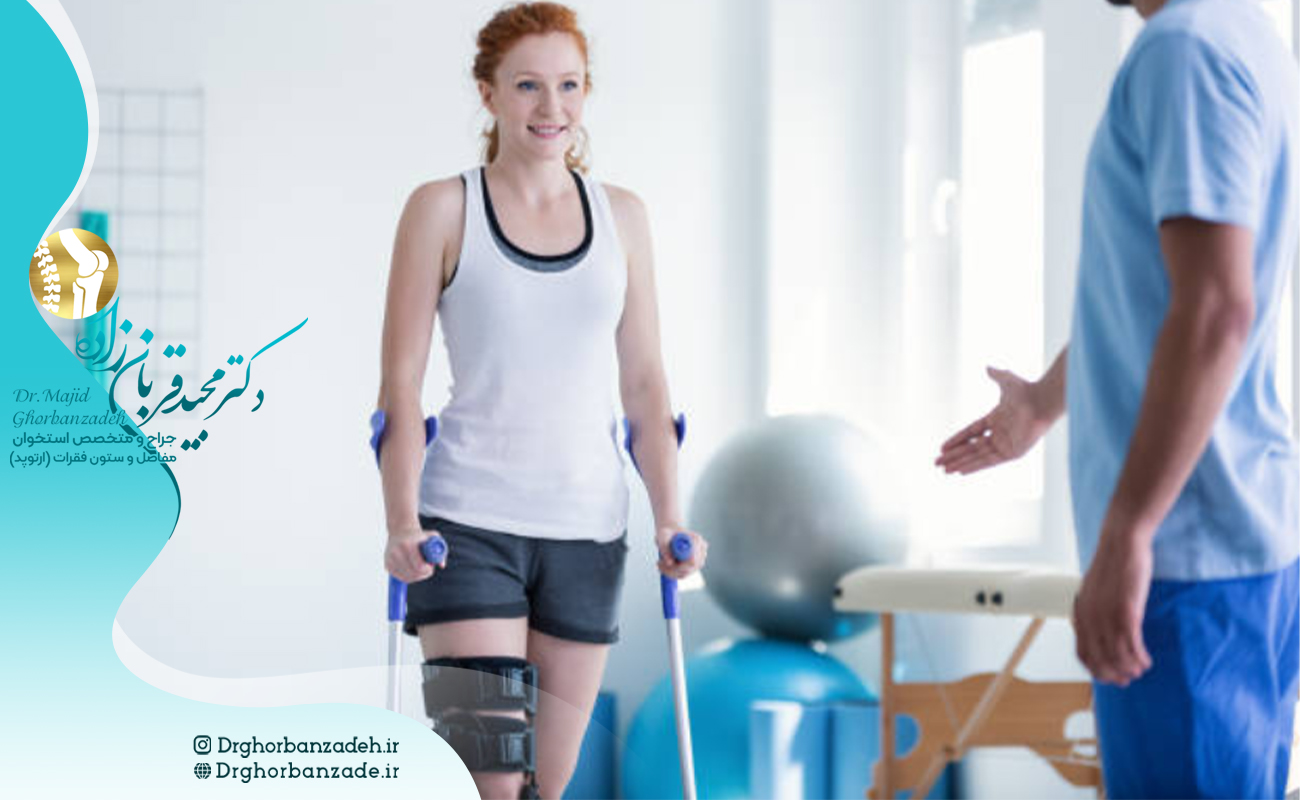
Physiotherapy for Knee Fractures
All those dealing with knee injuries should include stretching exercises and physical therapy in their program.
Physical therapy and various stretching exercises can help you regain your normal walking ability very quickly.
The muscles adjacent to the knee will be strengthened and the least amount of pressure will be applied to the injured knee.
With this, in addition to increasing muscle strength, you will have more flexibility and a higher range of motion, and recovery conditions will be provided with physiotherapy and occupational therapy.
After weeks or months of immobility with plaster or splints, muscle loss (atrophy) may occur in the leg.
In this case Positional physiotherapy can help to minimize atrophy and prevent it from becoming permanent, as well as to restore muscle strength, flexibility and range of motion.
Physiotherapy is performed for various reasons, including reducing pain, increasing leg movement, increasing balance and helping to walk.
The ultimate goal of physiotherapy and its exercises is to return the activity level to the previous state so that the patient can perform his usual activities without problems.
Different devices are used in physiotherapy. Compensation for muscle atrophy is used in some way.
This device prevents weight bearing on the broken leg, and hydrotherapy can also be used to speed up recovery.
Knee Fracture Surgery
Surgery is usually recommended for more severe patellar fractures. If the bone is severely broken or crushed, plastering will not help to heal it.
Surgery to treat knee fracture is performed in two stages, reduction and immobilization of the knee joint.
First, the broken bone is placed in its original position, then immobilized with a cast or brace.
Of course, in some cases, closed reduction may be done without opening the fracture site, which is generally done with the help of stretching and special maneuvers.
Study More Is pen juice and chicken feet cartilaginousOf course, this method cannot always be used to reduce a broken bone, and the doctor generally uses an open reduction method to reduce open fractures, in which the skin and muscles are first opened over the fracture, and then the fracture pieces are put together.
After surgery, the patient's knee is immobilized with a cast or brace for 6 weeks.
If you are facing a fracture of the knee joint, be sure to follow the care that your doctor recommends to you.
Even to sit and get up, you must put the body in the right position and take all the prescribed medicines and supplements at the right time and in the right dose.
Keep in mind that at this point in time, consuming healthy foods helps to heal the injury faster, so these simple but practical tips should not be neglected.
Home treatment of knee fracture
In addition to exercise and physiotherapy, which are very useful for knee fracture treatment, home treatment of knee patella fracture is also important and effective.
For example, the patient should use calcium-rich foods to provide calcium to heal fractures.
During the treatment period, avoid caffeine consumption as much as possible because caffeine prevents calcium absorption.
Zinc should be consumed at the same time as calcium, foods such as meat and seafood are rich in zinc.
Using a hot water bag to treat a broken knee may be useful.
Warm water dilates blood vessels and increases blood flow and can help reduce pain and inflammation.
Using warm water can also help relax the muscles. You can fill a hot water bottle with hot water and place it on your broken knee.
Make sure the water temperature is right and the skin on your knee is healthy.
Use it for 15-20 minutes, also consult your doctor before using hot water bag.
As usual, all diseases should try to avoid smoking and alcohol.
In addition to the harm they have on the body, these substances cause wounds and fractures to heal later than usual.
An ice pack can be placed on the wound to combat swelling and reduce pain, but be careful not to get the area wet.
Vitamin C helps the healing process and increases collagen production.
A significant part of bone is made up of collagen, and increasing collagen production helps a lot in the healing process.
Care after knee fracture
For quick recovery and recovery of mobility, following some tips can be effective.
The most important care instructions after knee fracture are:
Since you are wearing a brace, cast, or splint to immobilize your knee, sleeping on your back will probably be more comfortable.
You may also want to use pillows under your knees to keep them slightly elevated.
Avoid physical activities that increase the load on the knee.
During the recovery period, the doctor may recommend the use of assistive devices such as hinged knee braces or similar devices to reduce pressure on the knee.
Avoid using stairs as much as possible.
Get enough vitamin D through sun exposure or dietary supplements.
Avoid smoking and using any kind of tobacco.
It is very important to follow your doctor's instructions carefully and visit him regularly to check and follow up on the changes and recovery of your knee.
Physiotherapy is very effective for quick treatment of broken knee.
Physiotherapy for knee fracture recovery will include the following:
- Exercises to strengthen the muscles around the knee
- Exercises to increase flexibility, balance and movement control exercises
- reducing pain and using therapeutic techniques such as massage and electrotherapy
How long does a knee fracture take to heal?
How long does a knee fracture take to heal?The course of knee fracture treatment is variable and will depend on the severity of your fracture and whether you have already had surgery on it or not.
Most people take about six weeks to feel better and can resume normal activities within three to six months.
However, in cases where surgery is required, the recovery period may take up to a year and may require physical therapy and special exercises.
Some people complain of long-term symptoms of pain and stiffness, while others still wear knee braces.
Duration of treatment can be different depending on severity and type of fracture, treatment method and body response to treatment.
According to the advice of most doctors, avoid climbing stairs, squatting, kneeling and other activities that put pressure on that area for a while.
Despite knee immobility, you can walk more during the treatment period.
What should we eat for knee fracture?
What should we eat for knee fracture?Healthy and proper nutrition is very important and significant during the recovery period from knee fracture.
Consumption of nutrient-rich foods can help the healing process and strengthen bones and tissues.
Below are some tips for proper nutrition when facing this injury:
Protein consumption
Protein sources such as meat, fish, chicken, eggs, dairy, beans and nuts.
Consumption of foods rich in vitamin D and calcium
Foods such as milk and dairy products, green vegetables, fatty fish such as salmon and sardari, eggs and soybeans as rich sources of vitamin D and calcium can help strengthen bones and rebuild them.
Consumption of foods rich in vitamin C
Consumption of fruits such as oranges, strawberries, blackberries, dried berries, oranges, kiwi and vegetables such as red pepper, broccoli and medicinal plants.
Consumption of foods rich in omega-3 fatty acids
Consumption of fatty fish such as sardines, mackerel, salmon and almonds, krill butter and egg yolk oil.
Consumption of foods rich in antioxidants
Consumption of fruits and vegetables such as berries, raspberries, grapes, dark vegetables and herbs such as turmeric and ginger.
Complications of knee fracture
Even after successful treatment, there is a possibility of complications, some of which are:
There is a possibility of damage to the articular cartilage and pain even after the fracture has healed. Of course, this type of arthritis is observed in a small percentage of patients.
In some patients, the weakness of quadriceps muscles and decreased ability to bend and straighten the knee are observed in the patient.
A knee fracture is usually accompanied by severe pain that may be constant or worsen with knee movement.
The area around the kneecap may become significantly swollen and red.
A fracture of the kneecap can lead to limitation of knee motion, especially if the patella is not properly stabilized.
If a kneecap fracture is not treated or not treated in time, it may cause knee dysfunction and reduced mobility.
A fractured joint can increase the risk of infection, especially if the surrounding skin is damaged or not treated in time.
A fractured kneecap may cause internal bleeding, which can lead to increased swelling and pain.
Chronic pain is completely normal after patella fracture, this pain may be due to arthritis, knee stiffness or muscle weakness.
Sometimes this feeling of pain is relieved by using a splint.
Other common complications associated with knee fracture are:
- Abrasion and as a result the creation of knee joint arthrosis
- Feeling pain in the front of the knee
- restriction of the person's movement Weakening of the quadriceps muscle
- Not welding the broken knee
- Suffering from knee arthritis
- Deep venous thrombosis

Dr. Majid Ghorbanzadeh
Surgeon and bone and joint and spine specialist (orthopedic) Knee and hip surgery, arthroscopy, arthroplasty Member of the American Orthopedic Association Has a specialized board and a member of the Orthopedic Surgeons Association Youtube Instagram
10 answers
-
Which knee fracture is more common?
Reply-
The most common broken bone around the knee is the patella. The ends of the femur and leg where they meet and form the knee joint may also be fractured.
Reply
-
-
How long does a knee fracture last?
Reply-
Depending on the age and health of the person, it takes about three to six months for the knee fracture to heal.
Reply
-
-
What should we eat for a broken knee?
Reply-
Foods rich in calcium that are a type of restorative include dairy products such as milk, yogurt and cheese, green vegetables such as kale, spinach and broccoli.
Reply
-
-
Good time, what medicine should I take to relieve my pain?
Reply-
Hello, dear friend, you can use drugs such as acetaminophen and ibuprofen to relieve pain, but note that you must see a specialist doctor.
Reply
-
-
Hello, I'm sorry, my knee is cracked, the doctor put a cast on it, I'm awake a lot at night, now it's been two days, I wanted to know how long the pain lasts. Reply
-
Pain after knee cast is normal, especially at night. It usually decreases in 5 to 7 days, but if the pain becomes more severe or the swelling is high, definitely come for an examination.
Reply
-





