

امروزه در دندانپزشکی از فناوریهای جدید مانند قالب گیری دیجیتال دندان برای خدمات دندان پزشکی استفاده میشود. Digital tooth molding is one of the most innovative methods of recording the shape of the mouth and teeth in dentistry, which uses digital scanners for this purpose.
This technology makes it possible to record accurate images of the mouth and teeth without the need for traditional methods that are associated with less accuracy, thus creating an accurate 3D model. In the rest of this article, we will discuss digital tooth molding in full.
“Digital dental impressions use advanced intraoral scanners to create accurate 3D images of the teeth and gums, replacing traditional molds.
This method enhances precision, improves patient comfort, and speeds up treatment planning. It’s widely used for crowns, bridges, implants, and orthodontic devices.
"Digital tooth molding using advanced intraoral scanners creates accurate 3D images of teeth and gums and replaces traditional molding methods.
This method increases the accuracy of the treatment, provides more comfort for the patient and makes the treatment planning process faster. Digital tooth molding is used in the manufacture of crowns, bridges, implants and orthodontic devices. href="https://my.clevelandclinic.org/health/diagnostics/22671-dental-impressions" rel="nofollow noopener" target="_blank">Cleveland Clinic
What is digital tooth molding?
Digital tooth molding is known as an advanced and innovative method. In this method, digital technologies are used to prepare accurate 3D models of the patient's mouth and teeth.
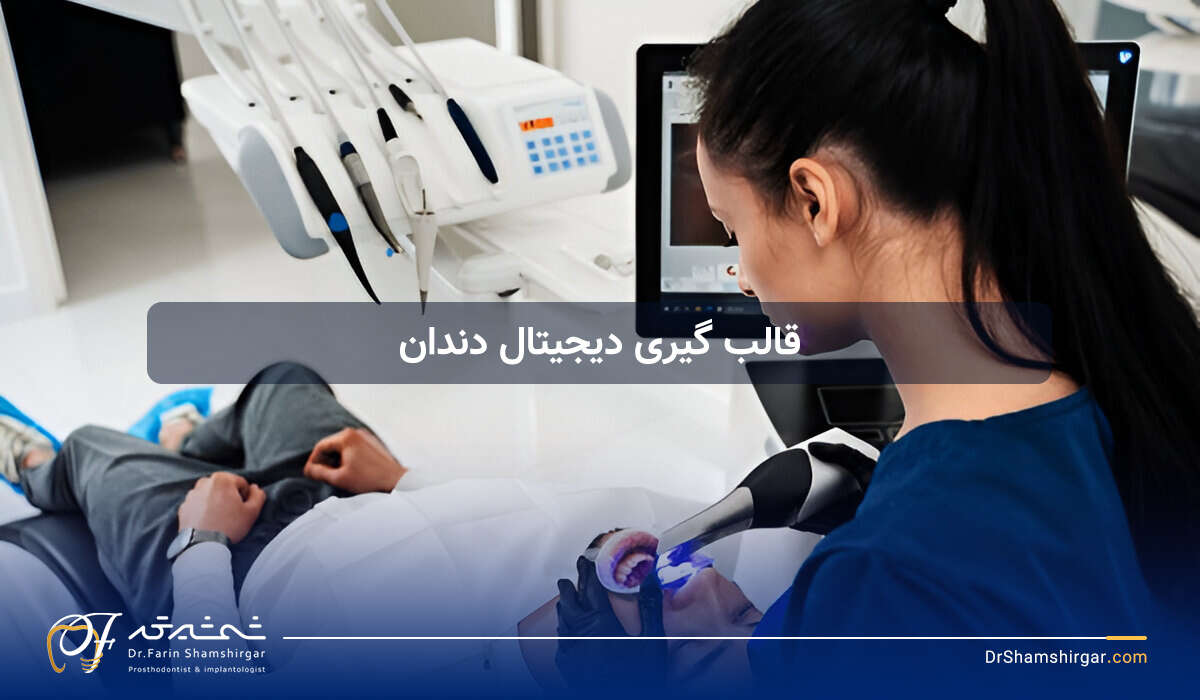
In the digital tooth molding method, physical molds and materials such as liquid or jelly are not used, and digital scanners are used instead. These scanners have high accuracy and speed and provide accurate and clear information about the condition of the teeth and gums.
In this method, no material is physically entered into the mouth, and this helps to make molding without discomfort and unpleasant feelings.
The digital scanning process is a quick and painless process and produces the necessary data in an accurate and customized form.

Steps of digital tooth molding
Specific steps are required to perform digital tooth molding. Among the steps that are followed to perform digital molding, the following can be mentioned:
- Preparation of the patient for digital molding
- Intraoral digital scan
- Modification and processing of the digital model
- Sending the digital model to the laboratory or 3D printer
- Test and installation of dental restoration
What is the difference between digital tooth molding and traditional molding?
Digital molding of teeth has very clear differences with traditional molding. The differences between these two methods have led many dentists to replace traditional molding methods with this method.
Although both of these methods follow the same goal; But they have differences with each other which are as follows:
Method and tools used
The first difference between these two methods refers to the tools used in them. In traditional molding, molding materials such as alginate or silicone are used to take the mold from the teeth. The dentist places these materials in the patient's mouth and removes the molds after hardening. Advanced digital scanners are used for digital tooth molding to capture accurate images of the mouth and teeth.
Accuracy and quality of results
The other difference between traditional and digital molding is the accuracy and quality of the results of these two methods. In traditional molding, due to the use of the mold, there is a possibility of creating errors such as incorrect adaptation or defects in the mold; Because this molding process depends on the manual precision of the dentist.
This error can cause problems in prostheses or restorations. In digital dental molding, since the scanners are highly accurate, all the details of the patient's teeth are recorded, and this makes more accurate models and better treatment results.
Patient comfort
In traditional molding, due to the use of molding materials in the patient's mouth, unpleasant feelings arise for the person; In a way that some people feel nauseous and do not want to do this.
In digital tooth molding, no material is used inside the mouth, and only by entering the molding scanner into the mouth, the molding process is done quickly and painlessly.
Time Required
Traditional molding is a process that requires time; Because at first, the dentist must place the molding material inside the mouth and wait for the material to harden and finally remove the mold. After these steps, the mold must be sent to the laboratory to prepare dental prosthesis.
In digital tooth molding, the molding is prepared in one session and quickly. After the 3D model is ready, it is sent to the laboratory so that the prosthesis can be prepared faster due to the presence of a more accurate model.
Maintenance and storage
In traditional molding, molds must be physically stored, which creates the need for additional storage space. If the templates are not maintained properly, it is possible to reduce their quality.
In digital tooth molding, however, this is not the case, and digital models can be stored and accessed electronically, and the necessary corrections can be made if needed.
Costs
Although the initial costs of using digital molding in the treatment process may be higher than traditional molding; But in the long run, choosing this method is more economical. Digital molding can reduce costs due to reducing treatment time, increasing accuracy and eliminating the need for additional molding materials.
Effect on treatment quality
In traditional molding, due to the possibility of problems in the molds, the result of the treatment may be accompanied by problems. For example, the accuracy of matching the prosthesis or dental crown with natural teeth in this method can be low.
In digital tooth molding, due to the high accuracy of scanning devices, it is possible to record more details, and this issue makes matching the molds with natural teeth much more accurate.
Applications of digital molding in dentistry
Digital molding has many functions in dentistry and that is why it is used a lot. Among the applications of digital molding in dentistry are the following: Preparation of dental crowns One of the applications of digital molding of teeth is to use this method to prepare accurate dental crowns. dental crown or dental crown is used to cover damaged or treated teeth, and digital dental molding helps the dentist to create an accurate model of the patient's tooth and design the crown according to that model.
This high accuracy helps the crown to match the patient's tooth completely and problems such as incorrect fit do not arise.
Braces and orthodontics
To perform orthodontics, there must be an accurate model of the teeth and gums so that it can be used to design braces and check the condition of the teeth.
Digital tooth molding helps the dentist prepare a 3D model of the patient's teeth more accurately and quickly and design orthodontic treatments based on it. Digital molding allows the dentist to prepare an accurate model of the patient's mouth and determine the exact location of the implant.
Dental restorations
Digital molding of the tooth helps the dentist to design the restoration of a broken or decayed tooth in a very precise way and in accordance with the patient's natural teeth. Prevent problems such as excess filling or lack of material in the tooth.
Dental prosthesis
Dental prosthesis is a method to replace lost teeth. Digital tooth molding helps the dentist to design precise and appropriate prostheses according to the condition of the patient's mouth.

Challenges of intraoral scanners and digital implants
Although the introduction of intraoral scanners and digital implants has increased the speed and accuracy in the field of dentistry, there are still challenges that reduce these challenges due to the skill and experience of the dentist. Among the challenges of intraoral scanners and digital implants are the following:
The role of the dentist's skill on the success of treatment
To successfully use the results of intraoral scanners and Digital methods in implant placement are very important for the dentist to have a deep understanding of anatomical principles, design software, and digital devices. A dentist who is aware of these issues can use these devices to display very accurate results in harmony with the patient's oral conditions. The use of equipment without sufficient skill cannot be effective.
Results are influenced by the physiological characteristics of patients and environmental conditions
Another important thing is that the individual conditions of each patient can affect the performance of intraoral scanners and the accuracy of digital implants. In fact, things such as the amount of moisture inside the mouth, anatomical differences, the presence of metal restorations, and light reflections can affect the quality of the scan.
Also, digital treatment planning can be more complicated in people who have a limited jaw bone or need a bone graft.
The impact of technology on the patient experience and the treatment process
One of the most important benefits of digital dentistry is the increase in patient satisfaction. By replacing traditional methods, digital scanners have made the patient not to experience unpleasant and uncomfortable feelings. Also, the presence of scanners has increased the speed of the implantation process, and on the other hand, the number of treatment sessions has decreased. These cases can lead to an increase in patient satisfaction and make people treat their teeth with more satisfaction.

Dr. Farin Shamshirgar, dental implant specialist in Zafaranieh
Digital tooth molding is one of the innovative methods in dentistry. This method requires special and high-quality devices that are usually expensive and can only be found in some dental clinics.
It is very important for people to go to dentists who are equipped with these devices in the highest quality in order to enjoy the benefits of these devices. Dr. Shamshirgar is dental implant specialist in Zaferanieh. He uses the most equipped digital scanner devices in his office so that he can create brilliant results for people. To use the experience and knowledge of Dr. Farin Shamshirgar, you can visit his office in Zafaranieh.
Final word
Digital tooth molding is one of the modern and up-to-date methods used in dentistry today. This method is designed to prepare a tooth mold without the hassles of traditional molding and it can be used to design dental crowns, dental implants and dental restorations. The many advantages of this method have made it more popular than traditional molding today. بسیار مهم است برای قالب گیری دیجیتال دندان به دندانپزشکان باتجربه و مجهز به دستگاههای بهروز مراجعه کرد تا این کار به بهترین شکل ممکن انجام شود.
مشاوره رایگان!
برای مشاوره رایگان یا بصورت آنلاین ثبت نوبت کنید یا با ما تماس بگیرید.
قالبگیری دیجیتال دندان فرآیندی است که در آن با استفاده از اسکنرهای داخل دهانی، تصاویر سهبعدی دقیقی از دندانها و لثهها گرفته میشود.
در قالبگیری دیجیتال از اسکن بدون تماس استفاده میشود، اما در روش سنتی مواد قالبگیری در دهان بیمار قرار میگیرد که ممکن است ناراحتکننده باشد.
بله، قالبگیری دیجیتال دقت بسیار بالاتری دارد و احتمال خطا در آن کمتر از روشهای سنتی است.
بله، اکثر بیماران میتوانند از قالبگیری دیجیتال استفاده کنند، حتی افرادی که دچار رفلکس تهوع هستند.
برای ساخت روکش، بریج، لمینت، ایمپلنت، پلاکهای ارتودنسی و محافظهای دندانی استفاده میشود.
بله، این روش کاملاً ایمن، غیرتهاجمی و بدون نیاز به اشعه است.