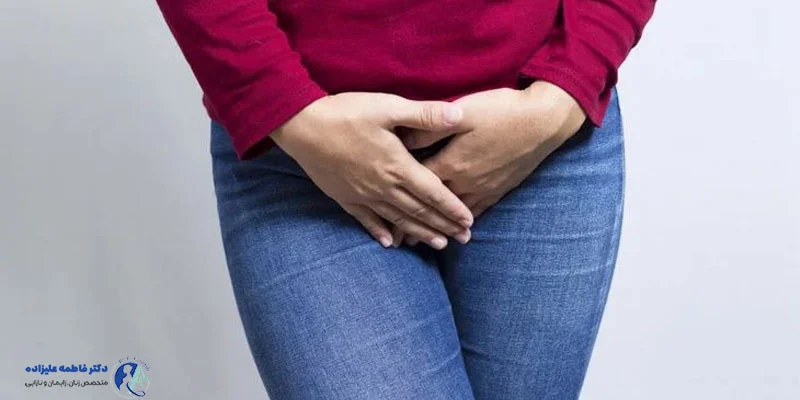

بیاختیاری ادرار در زنان بسیار شایعتر از مردان است و علت آن به عوامل مختلفی مانند بارداری و دوران قاعدگی مربوط میشود. این وضعیت به معنای نشت غیر ارادی ادرار بوده و در زمانهای در حالت استراحت رخ میدهد. دکتر فاطمه علیزاده، متخصص زنان و زایمان، یکی از پزشکان باتجربه در این حوزه است. در این مقاله به بررسی علل، انواع، روشهای تشخیص و درمان بیاختیاری ادرار در زنان خواهیم پرداخت

مشکل عدم کنترل ادرار
بیاختیاری ادرار چیست؟
بیاختیاری ادرار به عدم توانایی در کنترل خروج ادرار از مثانه گفته میشود. This can happen suddenly or due to special stimuli. This disorder varies from mild to severe and may occur when sneezing, coughing or doing physical activity. In some cases, this disease occurs even without any warning.
Types of urinary incontinence
- Functional incontinence: A person cannot control his urination due to physical or mental problems
- Stress Incontinence: Urine leaks when pressure is applied to the abdomen, such as when laughing or sneezing.
- Emergency incontinence: In these cases, a person needs to urinate immediately and may leak before reaching the toilet.
- Urine overflow: The bladder does not empty completely and the rest of the urine is excreted over time.
For more advice, contact the number below.
Symptoms of urinary incontinence in women
Identifying factors affecting urinary incontinence helps women to start effective treatment measures faster. The symptoms of this disorder may vary depending on the type of incontinence, but its general symptoms are common among many women.
Sudden or involuntary leakage of urine
One of the most common symptoms is urinary incontinence. This state occurs when laughing, coughing, sneezing, running or even when lifting heavy objects. In such a situation, the muscles of the pelvic floor or the urinary sphincter work poorly.
Learn more: What is HPV? Evaluation of factors and diagnosis method
Great urgency to urinate
Some women suddenly and strongly feel the need to urinate and may even leak before reaching the bathroom. This state of helplessness is seen as an emergency.
Urine frequency during the day or night
Increasing the number of times you urinate during the day, usually more than 8 times a day, or when you wake up, there is frequent urination at night and the need to go to the bathroom. This symptom may be accompanied by a decrease in bladder capacity or its irritability.
Burning or painful urination
In some cases, urinary incontinence is accompanied by burning, pain or an unusual smell in the urine, which can be a sign of a urinary tract infection. In such a situation, it is necessary to see a doctor immediately.

What is the cause of urinary incontinence in women?
Many women experience urinary incontinence at some point in their lives. From pregnancy and childbirth to menopause and hormonal changes, several factors can affect the pelvic floor muscles and the urinary system and lead to unwanted urine leakage. In the following, we discuss the most important reasons for the occurrence of this problem in women.
Pregnancy and fetal pressure on the bladder
During pregnancy, the fetus grows and puts a lot of pressure on the bladder and pelvic floor muscles. This pressure reduces the capacity to hold urine and sometimes leads to sudden leakage of urine. These complications usually occur in the third trimester of pregnancy. Also, hormonal changes during pregnancy can also make the muscles supporting the bladder more relaxed.
Natural birth and injury of the pelvic muscles
Natural childbirth is one of the main causes of urinary incontinence in women. During childbirth, pelvic floor muscles and nerves may be stretched and torn. This case is more likely to be damaged in difficult, long labors or with a large baby. This damage reduces voluntary control over the bladder.Repeated or multiple births
Urinary incontinence due to frequent and back-to-back births also increases the possibility of damage to the tissues and muscles that support the bladder. Also, multiple pregnancies put more pressure on the pelvic structure and increase the risk of incontinence.Menopause and estrogen hormone reduction
When entering menopause, the level of estrogen hormone in women's body decreases drastically. This reduction causes thinning and weakening of the bladder, urinary tract and pelvic floor muscles. As a result, the possibility of urine leakage and reducing the ability to control it increases.

- Stroke and brain and nerve diseases
- Spinal cord injury or MS
- Chronic urinary infections Bladder tumor
- Diabetes
Urinary incontinence diagnosis method
To accurately diagnose the cause of urinary incontinence, the doctor first begins with a complete review of the medical history, type of symptoms, and physical examination. This step helps to get clues about the cause of this condition. According to the patient's condition, additional tests such as urine test, bladder ultrasound or bladder tape are used to evaluate the function of the bladder and urinary tract more accurately.
Conclusion
Urinary incontinence in women is a common but treatable problem. This complication may be caused by pregnancy, childbirth, menopause, bladder prolapse or underlying diseases such as diabetes and neurological problems. It is recommended to Dr. Fatemeh Alizadeh, an obstetrician and gynecologist, with high experience in the field of urinary incontinence diagnosis and treatment, for a more detailed evaluation, she can help you regain your quality of life.FAQ
When should you see a doctor for urinary incontinence?
It is accompanied by symptoms such as pain, burning or a feeling of incomplete emptying of the bladder, it is better to see a doctor as soon as possible.
Can urinary incontinence in women be treated?
Yes. According to the cause of incontinence, there are several treatment methods; It can be treated including pelvic exercises, medicine, physiotherapy, and in severe cases, surgery.
Does urinary incontinence only occur in older women?
No. Although old age is a contributing factor, urinary incontinence can also occur in young women for reasons such as pregnancy, childbirth, or even urinary tract infections.
Is urinary incontinence permanent after childbirth?
Usually no. For many women, postpartum incontinence is temporary and can be resolved with strengthening exercises or simple treatments. But in some more severe cases, specialized treatments may be needed.





