مقاله تخصصی
Methods to prevent dental denervation: a comprehensive guide
3 weeks ago
462 بازدید

Dr. Mohammad Hossein Tajik
تهرانdentist
Methods to prevent tooth decay: a comprehensive guide
Nervation (root canal therapy) treatment It is done to save a tooth whose pulp (nerve and soft tissue inside the tooth) is severely damaged or infected. Although root canal treatment is necessary in many cases and can save a tooth from extraction, prevention is always the best solution. This comprehensive article examines the methods of preventing Dental denervation pays Our goal at Dr. Tajik dental clinic is to provide you with complete and practical information so that you can avoid the need for nerve extractions by taking proper care of your teeth. --jtoc-toggle-1 --jtoc-has-numeration --jtoc-has-custom-styles --jtoc-is-unfolded">
Why should we avoid denervation?
Denervation, although an effective treatment method, has its own disadvantages and consequences. Understanding these reasons makes the importance of prevention all the more apparent:
- Cost: Nerve removal is usually an expensive treatment. The costs of the examination, imaging, endodontic treatment, and final restoration (usually a crown) can be significant.
- Time consuming: Nerve removal is usually done in several sessions, and each session may last several hours.
- Potential problems: Although nerve removal is successful in most cases, problems such as re-infection, broken teeth, and persistent pain are possible.
- Tooth weakening: A denervated tooth, due to the removal of the pulp and tooth structure, is weaker than a healthy tooth and is more prone to fracture.
- Color change: A denervated tooth may become darker over time.
Regarding these cases, prevention of denervation by observing oral and dental hygiene and visiting the dentist regularly is the best. And it is the least expensive way to maintain teeth health.
The main reasons for the need for tooth extraction
In order to effectively prevent nerve extraction, we must know its main causes. The most important of these causes are:
Deep tooth decay
Tooth decay is the most common cause of the need for nerve extraction. When the decay is not treated in time, it penetrates into the deeper layers of the tooth and reaches the pulp. The bacteria present in caries cause inflammation and infection of the pulp.
Dr. Tajik's clinic experience: At Dr. Tajik's clinic, we are faced with many cases of deep caries every day, which unfortunately have led to denervation due to the late referral of patients. Many of these cases could have been prevented with regular examinations and simple repairs in the early stages.
Impact and damage to the tooth
Severe impact to the tooth, such as impact from an accident, fall, or martial arts, can cause damage to the pulp, even if there is no visible fracture in the tooth. This damage can lead to inflammation, necrosis (death) of the pulp and ultimately the need for denervation.
Real life example: One of our patients was a young athlete who received a blow to his front tooth during a boxing match. At first, there was no apparent fracture, but a few weeks later, the tooth became painful and after examination, it was found that the pulp of the tooth was damaged and needed nerve extraction.
Tooth cracking
Dental cracks, especially deep cracks, can create a path for bacteria to enter the pulp. These cracks may be caused by chewing hard foods, grinding teeth, or old and large fillings.
Advanced periodontal diseases
Gum diseases, if left untreated, can damage the bone and tissues around the tooth and eventually reach the dental pulp. This can lead to pulp infection and the need for denervation.
Frequent and deep fillings
Frequent and deep fillings, especially if they are close to the pulp of the tooth, can cause irritation and inflammation of the pulp.
Bruxism
teeth grinding, the habit of grinding or clenching the teeth together, especially while sleeping, can cause tooth enamel wear, cracking and damage to the pulp.

Prevention of neurosis Teeth
Methods to prevent tooth extractions
By observing the following points, you can significantly reduce the possibility of needing extractions:
Maintain oral hygiene correctly and regularly
Brushing: at least two Brush your teeth twice a day, for two minutes each time, using a soft toothbrush and toothpaste containing fluoride. Use the correct brushing movements (round and up and down movements).
Flossing: Floss at least once a day to clean between the teeth and under the gum line. Floss removes plaque and food particles that a toothbrush cannot reach.
Using mouthwash: Using antibacterial mouthwash can help reduce oral bacteria and prevent tooth decay and gum disease.
Expert tip: Choosing the right toothbrush and toothpaste is very important. Consult your dentist to choose the best option. At Dr. Tajik Clinic, we provide expert advice to our patients in choosing the right health products.
Regular dental checkups
Regular visits to the dentist (at least every six months) are essential for examining and checking the teeth and gums. The dentist can diagnose and treat caries and other problems in the early stages, before they reach the nerve of the tooth.
Dr. Tajik's clinic experience: Many patients who regularly come to our clinic for examination, their dental problems are diagnosed in the early stages, and with simple and low-cost treatments, the progression of the disease and the need for nerve extraction can be prevented.
Healthy diet
Reduce sugar and sugar consumption: Sugar and sugar are the main food for oral bacteria that cause tooth decay. Limit the consumption of sugary drinks, candy, chocolate, and sweets.
Consumption of healthy foods: Consuming fruits, vegetables, dairy products, and proteins helps the health of teeth and gums.
Chewing sugar-free gum: Chewing sugar-free gum after meals helps stimulate saliva production. Saliva neutralizes the acids produced by bacteria and prevents tooth decay.
Protection of teeth against impact
Using a mouth guard in martial and high-impact sports: If you do martial or high-impact sports, be sure to use a mouth guard to avoid Protect your teeth from impact.
Caution when chewing hard foods: Avoid chewing ice, fruit cores, and other hard foods.
Treatment of grinding teeth
If you have grinding teeth, be sure to see a dentist. The dentist may prescribe you to use a night guard. Nightguard protects your teeth from wear and pressure caused by grinding teeth.
Timely treatment of gum diseases
If you see the symptoms of gum disease (such as bleeding gums, swollen gums, bad breath, and loose teeth), see a dentist immediately. Timely treatment of gum diseases prevents the progression of the disease and damage to the dental pulp.
Timely repair of old caries and fillings
Repair small caries and old and broken fillings in time. This prevents the progress of caries and its penetration into the dental pulp.
Summary table of methods to prevent nerve damage
| Method of prevention | Description |
|---|---|
| oral hygiene | brushing (at least twice a day), using antibacterial mouthwash | Dentistry | visiting the dentist (at least every six months) for examination and examination of teeth and gums |
| healthy diet | reduce sugar consumption, consume fruits, vegetables, dairy, and proteins, chew sugar-free gum |
| protect teeth against impact | use a mouth guard in martial arts and Overeating, caution when chewing hard foods |
| Treatment of grinding teeth | Using a night guard |
| timely treatment of gum diseases | seeing a dentist in case of gum disease symptoms (such as bleeding gums, bad breath, and loose teeth) |
| timely repair Old caries and fillings | repairing small caries and old and broken fillings |
| use of fluoride | use of fluoride toothpaste and, if necessary, fluoride therapy by a dentist |
| Smoking causes dry mouth, reduced saliva flow, and increased risk of gum disease and tooth decay It is possible. | |
| Drinking enough water | Drinking enough water helps maintain oral moisture, wash food particles and bacteria, and prevent dry mouth. |
The role of fluoride in preventing denervation
Fluoride is a mineral that strengthens tooth enamel and makes it more resistant. It helps against decay. Fluoride can reach the teeth through the following:
Toothpaste containing fluoride: Most toothpastes on the market contain fluoride. Regular use of this toothpaste helps to strengthen tooth enamel
Fluoride mouthwash: Some mouthwashes also contain fluoride. The use of these mouthwashes can be useful as a supplement to toothpaste containing fluoride.
Fluoride Therapy: The dentist can use fluoride gel, varnish, or foam in the office to strengthen tooth enamel. Fluoride therapy is especially recommended for people who are at high risk of tooth decay (such as children, people with dry mouth, and people with orthodontics).
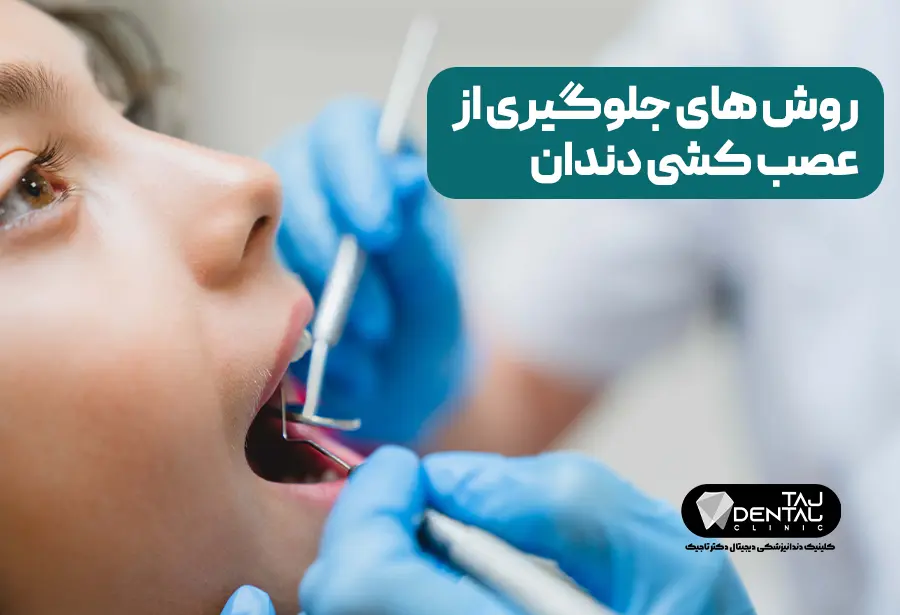
Source: American Dental Association (ADA) src="data:image/svg+xml;base64,PHN2ZyB4bWxucz0iaHR0cDovL3d3dy53My5vcmcvMjAwMC9zdmciIHdpZHRoPSI5MDAiIGhlaWdodD0iNjE1IiB2aWV3Qm94P SIwIDAgOTAwIDYxNSI+PHJlY3Qgd2lkdGg9IjEwMCUiIGhlaWdodD0iMTAwJSIgc3R5bGU9ImZpbGw6I2NmZDRkYjtmaWxsLW9wYWNpdHk6IDAuMTsiLz48L3N2Zz4=" loading="lazy" decoding="async" aria-describedby="caption-attachment-11134" class="size-full wp-image-11134" data-src="https://taj.dental/wp-content/uploads/2025/02/%D8%AC%D9%84%D9%88%DA%AF%DB%8C%D8%B1%D B%8C-%D8%A7%D8%B2-%D8%B9%D8%B5%D8%A8-%DA%A9%D8%B4%DB%8C-%D8%AF%D9%86%D8%AF%D8%A7%D9%86-3.webp" alt="Prevention of denervation of teeth" width="900" height="615" data-srcset="https://taj.dental/wp-content/uploads/2025/02/Prevention-of-nerve-of-dental-3.webp 900w, https://taj.dental/wp-content/uploads/2025/02/Prevention-of-nerve-of-dental-3-300x205.webp 300w, https://taj.dental/wp-content/uploads/2025/02/prevention-of-nerve-pulling-dental-3-768x525.webp 768w" data-sizes="(max-width: 900px) 100vw, 900px">
Prevention of nerve pulling Teeth
Frequently asked questions about preventing denervation
1. Does every toothache need nerve extraction?
No, not every toothache needs nerve extraction. Toothache can have many causes, such as surface decay, tooth sensitivity, gingivitis, and sinus problems. By examining the teeth, the dentist diagnoses the cause of the pain and prescribes the appropriate treatment.
2. Can denervation of a previously denervated tooth be prevented?
Yes, in some cases re-nervation of a previously denervated tooth can be prevented. If the infection or inflammation in the root canal is not completely treated, re-nervation may be required. By observing oral and dental hygiene, regular dental examinations, and timely treatment of problems, it is possible to prevent re-infection and the need for re-nerving.
3. Is denervation painful?
No, denervation is performed under local anesthesia and the patient does not feel pain during the treatment. After the treatment, there may be some pain and discomfort that can be controlled with regular pain relievers.
4. Does a denervated tooth have a shorter lifespan?
A denervated tooth is weaker than a healthy tooth due to the removal of the pulp and tooth structure. But with proper care, this tooth can last for years. Proper care includes oral and dental hygiene, regular dental examinations, and the use of veneers (if needed).
5. What is the best way to prevent denervation?
The best way to prevent denervation is proper oral hygiene, regular dental checkups (at least every six months), and a healthy diet.
Final Word
Preventing denervation is the best and least expensive way to maintain Dental health and prevention of more serious problems. By maintaining good oral and dental hygiene, regular dental checkups, a healthy diet, and protecting your teeth from impact, you can dramatically reduce the likelihood of needing a root canal.
At Dr. Tajik Dental Clinic, we help you stay healthy by providing comprehensive dental services, including regular checkups, scaling, cavity repair, and gum disease treatment. We help your teeth. Also, our experienced team will help you in choosing the right health products and the correct methods of dental care by providing expert advice in the field of oral and dental health. Our goal is to provide the best dental services with the highest quality and use the latest dental technologies and materials.
To schedule an examination and consultation, contact us.