![Breast cancer [breast] symptoms, diagnosis + treatment [gynecologist]](/storage/posts/covers/2026/01/05/0d2c008b72cfbf5343598c8045fd73cdfbfe6a0e567bd035ea8e1fc90702e96a.jpg)


سرطان سینه (Breast Cancer) یکی از شایعترین انواع سرطان در میان زنان در سراسر جهان بهشمار میرود و سالانه میلیونها نفر را درگیر میسازد. Although it can occur in men as well, the rate of infection in women is much higher. Despite significant scientific advances in the field of early diagnosis and new treatments, awareness and education play a very important role in the prevention and control of this disease. In this article, we will examine the causes, diagnosis methods and treatment strategies of breast cancer. Dr. Bita Sajjadipour is the best
Causes and risk factors of breast cancer
Breast cancer, like many other diseases, is caused by a combination of genetic, environmental and lifestyle factors. Knowing these factors can help in prevention or early diagnosis.
According to who.int
Breast cancer is a disease in which abnormal breast cells grow out of control and form tumors. If left unchecked, the tumors can spread throughout the body and become fatal. Breast cancer cells begin inside the milk ducts and/or the milk-producing lobules of the breast.
Breast cancer is a disease in which abnormal breast cells grow out of control and form a tumor. If left unchecked, tumors can spread throughout the body and become fatal. Breast cancer cells start inside the milk ducts and/or lobules that produce breast milk.
Genetic and hereditary factors in breast cancer
Some people have a family history of breast cancer, which increases the risk of developing the disease. Having certain gene mutations, such as BRCA1 and BRCA2, significantly increases the risk of developing breast cancer. These mutations are usually inherited from parents to children.
age and gender
Aging is one of the main risk factors. Most cases of breast cancer occur in women over 50 years old. However, younger women are also at risk, especially if they have a family history or genetic factors.
hormonal changes
Long-term exposure to estrogen (female hormone) is another effective factor in breast cancer. Early onset of menstruation (before age 12), late menopause (after age 55), childlessness or late pregnancy, and long-term use of hormone replacement therapy can increase the risk. Read the above link about hormonal disorders.
Lifestyle
Obesity, alcohol consumption, inactivity, poor nutrition, and smoking are among the factors that are associated with an increased risk of breast cancer. Studies have shown that women who have regular physical activity and follow a healthier diet are less likely to get infected.
Methods of breast cancer diagnosis
Timely diagnosis of breast cancer plays a very important role in increasing the chances of successful treatment and reducing the mortality caused by it. Today, various methods are used to identify this disease.
mammography
Mammography is one of the most common and effective breast cancer screening methods. This imaging technique uses X-rays and is able to detect abnormal masses even before they cause symptoms. It is recommended that women over 40 years old do mammography regularly (every one to two years).
breast ultrasound
In cases where mammography cannot identify lesions well, ultrasound can be a suitable supplement. This method is especially useful for younger women who have denser breast tissue.
Breast MRI
Magnetic resonance imaging (MRI) is recommended for women who are at high risk for breast cancer or have questionable results on previous tests. This method has high sensitivity and is especially used to check the extent of the tumor.
Sampling (biopsy)
If a suspicious mass is observed in the breast, a biopsy is performed. In this process, a sample of tissue is taken and examined under a microscope to determine if cancer cells are present.
breast cancer treatment
Breast cancer treatment depends on the type, stage of the disease, general health status of the patient, and biological characteristics of the tumor. A combination of treatment methods is usually used to increase the effectiveness of the treatment.
Surgery
Surgery is usually the first step in the treatment of breast cancer and includes two main types:
-
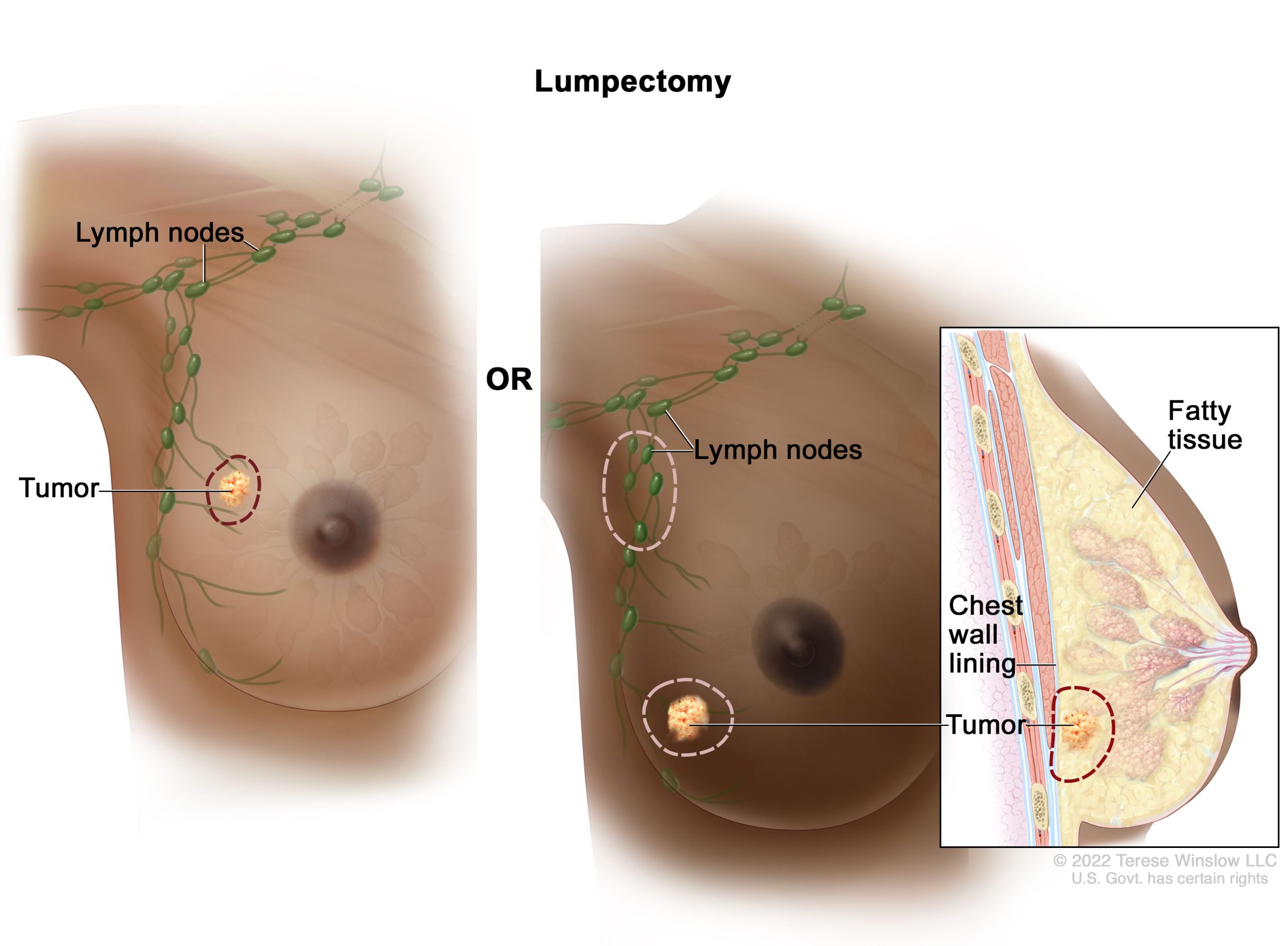
Lumpectomy: In this procedure, only the cancerous mass and a small part of the surrounding tissue are removed. This type of surgery is mostly used for small tumors and in the early stages.
-
Mastectomy: In cases where the tumor is larger or several areas of the breast are involved, it may be necessary to remove the entire breast.
Radiotherapy
After surgery, radiation therapy is used to kill any remaining cancer cells. This method is more recommended in patients who have had a lumpectomy to reduce the possibility of the disease returning.
Chemotherapy
Chemotherapy is the use of anticancer drugs that circulate systemically in the body and destroy cancer cells. This treatment is usually performed in more advanced stages or in the presence of metastasis (spread to other organs).
Hormonal therapy
In some cases, breast cancer tumors are dependent on female hormones (estrogen or progesterone). Medicines such as tamoxifen or aromatase inhibitors are prescribed to prevent the effects of these hormones.
targeted therapy
Targeted therapies such as trastuzumab are designed for HER2 positive patients. These drugs directly affect cancer cells and usually have fewer side effects than chemotherapy.

What can I do to reduce my risk of breast cancer?
According to mayoclinic
- Limit or stay away from alcohol
- Stay at a healthy weight
- Get active
- Breastfeed
- Limit hormone therapy after menopause
- If you smoke, quit
- Limit or avoid alcohol.
- Stay at a healthy weight.
- Activate.
- Give breast milk.
Limit hormone therapy after menopause.- If you smoke, quit.

Summary
Breast cancer is a serious but manageable disease, especially if it is detected in the early stages. Scientific advances in the fields of genetics, imaging, and targeted treatments have opened promising horizons against this disease. By increasing public awareness, conducting regular screening, and having specialized care, the incidence and mortality rate of this disease can be significantly reduced. Bita Sajjadipour Best Gynecologist in Chitgar is proud to be your guide.

![The role of inositol in the treatment of female infertility [obstetrics and gynecology specialist]](/storage/posts/covers/2026/01/05/c0b071d7095fdcbaa34903c34e092d27a7f5b2fc471de3ff89c0a6eb0c446a10.jpg)

![Children's vaginal infection: symptoms and treatment [obstetrics and gynecology specialist]](/storage/posts/covers/2026/01/05/e56f480f09acfaf71854a94f42ccf293be7e378bd9a4adcffd54d5476bf51caa.jpg)


![Vaginal infection in pregnancy: symptoms, diagnosis and treatment [obstetrician and gynecologist]](/storage/posts/covers/2026/01/05/74fbd328a8a4a83f39778f4a417048ddeb814f527d50d1afc9e23bbe0ad5e371.jpg)