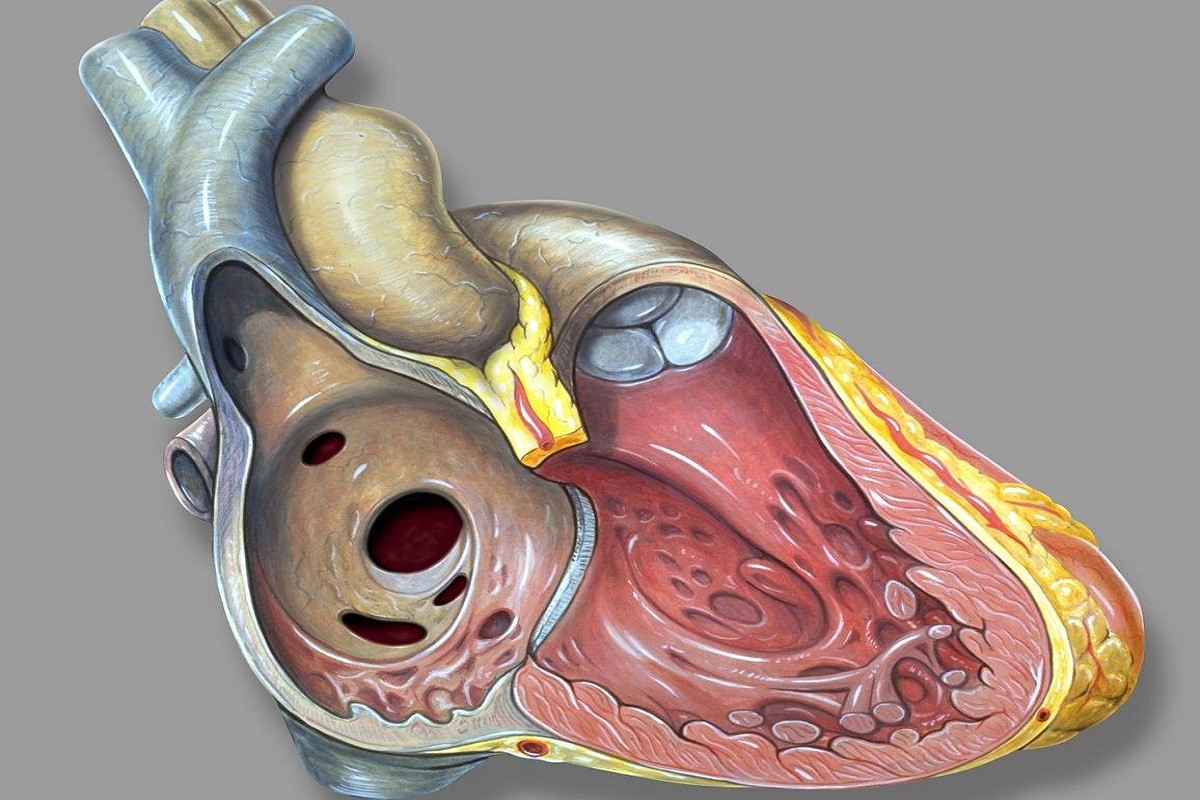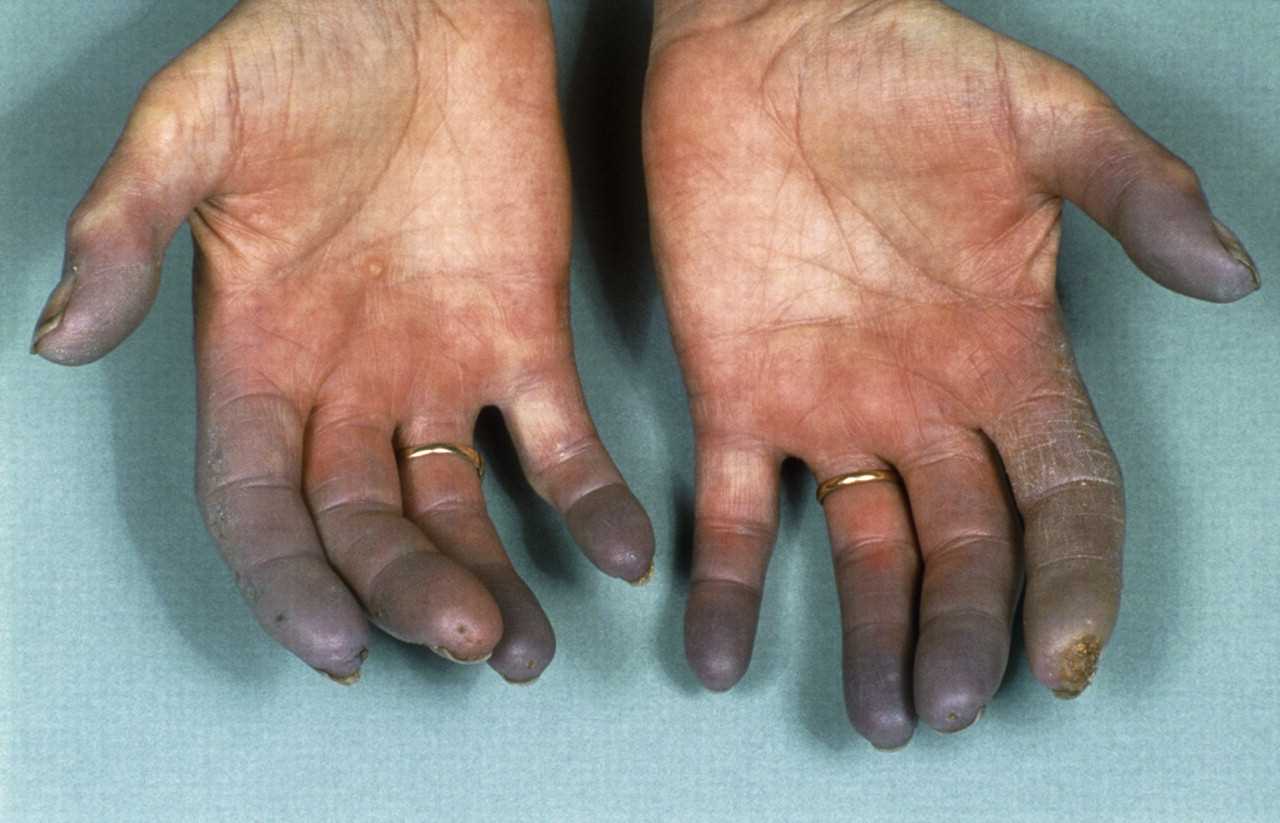
کبود شدن نوک انگشتان می تواند نشانه ی ابتلا به سیانوز محیطی باشد. Peripheral cyanosis is a problem in which due to insufficient blood reaching the affected organs, the affected areas become bluish in color. In addition to the fingers, the disease often affects the hands, feet, and/or toes. Peripheral cyanosis is only a serious problem in rare cases.
But if the blood flow to your hands and feet in these areas does not return to normal after heating and massaging, you may have an underlying disease. In these cases, you should seek help from a doctor. In this article, we have discussed the symptoms and causes of environmental cyanosis and how to diagnose and treat it.
The cause of blackening of the skin of the feet
One of the things that can cause the skin of the legs to turn black is venous insufficiency or, in simpler words, varicose veins. Varicose veins are actually black veins. They are dilated in which blood does not flow well. And if these veins are not treated, they will gradually cause the skin of the feet to turn black.
cause of sudden blackening of hands
The cause of the sudden blackening of the hands can be due to the narrowing of the blood vessels in your hands, of course, sometimes the hands turn black with extreme cold, which is temporary and will return to normal when the hands warm up. In any case, if the blackening of your hand is not due to the cold, be sure to see a doctor as soon as possible.
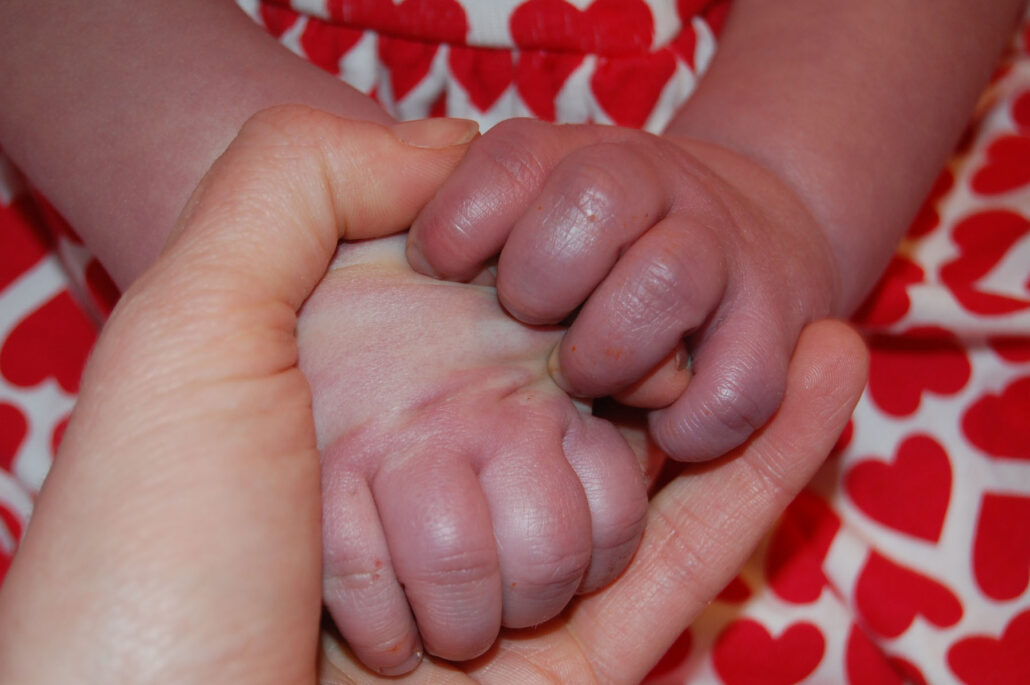
Symptoms of environmental cyanosis in adults and children
Adults and children with peripheral cyanosis usually experience the following symptoms:
- Bruising of some organs and coldness in these areas
- Bruising (close to green or blue) of fingertips, toes, palms, and feet
- Returning skin color to normal after heating that part of the body
What is environmental cyanosis?
Peripheral cyanosis is the medical term for black or blue hands, feet, and fingers. People of any age can suffer from this problem. Peripheral cyanosis is usually temporary and resolves with warming or massaging the affected area. If the skin bruise is not resolved after these measures, it may be a sign of a serious problem that you should seek to diagnose and treat. Specific symptoms such as: chest pain, dizziness, and shortness of breath (Difference cardiopulmonary dyspnea) indicates life-threatening peripheral cyanosis. Therefore, if you experience these symptoms, call the emergency room immediately and seek medical care. In some cases, central cyanosis (bruising of the body that can be life-threatening) may also cause peripheral cyanosis. For this reason, it is very important to know the emergency signs:
- chest pain
- Dizziness or fainting
- Sweating profusely
- Tab
- Headache
- Pain or numbness in the arms, hands, legs, fingers or toes
- Shortness of breath or other breathing problems
- Whiteness or pallor of the skin in the areas of the arms, hands, legs, fingers or toes (symptoms of blocked blood flow)
If you have the above symptoms, call the emergency room immediately.
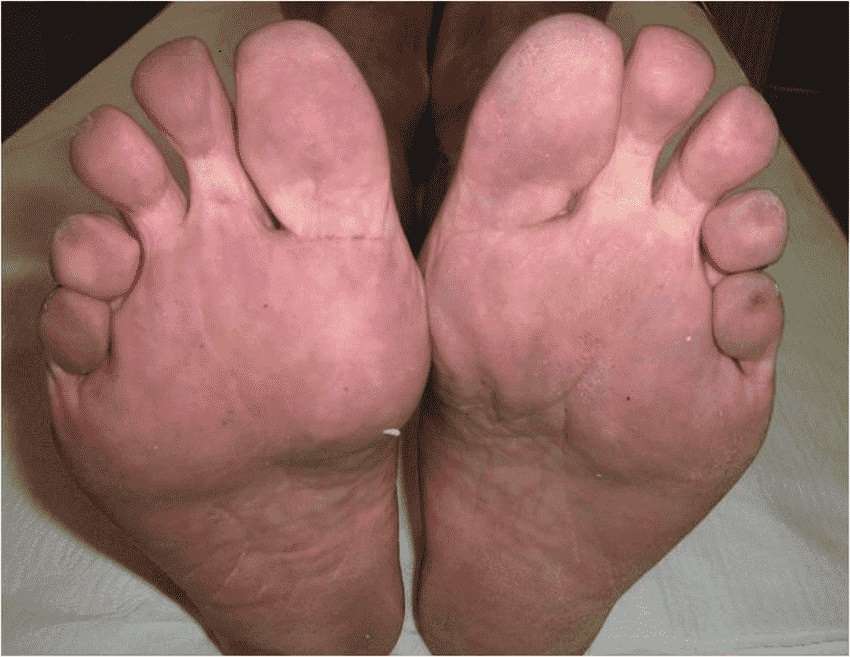
Causes of blackened hands and feet or peripheral cyanosis
Most of the time, this problem is caused by low blood oxygen level, medically called "hypoxia". Hypoxia occurs when not enough oxygen reaches the blood from the lungs.
Other common causes of peripheral cyanosis include:
- Arterial insufficiency: slowing or interruption of blood flow in the arteries
- Deep vein thrombosis (DVT): blood clot in a deep vein of the body
- Heart failure: reduced ability of the heart to pump enough blood throughout the body
- Hypovolemia: decrease in body blood volume
- Lymphedema: This problem causes a malfunction of the lymphatic system and causes swelling in the arms and legs, as well as fluid retention in the fingers or toes.
- Raynaud's phenomenon: In this condition, blood flow to the fingers, feet, ears, or nose is restricted in response to factors such as stress or cold.
- Severe drop in blood pressure: low blood pressure
- Septic shock: Infectious shock or septic shock is an acute medical problem in which a blood infection leads to a dangerous drop in blood pressure and disorder in cell metabolism.
- Venous insufficiency: when the valves of the veins do not work properly and cause blood to accumulate.
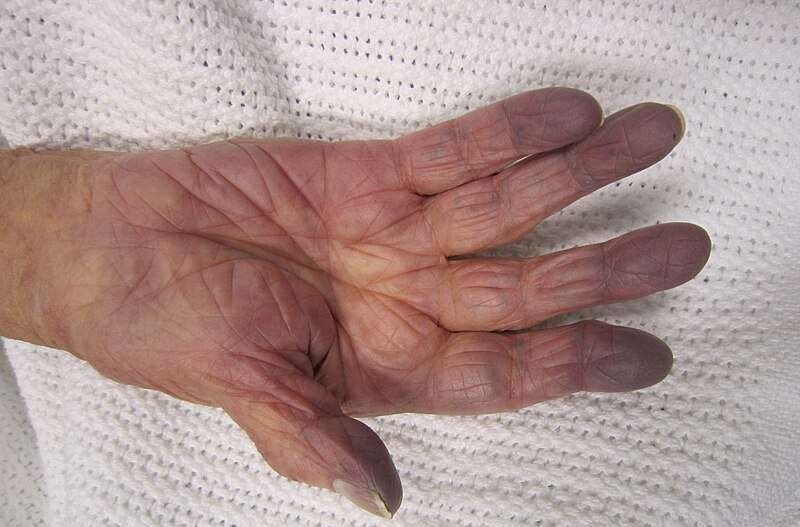
Comparison of peripheral cyanosis with central cyanosis
- Both peripheral cyanosis and central cyanosis occur as a result of hypoxia (low blood level).
- Peripheral cyanosis affects some organs (especially hands and feet); But in central cyanosis, the whole body (especially mucous membranes such as lips) are affected.
- The main cause of peripheral cyanosis is the low level of blood oxygen. The reasons for this can include a wide range of problems, such as severe low blood pressure or blood clots, or heart failure.
- Bruising the skin is usually not a serious condition. However, if this problem persists and does not improve after warming up or massaging, it is better to look for the cause!
- After performing a physical examination and listening to the heart and lungs, the doctor will look for the cause of this problem by prescribing a blood test. In some cases, a CT scan is prescribed to diagnose abnormalities in the heart and lungs.
- Pulse oximeter (a test to measure blood pressure) can be very useful to diagnose the cause of peripheral cyanosis. Unfortunately, this test is not able to determine oxygen metabolism or the amount of oxygen consumed by a person.
- Peripheral cyanosis can also be detected using an arterial blood gas test. In this test, the amount of acidity, carbon dioxide and oxygen in the blood is measured.
Treatment of environmental cyanosis
Treatment of peripheral cyanosis is done by diagnosing its cause. Timely and appropriate treatment will help to prevent any possible complications. Prescription drugs for peripheral cyanosis lead to improvement of blood flow by relaxing blood vessels. Among these drugs, we can mention antidepressants, blood pressure drugs, or even erectile dysfunction drugs. People with peripheral cyanosis should avoid drugs that restrict blood flow, such as beta-blockers, birth control pills, and drugs containing pseudoephedrine (cold and allergy medications). It is better to limit caffeine consumption and quit smoking.
Both of these cases are the main cause of constriction of blood vessels and decrease in blood flow. Cyanosis in infants usually resolves with treatment or management of the underlying disease causing it. If the cause of the cyanosis is unclear, the doctor will usually prescribe supplemental oxygen. 3.4% of babies with this disease need oxygen therapy.
Dr. Mohammad Hossein Najafi, cardiologist
Source: