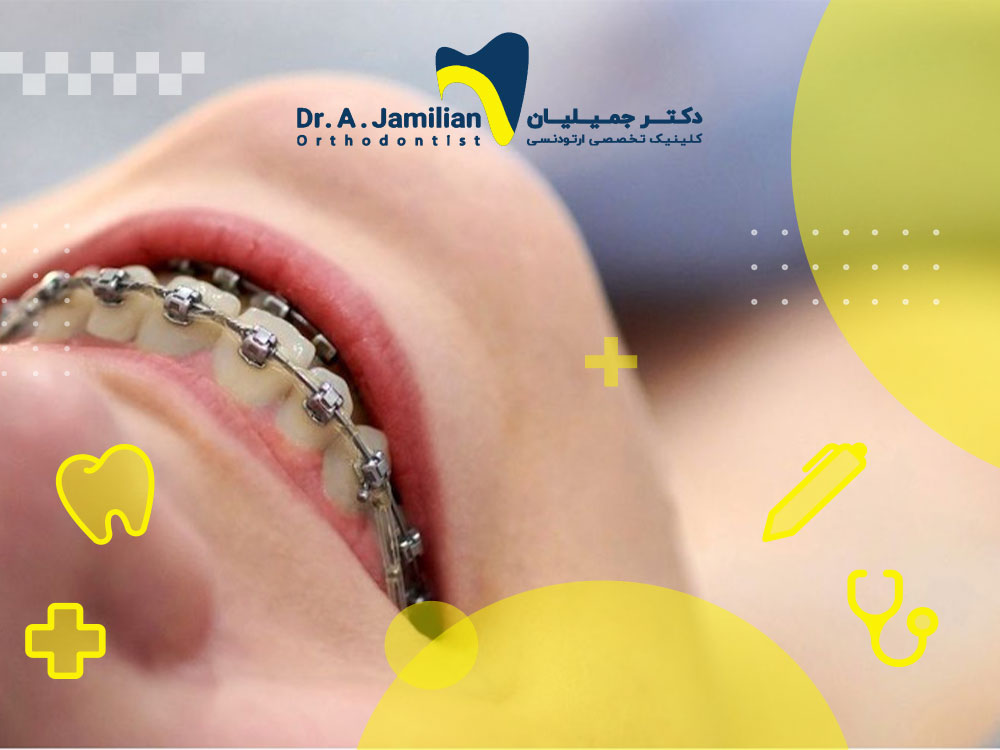

Dental orthodontics with a fixed plate is one of the most effective methods for correcting dental abnormalities. In the meantime, knowing the methods of cleaning and maintaining the fixed orthodontic plate helps to provide better and more effective feedback for permanent and better correction. Although orthodontic treatment with fixed brackets has many advantages, it requires more careful care and maintenance than other treatment methods to prevent problems such as tooth decay, gingivitis, and white spots.
In the following, we will discuss all the steps of cleaning fixed brackets and we will explain the important points of nutrition and care of orthodontic brackets.
Why is it important to clean fixed orthodontic plaque?
When fixed orthodontic plaque is installed on the teeth, more surface area is created for the accumulation of microbial plaque and food debris. If these areas are not cleaned well, the following risks will threaten the health of the patient's mouth and teeth. These include:
- tooth decay
- Gum analysis
- Bad breath
- White spots on tooth enamel
- Gum inflammation and bleeding
This is why proper maintenance and basic cleaning of fixed orthodontic brackets is as important as orthodontic treatment. be.
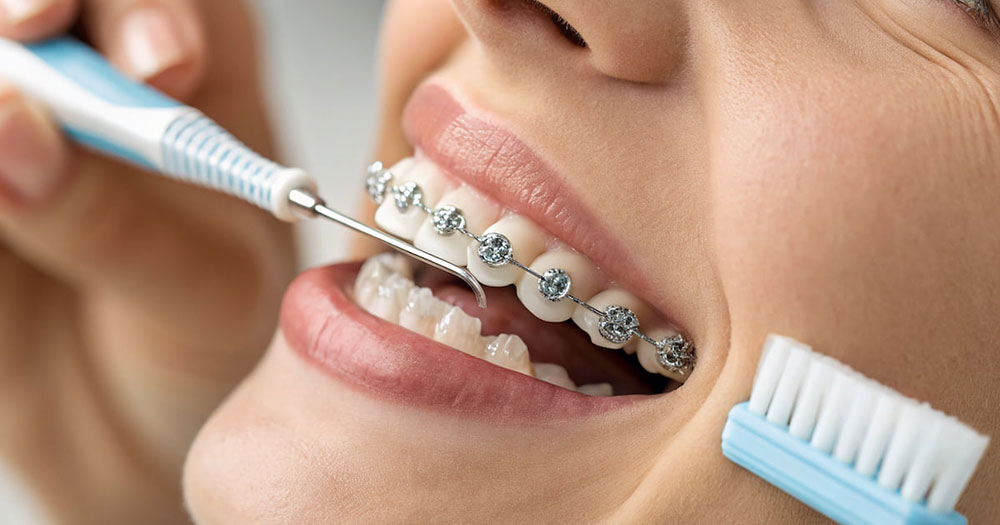
5 main routines for cleaning fixed orthodontic plaque
To make sure that your fixed orthodontic plate is completely cleaned, you need to do the following 5 methods regularly and daily. In this way, you have avoided the complications of fixed orthodontics and you will spend the duration of your orthodontic treatment successfully.
1. Correct brushing with brackets
One of the most important and basic measures to care for and clean fixed orthodontic plaque is correct brushing. In this method, the following should be considered:
- Choosing the right toothbrush: using a special orthodontic toothbrush or a toothbrush with a small and soft head
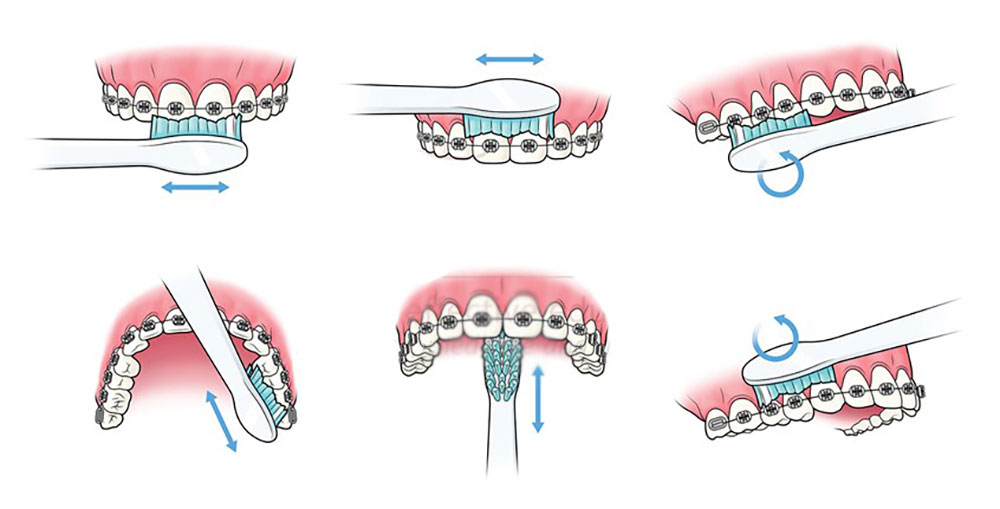
- How to brush your teeth: place the toothbrush at an angle of 45 degrees. First, the upper and lower surface of the brackets, then go to the inner parts and the chewing surface of the teeth. Also, clean the surface of the tongue, gums and palate with a special toothbrush.
- repetitive brushing after every food consumption
2. Use of dental floss for orthodontics
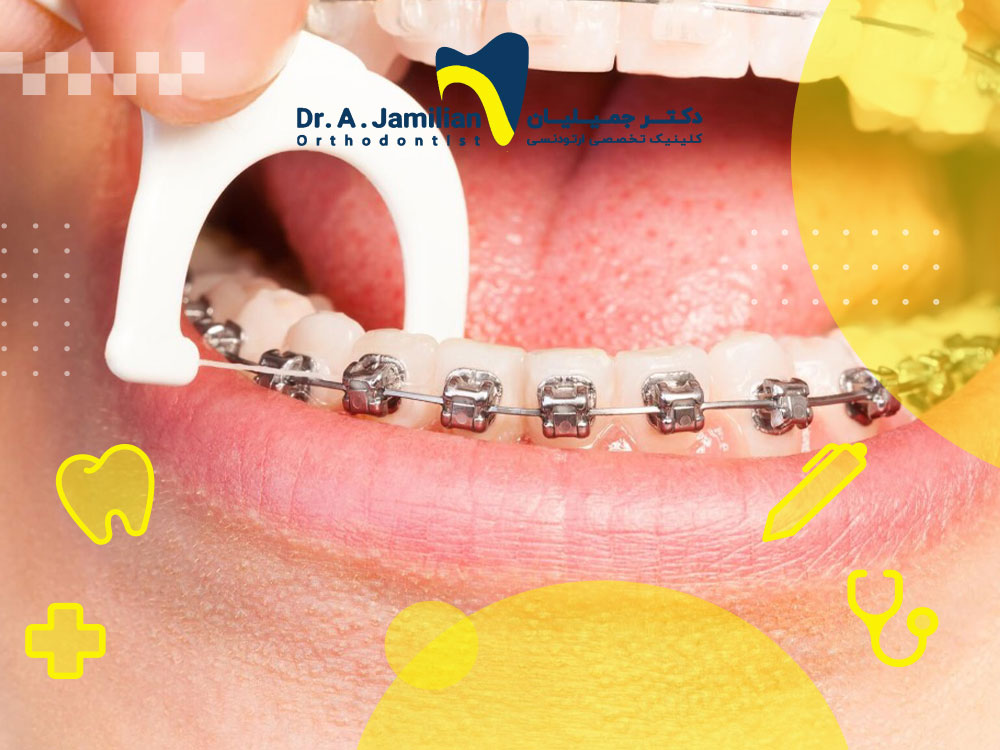
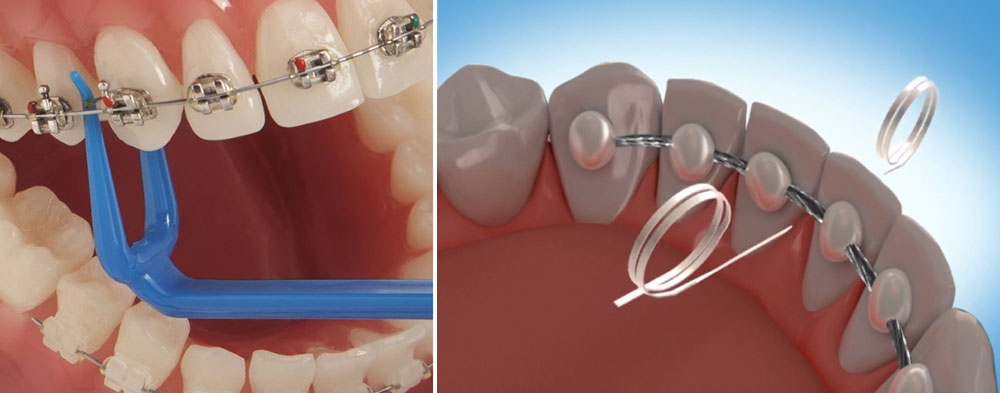
Flossing may be difficult for people with fixed orthodontic plaque. But with the right tools such as orthodontic floss or special flosser, this will be much easier. In this method, the thread is passed through the space between the wire and the tooth and the plaques are removed by moving up and down, without putting too much pressure on the wire.3. Using an interdental brush
Interdental brushes are practical tools for cleaning the spaces between brackets and wires. The advantages of these brushes include better access to the areas between the brackets and easier cleaning around the wires and clamps. Cleaning with an interdental brush moving downward from the top and then from the bottom to the top is recommended.
4. Antibacterial mouthwashes
Using mouthwashes containing chlorhexidine or other antibacterial substances can help reduce oral bacteria. In this way, very small points that are far from the reach of the toothbrush and dental floss are cleaned. It also stops the growth of bacteria in the oral cavity and the gap between the gums and teeth for a few hours. Using mouthwash containing fluoride also prevents the appearance of white spots around the orthodontic bracket. Please do not use mouthwashes containing chlorhexidine during orthodontic treatment without a dentist's prescription, because its long-term use causes the color of teeth and brackets to change.

Note: Chlorhexidine can change the color of teeth, fillings, and surfaces around brackets in the long term.
The side effects caused by long-term use of chlorhexidine are not limited to under the orthodontic wires, but can also occur in different areas of the mouth. For this reason, it is recommended not to use chlorhexidine mouthwash for a long time (more than 2 weeks) during orthodontic treatment and only in special circumstances (for example, after gum surgery or in case of severe gum inflammation) and with the prescription of an orthodontist.
5. Water flosser / oral irrigator
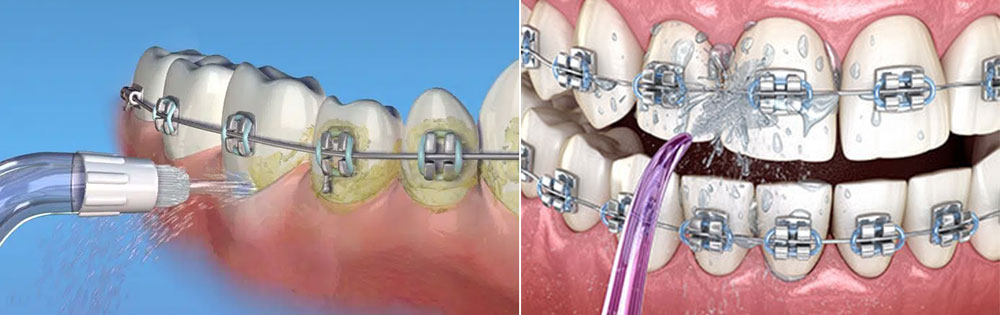
Waterpik device or water injection with water pressure helps to expel food particles from around the brackets. It is recommended to use this device as a complement to other methods. The advantage of using waterpik is that there is no chance of the thread getting stuck between the patient's teeth, like flossing. By adjusting the water pressure, the brackets are no longer likely to come off, and the gums are also cleaned well. Another advantage of using Waterpik or Waterflosser is reducing gum inflammation. Especially for patients who experience bleeding and inflammation of the gums when using dental floss.

To learn more about installation and functionality fixed orthodontics Click.
nutrition tips to maintain fixed orthodontics
Eating certain foods can damage the wires or brackets or make it more difficult to clean your braces. For this reason, to maintain and care for fixed orthodontics, pay attention to the following nutritional tips and what you want.
Avoid consuming these foods:
- Hard foods such as nuts, ice or bottom of the pot.
- sticky foods such as chewing gum, chocolate, shavings, and chewing gum.
- Sweet and acidic drinks such as carbonated soft drinks.
Instead, use soft food and fruits such as soup, puree, pasta, cake, banana and peach.
Regular-referral to an orthodontic specialist
Regular examinations by an orthodontist help to avoid possible problems such as Loosening of wires, broken brackets, gingivitis and discoloration of teeth can be identified and fixed quickly. It is recommended to visit your orthodontist once every 4 to 6 weeks. The exact time will be determined by your orthodontist after each examination. In addition, it may be necessary to perform a detailed scaling by a dentist every few months to prevent complications such as tooth decay. Also, if you encounter the following cases, be sure to visit the orthodontic clinic earlier than the appointed time.
- Feeling of loosening or detachment of the plaque or even a part of the plaque
- Breakage or bending of the plate wire, which irritates the tongue and gums and destroys the plate's effectiveness.
- Persistent pain or discomfort or unusual sensitivity around the tooth should be checked by a specialist.
- Severe mass accumulation around the plaques that cannot be removed by flossing.
Inventions that have changed the world of orthodontics
Professor Abdulreza Jamilian is a pioneer in presenting four international patents in the United States Patent Office (USPTO) and several other inventions New treatment methods. These inventions have been a big step in the development of orthodontic treatments and improving the quality of life of patients.
See Dr. Jamilian's inventions Tongue Plate
 Maxillary deficiency treatment using miniscrews
 R-Appliance
Conclusion
Maintaining oral and dental hygiene during the use of fixed orthodontic plates plays a very important role in the success of treatment and prevention of possible complications. However, even with perfect hygiene, take regular visits to the orthodontist seriously. Your treating orthodontist can diagnose possible problems such as loose wires,