
The Complete Guide to Obedience Schema From Submission to Treatment

Mohammad Pirizi
TehranCounselor and psychologist
The Complete Obedience Schema Guide From Submission to Therapy
The Complete Guide to Obedience Schema From Submission to TreatmentObedience Schema: Its Psychological Roots and Silent Consequences
In the early years of life, our minds begin to form patterns that later define the path of our understanding, decision-making, and reactions. These mental patterns, called schemas, are a direct result of encounters, experiences, and training that we often receive from our parents or primary caregivers.
Schemas are like lenses through which we see the world; They help us make sense of events and react to them. Jean Piaget, a famous psychologist, believed that without schemas, the human mind would not be able to create any image of the world.These mental structures are unique in each person and take different forms depending on the family, cultural and social conditions in which the person grew up. For this reason, your schemas may have nothing in common with the schemas of those around you.
In the meantime, one of the most frequent and controversial schemas is the "obedience schema". A mental pattern that causes a person to suppress his needs, desires and feelings in order to behave according to the wishes of others. This way of thinking can cause serious damage to relationships, self-confidence and mental health.
In this article from the Pirouz Psychology Clinic site, we will join you to take a deeper look at the obedience schema and examine its signs and effects. If you feel that you sometimes sacrifice yourself for the peace of others, the rest of this article will be very enlightening for you.


What is schema?
Schemas are actually unconscious mental maps that are formed in our minds from the first years of life. These maps are gradually built from our experiences with our parents, people around us, and our living environment, and in adulthood, they guide the way we think, feel, and behave.In simpler terms, the mind creates structures that act like filters and interpret incoming information to process events faster. These mental structures can be positive or negative and shape our understanding of ourselves, others and the world depending on the quality of our primary relationships.
What is the obedience schema?
Obedience schema is formed when a person suppresses his own desires, needs and feelings and submits to the wishes of others in order to avoid anger, punishment, rejection or criticism. These people usually grew up in a domineering, punitive or very controlling environment during their childhood.
In defining this schema, Young says that the schema of obedience is divided into two main parts:
1. Obedience to the control of others: submission to others for fear of different consequences; Like anger, rejection or punishment. 2. Obedience to the feelings and reactions of others: To avoid causing discomfort to others or disturbing the peace of relationships, the person ignores or denies his feelings. (Young, Jeffrey, Klosko, Janet and Wisher, Marcia, translated by: Hamid Poursharifi and others, schema therapy, Arjmand Publications)
Signs of people with obedience schema
1. Suppression of character's desires and feelings
A person ignores his own needs and prioritizes fulfilling the wishes of others instead.
2. Fear of displeasure of others
Afraid to disagree or say no, because he thinks it will cause anger, punishment or rejection.
3. Surrender in interpersonal relationships
He often plays the role of a submissive person in relationships; He falls short against the other party's wishes, even if he himself is unhappy.
4. A feeling of worthlessness or powerlessness
Because his needs are ignored, over time he feels insignificant and powerless.
5. Suppressed and explosive anger
Suppressed anger over time can lead to sudden outbursts, behavioral outbursts, or even internal hatred.
6. Feeling guilty when expressing disapproval
Even if his request is reasonable, he will still suffer from a pang of conscience when he disagrees with others.
7. Avoiding powerful people or stressful situations
To avoid conflict or feelings of helplessness, he usually distances himself from domineering people or challenging conversations.

Obedience Schema Reactions
When the obedience schema is activated in a person, his reaction to the situation is usually formed in one of the following three ways:
Pure Surrender: A person leaves the decision-making power to others and somehow puts his life in their hands. In this case, others determine what to do and the person obeys without question.
Avoidance: A person tries to escape from situations that may lead to opposition or tension. This avoidance is more to escape anxiety and discomfort than to solve the problem.
Overcompensation: In this case, the person's reaction is rebellious and rebellious. He reacts harshly and opposed to any request or order from those around him or superiors, even if the request is reasonable.
People trapped in this schema often do things they don't really want to do to please others. Sometimes they spend their time making people around them happy, but instead they stay away from their personal tasks and may even not answer calls, become disorganized or leave work unfinished.
The result of this situation is the loss of the inner sense of power, lowering of self-confidence and the feeling of being away from the real self. Over time, this internal repression may manifest itself in the form of pent-up anger, unhealthy relationships, or explosive reactions.
The root of the formation of obedience schema
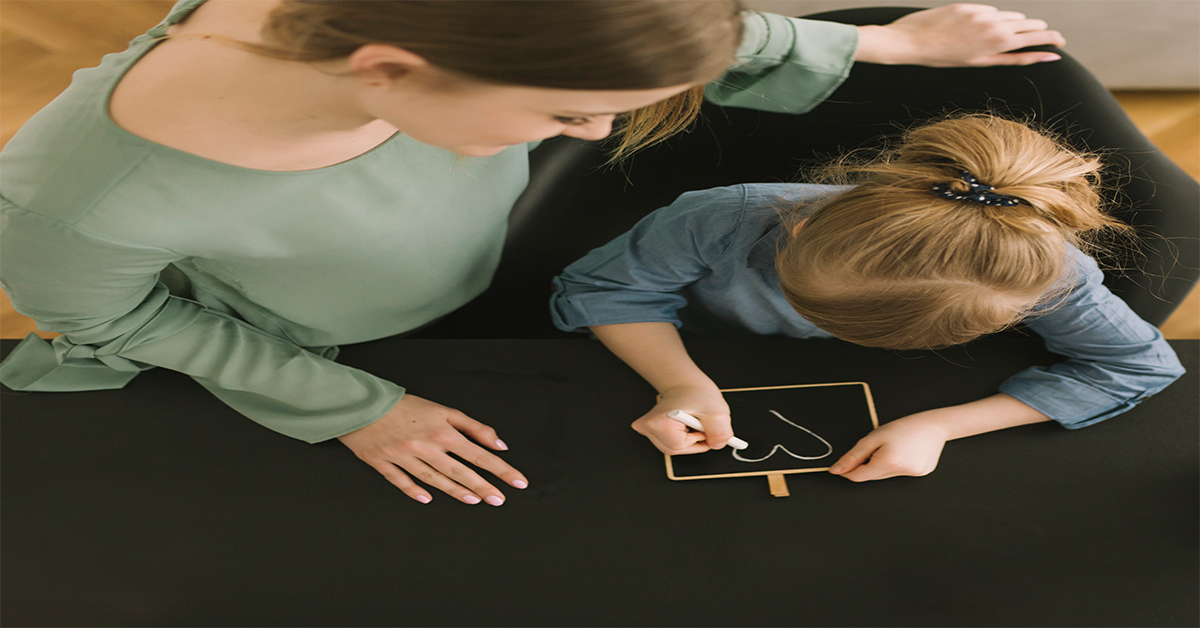
One of the important reasons why some of us always try to fulfill the wishes of others is rooted in our childhood; Where our personality and style of looking at ourselves and the world was formed. Parents' behavior and the emotional atmosphere of the family play a key role in the formation of this mental pattern. In the following, we review some common situations that cause the growth of the obedience schema:
A child who acts older than his age
In some families, the child takes on the role of the father or mother unwillingly. He may take care of siblings or bear the problems of parents. In such a situation, the child learns that his own needs are not important and should always be selfless.
A space full of contempt and condemnation
If a child is constantly scolded, ridiculed or compared, he will eventually believe that in order to be loved, he must be quiet, polite and completely conform to the demands of those around him.
Ignoring the child's feelings
When parents don't pay attention to their child's feelings and wishes, this hidden message is conveyed that "your feelings don't matter" or "you will only be accepted when you are good and obedient."
Fear of strong reactions
Growing up in an environment with threats, yelling or punishment makes the child censor himself to keep himself safe. The result? Becoming an adult who always holds back so that others don't get upset.

Obedience schema therapy
The obedience schema, like many other false mental beliefs, is capable of change and improvement. To get rid of this pattern, there are different methods that can pave the way for treatment:
1. schema therapy
In this treatment method, with the help of a psychotherapist, you address the roots of the formation of the obedience schema in childhood. The goal is to recognize past experiences and learn healthier and more effective ways to cope with your emotions and behaviors.
2. Cognitive-behavioral therapy
This technique helps you identify the negative and self-limiting beliefs that reinforce the obedience schema and replace them with more rational and positive views.
3. Teaching assertiveness skills
Learning ways to express desires, saying no without feeling guilty and establishing healthy boundaries in relationships plays an important role in treating this schema. These skills will help you communicate more confidently and without fear.
4. Writing and self-reflection
Taking time to write down memories and review past experiences can help you explore deeper feelings and get to know yourself better. This will provide a framework to understand in which situations the obedience schema is most activated and how you can react better.
5. Participation in support groups
Being with people who are on the same path reduces the feeling of loneliness and increases the motivation to change. Sharing experiences and receiving mutual support is a strong driving force for progress.
Remember, healing takes time and each person has different needs. The most important thing is to stick to the treatment process and get the right support that can lead you to a life with healthier and more fulfilling relationships.

Pirizi Clinic, with an experienced team of expert psychotherapists and the use of modern treatment methods such as schema therapy and cognitive-behavioral therapy, is ready to help you identify and treat the schema of obedience.
In this center, by providing individual and group counseling, we strengthen assertiveness and self-knowledge skills so that you can achieve inner peace, build healthier relationships, and manage your life with more strength and confidence. The victory clinic is with you on the path of growth and improvement.
Make an appointment:
To receive individual advice from the specialists and consultants of Pirouzih Clinic, just call the following numbers:Yeproozi contact number:
 02177431649
Qaitariya contact number: 02126456903
02177431649
Qaitariya contact number: 02126456903
Working hours
days of the week 8:00 – 17:00 Thursday with coordination Friday Holidayhref="tel:+982177431649">021-77431649
Latest content
Behzadi2025-10-16T21:31:24+00:00 October 16th, 2025|no View
Why do some people avoid intimacy? Getting to know the avoidant attachment style is one of the behavior patterns that is rooted in the early life, the avoidant attachment style. The way people to establish [...]

The effect of forgiving betrayal on mental health and emotional relationships
amini2025-08-25T16:04:14+00:00 August 21st, 2025|No view
Can betrayal be forgiven? A psychological look at forgiveness of betrayal. Facing betrayal in an emotional relationship can be one of the heaviest and most complex experiences in life. When trust [...]
Daily visit: 3Register an appointment
You can set up a consultation session through this button...
make appointment amini2025-08-11T15:27:33+00:00Clinic Address
Tehran Province, Tehran, Piroozi St, MFVR+298, IranBranch 1:
Pirooz Branch
No. 1278, No. 1278, 3rd floor - Unit 7, at the beginning of Abuzar Blvd., Pirizi St., Tehran
Contact us
Saturday to Wednesday: 9 am to 9 pm
Yeproozi contact number:
02177431649
Qaitariya contact number: 02126456903
Andrezgo Blvd., between Kaveh Blvd. and Qaitarieh Blvd., in front of the Proud Mosque, No. 134, 2nd floor, unit 3

Pirouzi Clinic is always by your side to achieve your growth and mental health...
About Us
Piirozi Clinic is a center dedicated to personal growth and personal development and skilled psychologists here They play a very important role. This field is dedicated to training people to achieve goals and win in life. Using modern psychological techniques and their experiences, our psychologists provide solutions for the mental and social problems of the clients.





