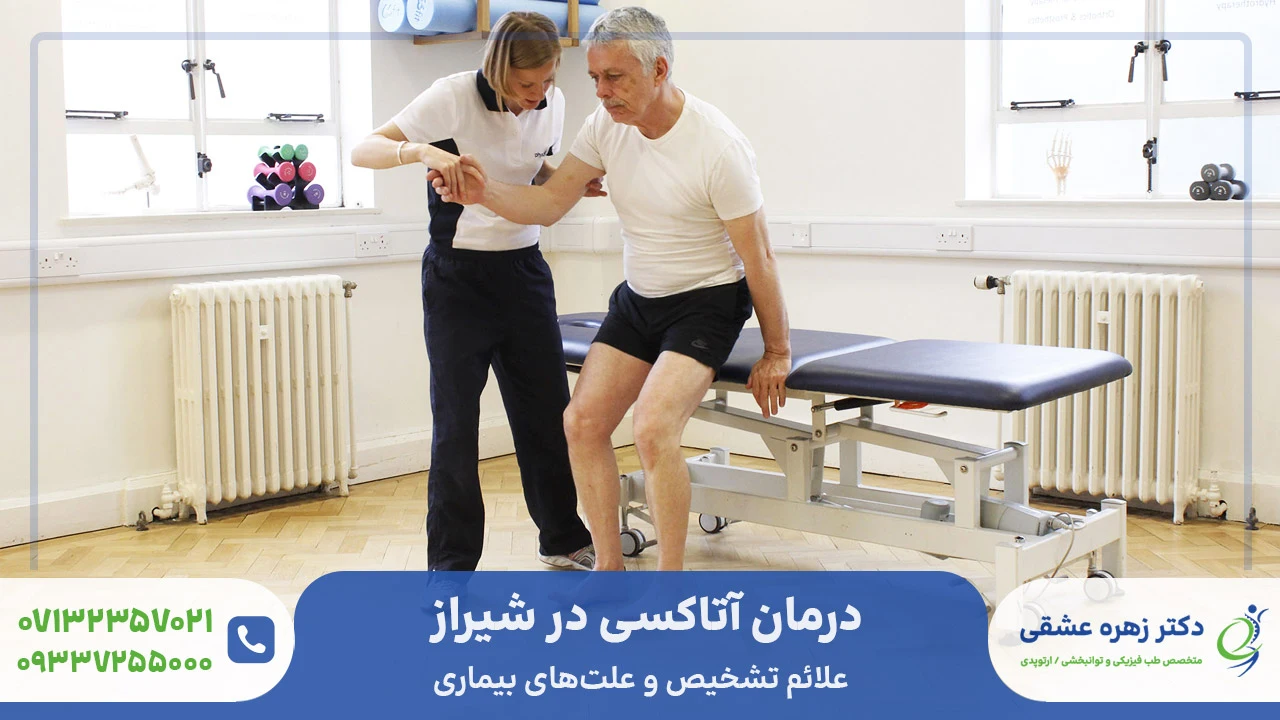

آتاکسی (Ataxia) یک اختلال عصبی است که باعث عدم هماهنگی در حرکات بدن میشود. این امر میتواند سبب تاثیرگذاری روی راه رفتن، تعادل و هماهنگی دست، گفتار، بلعیدن و حرکات چشم شود. آتاکسی میتواند به صورت موقت یا دائمی ظاهر شود و شدت و روشهای درمان در شیراز بسته به علت زمینهای متفاوت است.
بیماری آتاکسی هم برای فرد و هم برای خانواده او چالشهای زیادی ایجاد میکند. خوشبختانه در شیراز، به دلیل وجود مراکز تخصصی مغز و اعصاب و توانبخشی پیشرفته، امکان تشخیص و درمان این بیماری با روشهای نوین فراهم است.
آتاکسی معمولاً در نتیجه آسیب به بخشی از مغز به نام مخچه یا اتصالات آن به وجود میآید. مخچه وظیفه هماهنگی عضلات را بر عهده دارد. Many diseases can cause ataxia, such as genetic problems, stroke, tumors, MS, stroke, degenerative diseases and alcohol abuse.
Ataxia disease symptoms
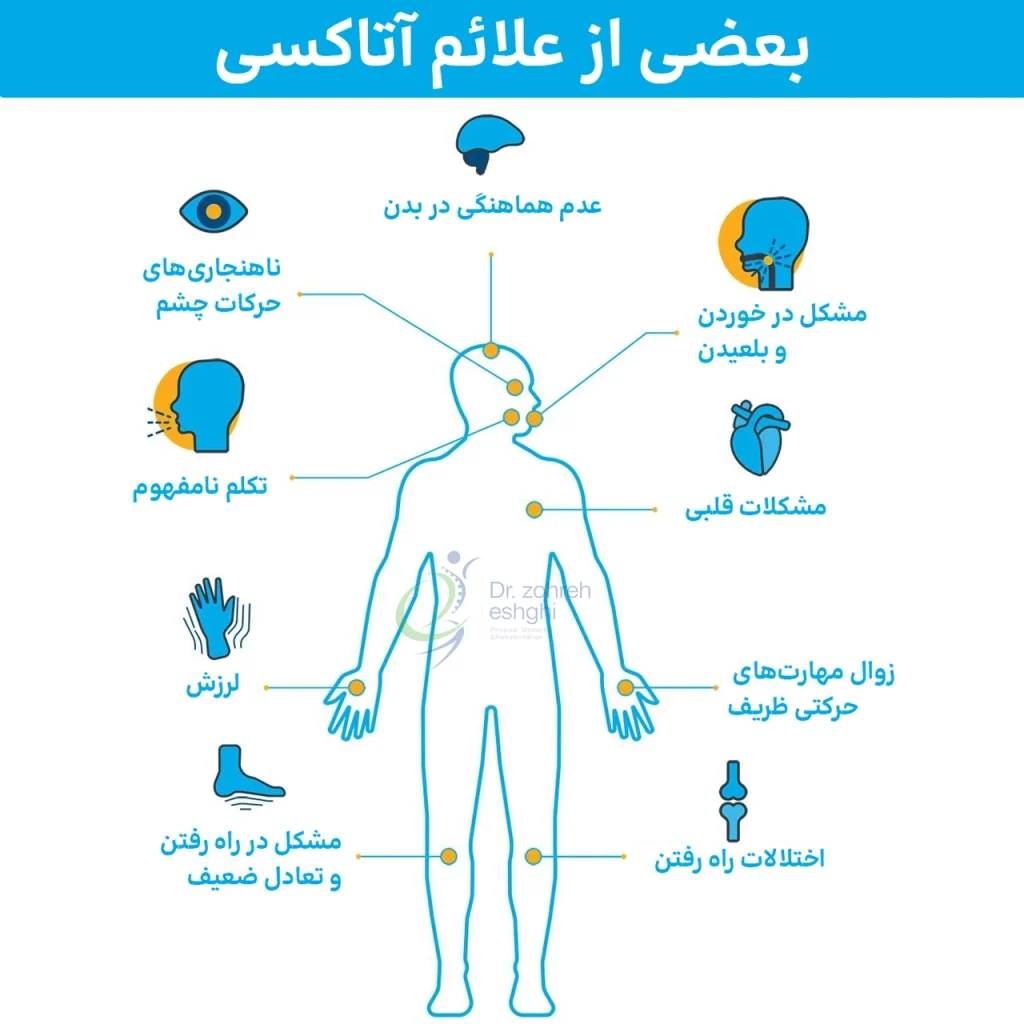
Ataxia symptoms vary depending on the cause. If the cause is an underlying disease or diseases such as stroke, tumor, alcoholism or nerve damage, the following symptoms are observed:
- Poor coordination
- Balance problems and walking disorder
- Inability to coordinate hands, arms and legs
- Slurred speech
- Difficulty writing and eating
- Slow movements Eyes
Symptoms of the genetic form of ataxia or diffuse ataxia are likely to include:
- Poor coordination and balance
- Slurred speech (dysarthria)
- Small, red spider veins on the skin and eyes
- Lung infection
- Delayed physical and sexual development
- Difficulty swallowing food or water (dysphagia)
- Tremors and involuntary movements
- Heart problems
- Difficulty walking
Other symptoms of ataxia include:
- Muscle weakness and early fatigue
- Difficulty with fine movements: such as writing or buttoning clothes
- Abnormal eye movements (Nystagmus)
- Decreased body coordination in daily activities
Causes of ataxia
Genetic or hereditary ataxia
Some types of ataxia are inherited, such as Friedrich's ataxia. or spinocerebellar ataxia.
This type of ataxia occurs when parents (one or both) pass the genetic defect on to their child. In some cases, the severity of the disease can worsen from generation to generation, and the age of onset can decrease.
If a person with the hereditary form of ataxia is trying to have children, a doctor recommends genetic testing and counseling. The chance of inheriting the defective gene depends in part on the type of ataxia. In the case of Friedreich's ataxia, both parents must have genetic characteristics to pass it on.
In the case of spinal ataxia, only one parent needs to have the defective gene, and each of their children has a 50% chance of developing the disease.
Sometimes a person is born with ataxia for no particular reason, even if there is no history of the disease in the family. One of the reasons for this is probably malformation of the cerebellum before birth.
Non-genetic (acquired) ataxia
The following events and diseases can lead to ataxia:
- Brain surgery, brain tumor or injury Head
- Excessive use of alcohol or drugs
- Some infections such as chicken pox
- Poisoning and exposure to toxic chemicals, chemotherapy or heavy metals
- Some neurological diseases such as MS, cerebral palsy and stroke
- Some tumors due to paraneoplastic syndromes that cause ataxia. These tumors produce chemicals that will disrupt the function of the cerebellum, and ataxia is its main symptom. Vitamin deficiency (especially vitamin E and B12). class="wp-block-image">

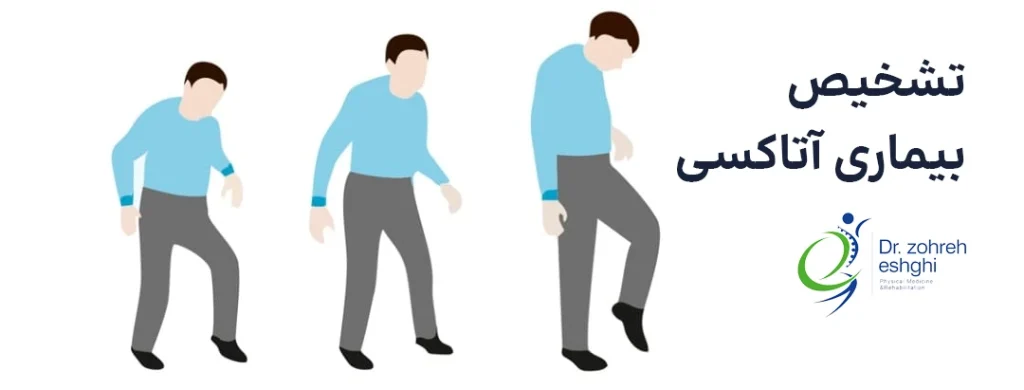
Diagnosis of ataxia in Shiraz requires careful examination by an expert. Doctors in Shiraz can determine the exact cause of the disease by using advanced equipment. The diagnostic methods are:
- Clinical and neurological examination: the doctor can diagnose the type of disorder by examining the movements of the hands, feet, walking, eye movements and speech of the patient.
- Brain imaging: MRI of the brain to examine the structure of the cerebellum and find lesions caused by tumors, strokes or MS. CT scan: to check brain damage or bleeding more quickly. Blood test: to check vitamin deficiency (such as vitamin E or B12) and to detect infections or metabolic diseases. Genetic test: in cases where the doctor suspects hereditary ataxia. href="https://doctoreshghi.com/%D8%AA%D8%B3%D8%AA-%D9%86%D9%88%D8%A7%D8%B1-%D8%B9%D8%B5%D8%A8-%D9%88-%D8%B9%D8%B6%D9%84%D9%87/">Nerve and muscle tape test (EMG) and Nerve conduction examination: to check the function of peripheral nerves and muscles. Cerebrospinal fluid (CSF) test: if infection or autoimmune diseases are suspected. Sometimes it is possible to treat the root cause of this disease so that it improves and does not worsen, but in most cases this is not possible.
👈 The treatment plan is usually provided by a group of specialists and a multidisciplinary team will include a physical medicine and rehabilitation specialist, a neurologist and a physiotherapist.
The performance and care plan of the patient will play an important role in the management of the disease. The syntax will be fulfilled.
Treatment of ataxia symptoms in Shiraz includes speech therapy. Unintelligible speech (dysarthria) and swallowing problems (dysphagia) are common symptoms of ataxia.
The therapist can help the patient on how to make the voice clearer. For example, the doctor may suggest:
- Changing the position of the body to improve the quality of voice
- Doing exercises to strengthen the muscles needed while speaking
- Speak slowly and emphasize each word using breathing techniques to improve speech
If the speech worsens, possibly use assistive devices such as a laptop connected to the sound. To treat dysphagia, the therapist can teach exercises to stimulate the nerves responsible for stimulating the swallowing reflex. The swallowing muscles will also be strengthened.
Drug treatment

If ataxia is caused by vitamin deficiency, taking supplements can help. In cases of autoimmune or inflammatory diseases, corticosteroids or immunosuppressive drugs are prescribed.
In ataxias caused by infections, antiviral or antibiotic treatment is necessary. Medicines are prescribed to control symptoms such as tremors and muscle spasms.
Occupational Therapy
The goal of occupational therapy is to learn how to adapt to the gradual loss of mobility and learn new skills to use in daily activities.
The therapist may be able to teach how to use a wheelchair and mobility devices. It will also help to make changes at home, such as guide rails or stair lifts.
Treatment of muscle problems
If you have muscle spasms, cramps, and stiffness, muscle relaxants such as baclofen or tizanidine may be used to control the symptoms.
If these drugs do not work, botox will be injected. In this case, by blocking brain signals, the injured muscles will be helped. The effects of the injection usually last up to 3 months.
Treatment of bladder problems
Bladder problems such as urinary urgency or urinary incontinence sometimes affect a person with ataxia.
In some cases, bladder problems can be treated using care techniques such as limiting fluid intake during Day, planning to visit the toilet regularly, avoiding drinks that stimulate urine production such as caffeine and alcohol will be controlled.
Some people may need a type of medicine called antimuscarinic, which helps to relax the bladder and reduce the urge to urinate.
Botox injection will also help the bladder. Others may have difficulty emptying their bladder completely when going to the toilet, which will result in a small amount of urine leakage. In such cases, a catheter tube may be used to be inserted into the bladder to help drain urine.
Nerve pain treatment
Injury to nerve endings can lead to nerve pain, the medical term for which is neuropathic pain. Often this pain is experienced with burning, pain or sometimes tingling in certain parts of the body.
Traditional pain relievers such as paracetamol or ibuprofen are usually not effective in treating nerve pain. Therefore, other drugs such as amitriptyline, gabapentin or pregabalin will be prescribed.
 Musculoskeletal pain treatment in Shiraz
Physiotherapy, physical medicine and rehabilitation of ataxia
One of the most important and effective methods of controlling and treating ataxia in Shiraz is to refer to a physical medicine and rehabilitation and physiotherapy specialist.
Rehabilitation helps a person to use his arms and legs and prevent muscle weakness in one position (contractions).
eye problems treatment
In some cases of ataxia, eye problems are common. Oscillopsia is an eye problem that is caused by the involuntary movement of the eyes from one side to the other or up and down.
This can cause visual impairment and make tasks such as reading difficult. Sometimes, it can be treated with drugs such as gabapentin to control the eye muscles.
Some people with ataxia will have double vision, that is, they see two images of the same object. Treatment is possible by attaching a wedge-shaped piece of glass or plastic called a prism to the glasses.
Erectile dysfunction treatment
Due to deep nerve damage, some men with ataxia will face erectile dysfunction. This problem is often treated with the use of a group of drugs that inhibit phosphodiesterase-5, such as sildenafil. In this case, the blood flow in the penis improves.
help to treat and control fatigue
Many people with neurological diseases such as ataxia feel tired and lethargic. This is likely due to disturbed sleep and physical efforts to cope with the loss of coordination.
Rehabilitation specialists may be able to help the individual increase their endurance levels. Also, the occupational therapist provides guidance to the patient on how to adapt daily activities to better deal with fatigue.
Read more: Treatment of nerve pain in Shiraz
Cardiomyopathy
Cardiomyopathy (damage to the heart muscle) is a common problem in some types of ataxia is This is a serious problem because it puts pressure on the heart and affects the normal flow of blood in the heart. It will also lead to irregular heartbeat. If you have cardiomyopathy, ask for help from a cardiologist in Shiraz.
Dealing with depression caused by ataxia
An important part of the process of controlling and treating ataxia in Shiraz is dealing with the depression of this disease. Living with a long-term condition like ataxia can be stressful and often causes feelings of extreme anxiety. This will be the beginning of depression.
Symptoms of depression include feeling hopeless and not enjoying the things you used to enjoy. If you think you are depressed, see a psychiatrist for advice. Various treatments may be prescribed for depression, such as antidepressants, cognitive behavioral therapies
underlying cause treatment
In a few cases of ataxia, it may be possible to improve the condition or prevent it from worsening by treating the underlying cause. For example, ataxia is usually associated with vitamin E deficiency, so it is better to take supplements containing this vitamin.
Episodic ataxia can be controlled with a drug called acetazolamide and by avoiding stimuli such as stress, alcohol, and caffeine. Sometimes acquired ataxia is treatable depending on the cause, for example, if it is due to an infection, antibiotics or antiviral drugs help. If acquired ataxia is caused by serious brain injuries such as injuries from a stroke or severe head injury, it may not be possible to improve the condition. In this case, the mentioned treatment can be used to control the symptoms.
Answers to frequently asked questions
 What are the first symptoms of ataxia?
The first symptoms usually include walking imbalance, hand tremors, slurred speech and abnormal movements. The eyes are In mild cases, the patient may only feel that he wobbles a little while walking.
Does ataxia have a definitive cure?Currently, hereditary ataxias do not have a definitive cure, but they can be treated with physical therapy, occupational therapy and Speech therapy improved the patient's quality of life. In acquired ataxias, the probability of treatment is higher.
Does ataxia cause permanent disability?In the hereditary type, it is usually progressive, but in some acquired cases, partial recovery is possible with treatment and rehabilitation.
Is ataxia preventable?The inherited type cannot be prevented, but in the acquired type, the risk can be reduced by healthy eating, avoiding alcohol and disease control.
Can ataxia patients live a normal life?Yes, many patients can live a relatively normal life using rehabilitation, speech therapy, occupational therapy and assistive devices. Family support and psychological care also play an important role in the quality of life of these patients.
Final speech and summary
Ataxia, which is associated with loss of coordination, is usually seen in MS, stroke, alcohol use disorder, etc. It is also the name given to a group of diseases that destroy the central nervous system.
People with ataxia may show loss of balance, slurred speech, staggering, and unusual eye movements. The doctor will diagnose this problem and refer to a neurologist for further investigations. When the underlying disease is identified, its treatment will resolve the ataxia.
To diagnose, control and receive ataxia treatment methods in Shiraz, you can contact Dr. Zohra Eshghi's clinic to receive an in-person appointment.