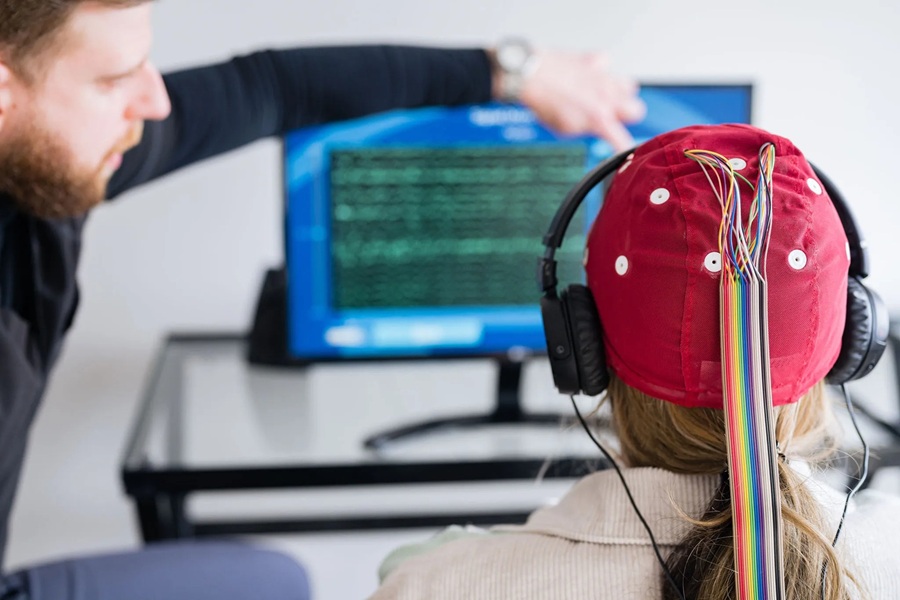
Neurofeedback device A window to the brain and improving its performance

Dr. Melika Akbari Mehr
تهرانNeurologist and neurologist
The ability of the brain to regulate and optimize its functions is one of the main foundations of mental and physical health. For this reason, the new technologies of neuroscience have provided precise tools to strengthen this innate ability. Meanwhile, Neurofeedback Device, as an advanced and non-invasive approach, teaches the brain how to modify its activity patterns. Using the neurofeedback device creates a unique opportunity to achieve greater concentration, deeper relaxation and higher mental performance, and provides an effective solution to face neurological and psychological challenges.
How does the neurofeedback device work?
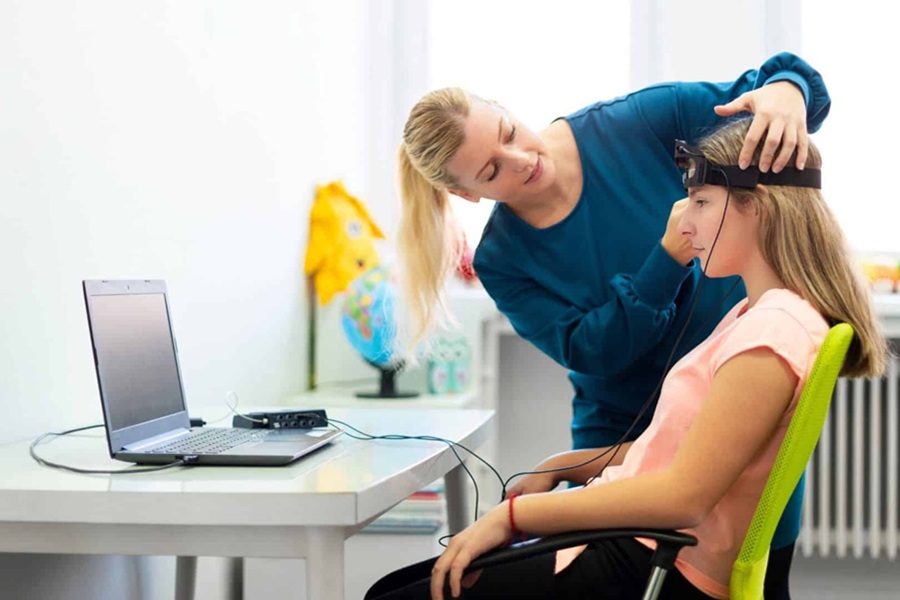
The basis of this technology is based on operant conditioning and providing instant feedback to the brain. In fact, the neurofeedback device records the electrical activity of the brain and shows the person how to direct their brain waves to the desired pattern. This learning process allows the brain to learn and consolidate healthier patterns over time. In the following, we will describe the main steps of this process.
Registration of brain waves with sensitive electrodes
The first step in the treatment process is the accurate recording of brain waves. For this, the specialist places very sensitive electrodes or sensors on specific points of the scalp. This process is completely non-invasive, painless and similar to taking an EEG. The electrodes only receive the subtle electrical signals produced by the neurons in the brain and do not deliver any electrical current to the brain. Then these signals are sent to a computer equipped with specialized software for analysis.
Analysis of brain patterns in the moment
After receiving the signals, the advanced software of the neurofeedback device analyzes them in real time. This software measures the frequency and amplitude of different brain waves and compares them with the optimal patterns defined in advance by the expert. This analysis helps identify undesirable patterns such as waves that are too fast (related to anxiety) or waves that are too slow (related to distraction).
The software evaluates the following:
- The level of waves associated with relaxation (alpha waves)
- The amount of waves related to concentration and attention (beta waves)
- Irregular patterns associated with anxiety or distraction
Providing visual and auditory feedback
The most important part of treatment is providing feedback to the brain. This feedback is usually presented to the individual in the form of a video game, a movie or music. For example, when a person's brain waves approach the desired pattern, a game character will move faster, a movie screen will be displayed more clearly, or pleasant music will play. This momentary reward encourages the brain to repeat that desired state more and gradually learn how to regulate itself without the need for external feedback.
Therapeutic applications of the neurofeedback device
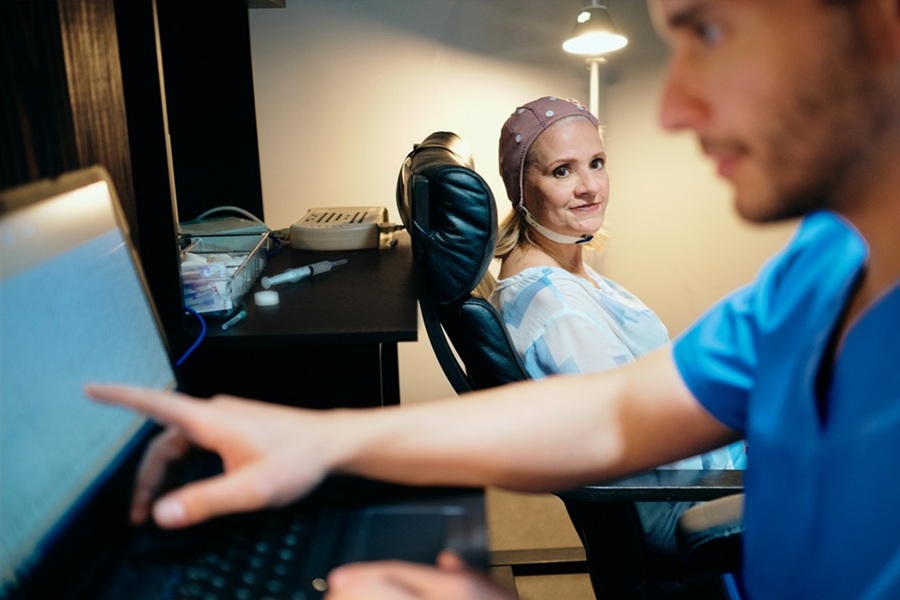
The effectiveness of the neurofeedback device in improving a wide range of neurological and psychological conditions has been confirmed through numerous scientific studies. This method is not only used for the treatment of specific disorders, but also as a tool for improving the performance of healthy people (Peak Performance Training). This therapeutic approach helps the brain to increase its neuroplasticity. In the following, we will examine some of the most important therapeutic uses of this device.
Improving concentration and treating hyperactivity (ADHD)
One of the most well-known uses of the neurofeedback device is to help people with attention deficit hyperactivity disorder (ADHD). In the brain of these people, the activity of slow waves (theta) is usually excessive and the activity of faster waves (beta) which are necessary for concentration is less than normal. Therapy sessions teach the brain to reduce theta wave production and increase beta wave production. This process leads to lasting improvement in concentration, reduction of distraction and control of impulsive behaviors.
anxiety reduction and stress management
Anxiety and chronic stress are associated with specific patterns of brain activity, particularly hyperactivity in fast beta waves. Neurofeedback teaches the brain how to get out of this tense state and into a deeper state of relaxation characterized by alpha waves. This method is a drug-free solution to manage stress and reduce anxiety symptoms.This method is especially effective in the following cases:
- Generalized anxiety disorder (GAD)
- Post-traumatic stress disorder (PTSD)
- Panic attacks
Improving cognitive and mental performance
Beyond the therapeutic applications, many healthy people also use this technology to reach the peak of their mental performance. Professional athletes can use neurofeedback sessions to increase concentration in critical moments of competition, managers to strengthen decision-making ability under pressure, and artists to increase creativity. By optimizing brain patterns, this method helps to strengthen working memory, increase the speed of information processing and improve cognitive flexibility. The effectiveness of the neurofeedback device in this field has made it a popular tool.
A specialized step towards brain health with Neurali Clinic
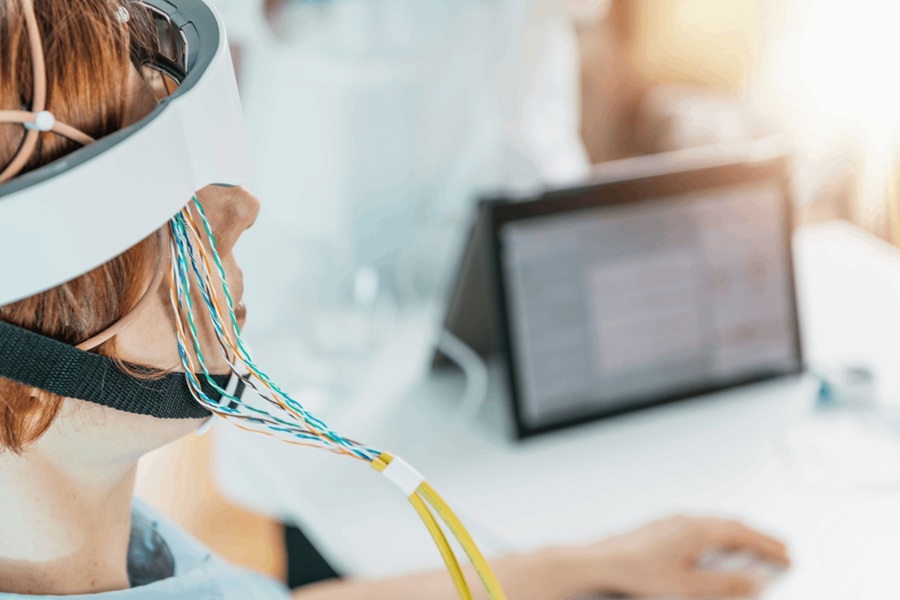
The neurofeedback device is a scientific and efficient tool to retrain the brain and make lasting changes in its function. By providing an accurate mirror of the inner activities of the brain, this technology helps people gain more control over their mental and emotional states and improve their quality of life. Of course, to achieve the best results, the implementation of treatment sessions should be done under the supervision of experienced professionals and in a specialized center. Using the latest equipment and a team of neuroscientists, Noorali neurology clinic is ready to provide diagnostic and therapeutic services, including neurofeedback, to accompany you on the path to complete brain health.
Frequently asked questions
How long do neurofeedback therapy sessions last?
Each treatment session usually takes between 30 and 45 minutes. The total number of sessions required depends on the individual's condition and the specialist's diagnosis, but it usually varies between 20 and 40 sessions.
What is the difference between neurofeedback and biofeedback?
Biofeedback is a more general concept that includes providing feedback from various body functions (such as heart rate or breathing). Neurofeedback is a type of specialized biofeedback that focuses exclusively on brain waves.
Is it painful to use the neurofeedback device?
No, this method is completely non-invasive and painless. The electrodes only record brain signals and do not stimulate the brain, and the person only watches movies or plays games.





