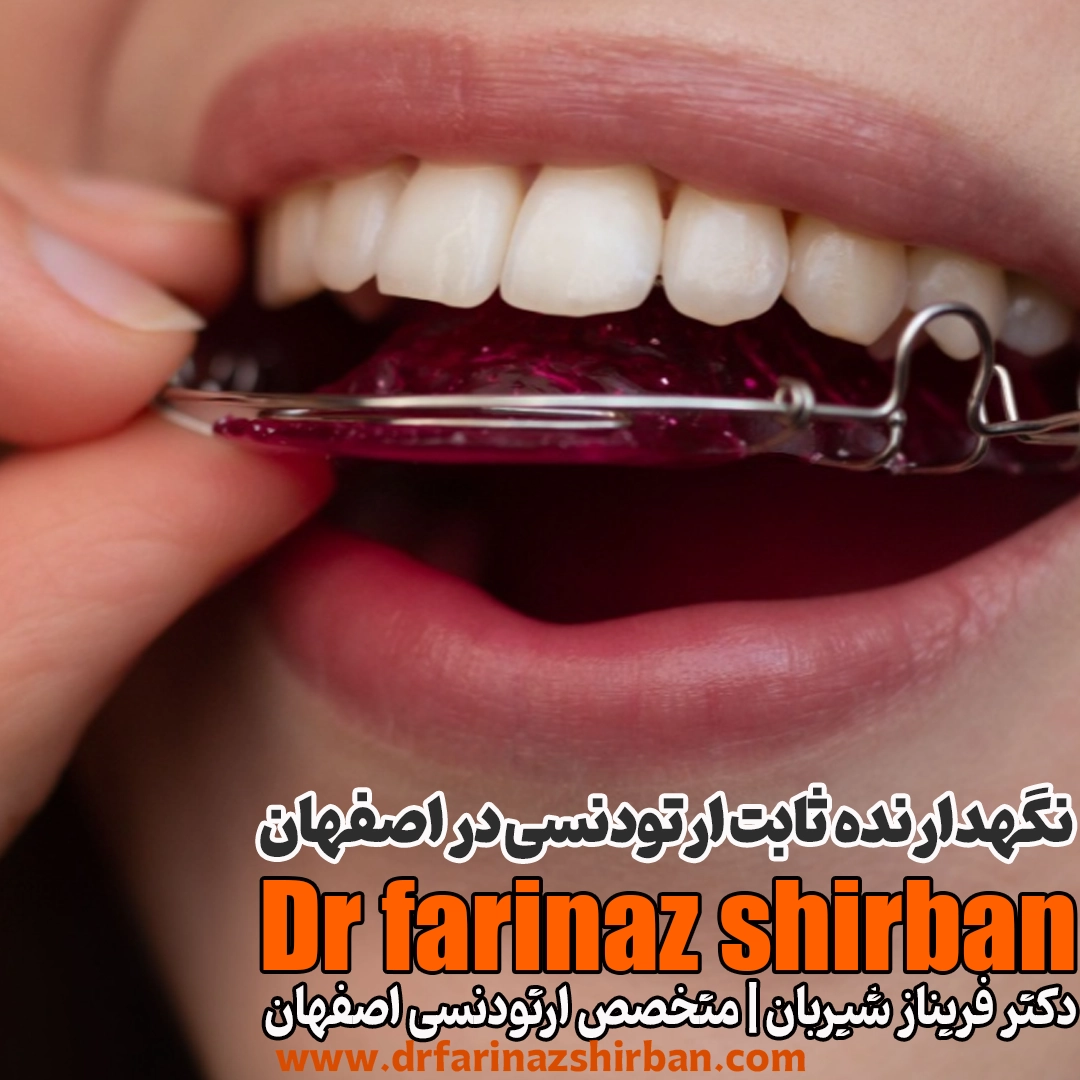


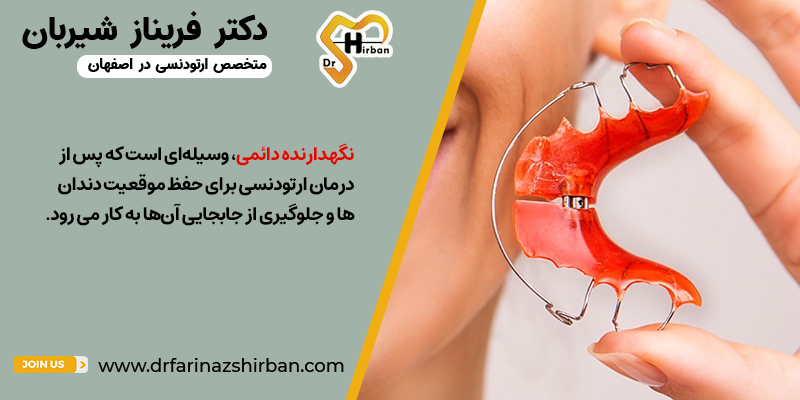
پس از پایان درمان ارتودنسی و برداشتن براکتها، دندانها تمایل طبیعی دارند تا به موقعیت قبلی خود برگردند. برای جلوگیری از این بازگشت، متخصص ارتودنسی از وسیلهای به نام نگهدارنده یا ریتینر (Retainer) استفاده میکند. Among the different types of retainers, the fixed orthodontic retainer or wire behind the teeth is one of the most lasting and effective methods to maintain the treatment result.
The fixed retainer consists of a thin metal wire that is installed with special resin glue behind the front teeth of the upper or lower jaw. Unlike removable retainers, this retainer remains permanently in the mouth and does not need to be placed and removed daily, so the possibility of the teeth returning to their previous position is minimized.
Relying on the practical experience of Dr. Farinaz Shirban, orthodontist in Isfahan, and using the world's standards, this article has been written as a comprehensive guide for fixed orthodontic patients. In this guide, you will learn about pros and cons, care methods, replacement time and key tips to maintain orthodontic results.

Global statistics of the use of fixed retainer after orthodontics
Global research shows that more than 70% of people continue to use fixed retainers to maintain the results of their treatment after finishing orthodontic treatment. In Iran, the situation is almost the same, but internal surveys show that many teenagers still do not adhere to the regular use of retainers, which can jeopardize the result of hard work in orthodontic treatment.
In Dr. Farinaz Shirban's clinic in Isfahan, more than 65% of patients prefer to use a fixed retainer to continue their orthodontic treatment. Their main goal is to prevent the front teeth from coming back and to maintain stable orthodontic results. This statistic shows that choosing the type of preservative and adhering to regular use has a direct role in the long-term success of the treatment.
What is fixed orthodontic retainer and how does it work?
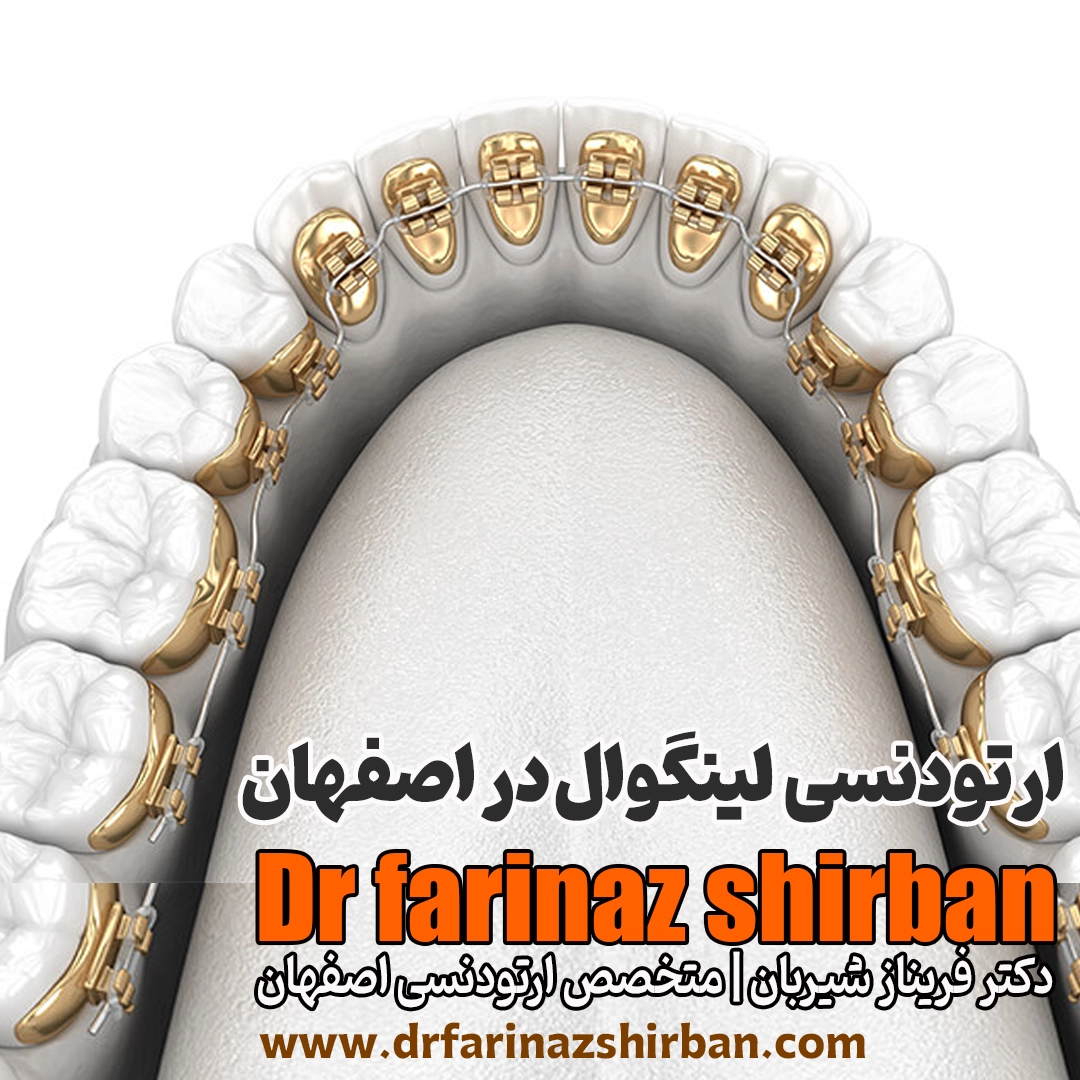
The wire behind the teeth or the orthodontic wire holder is one of the most important tools after the end of the orthodontic treatment. This retainer is installed behind the front teeth of the upper or lower jaw with a special orthodontic retainer adhesive, and unlike orthodontic plate retainers or removable retainers, it remains permanently in the mouth. For this reason, the retainer behind the tooth reduces the possibility of the teeth moving to the previous position and ensures the long-term stability of the orthodontic results.
This type of retainer is made of thin metal wire and can be used for each individual tooth or as a complete orthodontic jaw retainer. Its precise installation is very important, because any problem in the glue or wire can cause the unwanted displacement of the teeth.
Important points about wire:
- Duration of using a fixed retainer: Most patients need to use it for several years, even permanently.
- Fixed retainer hygiene: Careful brushing, flossing, or tools such as a Floss Threader are essential for cleaning wires.
- Orthodontic holding space: The distance between the wire and the tooth should be adjusted properly so that both tooth movement is limited and plaque accumulation is low.
- Pain and side effects of orthodontic retainer: Some patients feel a little pressure or discomfort in the first days, which usually goes away with time.
- Fixed lower or upper jaw retainer: depending on the position of the teeth and the diagnosis of the specialist, the retainer can be installed behind the lower jaw teeth, the upper jaw or both.
According to the practical experience of Dr. Farinaz Shirban, wire behind the teeth is the best option for patients whose front teeth are prone to displacement and need long-term stability.
Advantages and disadvantages of fixed orthodontic retainer
wire behind the teeth, due to its high durability and permanent installation behind the teeth, is one of the most effective tools to maintain the results of orthodontic treatment. This type of retainer stabilizes the position of the teeth continuously and minimizes the possibility of the teeth returning to their previous position.
However, using them comes with challenges. Cleaning under the wires requires precision and special tools, and there is a possibility of breaking the fixed retainer or eroding the resin adhesive. Also, if there is no accurate installation or insufficient care, some permanent retainer complications may occur, such as gum irritation or slight movement of the teeth.
Table of advantages and disadvantages of fixed retainer
Scientific study about wire behind teeth after orthodontics
"Fixed retainers are the most used in the stabilization phase of orthodontic treatment and have several advantages, including inconspicuous appearance, no need for continuous patient cooperation, high effectiveness and the possibility of long-term maintenance of treatment results."
—Turkish Journal of Orthodontics

Types of fixed orthodontic retainers
Retainer or wire behind the teeth are divided into several main categories, each of which has its own uses and characteristics. Choosing the right type is based on the diagnosis of the orthodontic specialist, the condition of the teeth and the treatment needs.
1. Single-strand fixed retainer
This type of retainer consists of a thin metal wire that is attached behind the front teeth of the lower or upper jaw. The wire is designed to put proper pressure on the teeth and prevent them from returning to their original position.
Features and benefits:
- Inconspicuous and permanent appearance
- The lowest probability of teeth returning
- Keeping the teeth fixed, especially the front teeth
Suitable for: This type is the best option for patients whose front teeth are prone to movement, and with proper care, it will not need to be replaced for years.
2. Braided / Multi-Strand Wire Retainer
This model consists of several thin woven wires and is more flexible. Braided wires create more uniform pressure on the teeth and are more suitable for teeth that need more stabilization.
Features:
- distributing pressure uniformly on the teeth
- Suitable for the lower jaw and teeth prone to return More flexibility and resistance than a simple wire retainer
Suitable for: A multi-wire retainer is a safe option, especially for patients whose mandibular front teeth are sensitive to movement, and has a longer lifespan than a simple wire.
3. CAD/CAM (custom computer designed) retainer
This type of retainer is made using CAD/CAM technology and digital design and is shaped exactly according to the shape of your teeth.
Features:
- Exact matching with the back surface of the teeth
- High durability and reducing the possibility of unwanted displacement
- It is usually recommended for patients who had complex dental changes
Expert advice: CAD/CAM retainer in Dr. Farinaz Shirban clinic in Isfahan offers the highest level of accuracy and is suitable for patients who want to maximize the life of the retainer and the stability of the teeth.
Cost of fixed orthodontic retainer in 1404
The cost of fixed orthodontic retainer in 1404 depends on various factors, including the type of wire, the type of resin adhesive, the experience of the orthodontic specialist and the location of the treatment. In the clinic of Dr. Farinaz Shirban, the costs are determined according to the global standards of consumables and accuracy in technical installation, so that the patient can be sure that the result of his orthodontic treatment will be permanently stabilized.
However, for the information of patients, the following table shows the price of fixed orthodontic retainer in Isfahan in 1404:
Important point in determining the cost of fixed orthodontic retainer: Using stainless steel or titanium wires with high durability and high-quality resin adhesive will increase the price a little but avoid the repair costs. For detailed information about cost of orthodontics in Isfahan and personal consultation, you can contact Dr. Farinaz Shirban clinic.
Online consultation for orthodontic price

How to install and function fixed orthodontic retainer in Isfahan
In this section, we will examine how it works, the exact installation steps and the specialized tips of the fixed retainer in Dr. Farinaz Shirban's clinic in Isfahan.
Fixed retaining structure in orthodontics
Fixed retainer consists of two main parts:
- Thin metal wire: Usually made of medical grade stainless steel or braided wires. These wires are designed according to the shape of the teeth and the treatment plan, and they can be single-stranded or multi-stranded. The CAD/CAM system is simply a method of digital wire design and molding, not wire material.
- Special resin adhesive: The metal wire is attached to the back surface of the teeth with a strong resin adhesive. This adhesive is resistant to the pressure of chewing and contact with saliva, and makes the retainer work without shifting.
main function of fixed retainer after orthodontics
- maintaining the position of the teeth and preventing them from returning to the state before the treatment
- Fixing the alignment of the teeth, especially the front teeth, which are most likely to move.
- Creating long-term stability without applying active pressure to move teeth
Installation location
- Fixed mandibular retainer: It is usually placed behind the front teeth of the lower jaw and has the greatest effect in preventing the front teeth from coming back.
- Fixed upper jaw retainer: In some patients whose upper jaw is displaced or very sensitive, a fixed upper jaw retainer is installed.
Fixed retainer installation steps in Isfahan by Dr. Farinaz Shirban
At the clinic of Dr. Farinaz Shirban, fixed retainer installation is done with high precision and international standards:
- Preparation of the teeth: The back surface of the teeth is carefully cleaned and dried so that the resin adhesive works best.
- Metal wire placement: The wire is placed on the back of the teeth according to the natural shape of the teeth without applying extra pressure.
- Connection with resin glue: The wire is fixed with special orthodontic glue and uniform pressure is applied for strength.
- Drying the glue with a special light: After connecting, the glue is dried with an exposure device and the final alignment and strength are checked with precision instruments.
- Final Check: Make sure the wire is tight, there are no bubbles or gaps between the wire and the teeth, and the teeth remain in the correct position.
Fixed retainer installation must be done carefully and skillfully to achieve the best results. Even the slightest misalignment of wires or inadequate bonding can cause slight movement of teeth. Periodic visit to check the health of the fixed retainer is the key to success in stabilizing orthodontic results.
— Dr. Farinaz Shirban, an orthodontic specialist in Isfahan

How many years should the fixed retainer stay after orthodontics and when does it need to be replaced?
One of the most frequent questions is how long should the fixed retainer stay? Or fixed retainer for how many years should be used? The answer to this question is very important, because the lifetime of the retainer and its replacement time directly affect the stability of orthodontic treatment results.
Duration of using fixed orthodontic retainer:
Typically, braces can remain in the mouth for several years, but no retainer is permanent. Factors such as wire type, installation method, type of resin adhesive and patient's eating habits determine its lifespan.
Signs that indicate when to change the fixed retainer:
- Feeling of looseness or slight movement of the wire behind the teeth
- Change in the way the teeth close together
- Breaking of fixed retainer or damage to metal wire
- Plaque accumulation or hardening of resin glue
Recommendation of Dr. Shirban, orthodontic specialist:
“Even if oral hygiene is carefully observed, some microscopic changes in the wire or adhesive of a fixed retainer may not be seen. The best thing is to visit once every 3 to 4 years and have a detailed examination by a specialist."
Special tips about the duration and replacement of fixed retainer:
- The fixed retainer behind the teeth usually needs a specialist examination after 3 to 5 years.
- Symptoms of wear include loosening of the wire, changes in the alignment of the teeth, or breakage of the resin adhesive.
- Even without obvious damage, microscopic changes in wire or adhesive can cause slight displacement of teeth.
- Regular examination by an orthodontist is the best way to make a decision about replacing a fixed retainer.
Table of tips for the duration of use and replacement time of fixed retainer


How to clean and care for fixed orthodontic retainer
The orthodontic wire retainer, despite its high durability and permanent performance, requires careful care so that the teeth remain healthy and the retainer wire and adhesive are not damaged. Maintaining proper hygiene, using auxiliary tools and regular examination by a specialist is the key to maintaining the results of orthodontic treatment.
Key tips for fixed retainer hygiene:
- Regular brushing:
The teeth and their backs, where the wire is attached, should be brushed at least twice a day. It is necessary to use a soft toothbrush and the right angle to clean the glue and wire. - Dental floss with fixed retainer:
The use of Floss Threader or Super Floss is recommended so that the dental floss can easily pass under the wire and remove the plaque between the teeth and around the adhesive. - Washing and plate control:
After every meal, especially if sticky or sweet foods have been consumed, the mouth should be rinsed with water or mouthwash to prevent the accumulation of bacteria and decay. - Periodic examination by an expert:
Even if the patient observes good hygiene, the wire or adhesive may have slight deformation or invisible damage. It is recommended to visit at least once every 6 to 12 months. - Avoid excess pressure:
Avoid chewing hard, sticky food or opening objects with your teeth so as not to damage the retainer wire and glue.
Golden tips from Dr. Farinaz Shirban:
- Any accumulation of mass or discoloration around the retainer wire can be a sign of the beginning of decay.
- If a part of the glue is loose or broken, do not try to remove it yourself and immediately consult a specialist.
- It is better to perform a specialized scaling once every 6 months to preserve the durability of the wire.
Cleaning the wire behind the teeth seems simple, but it is actually one of the key steps for its long-term durability. With daily care and regular visits, the retainer can last for years without needing to be replaced.
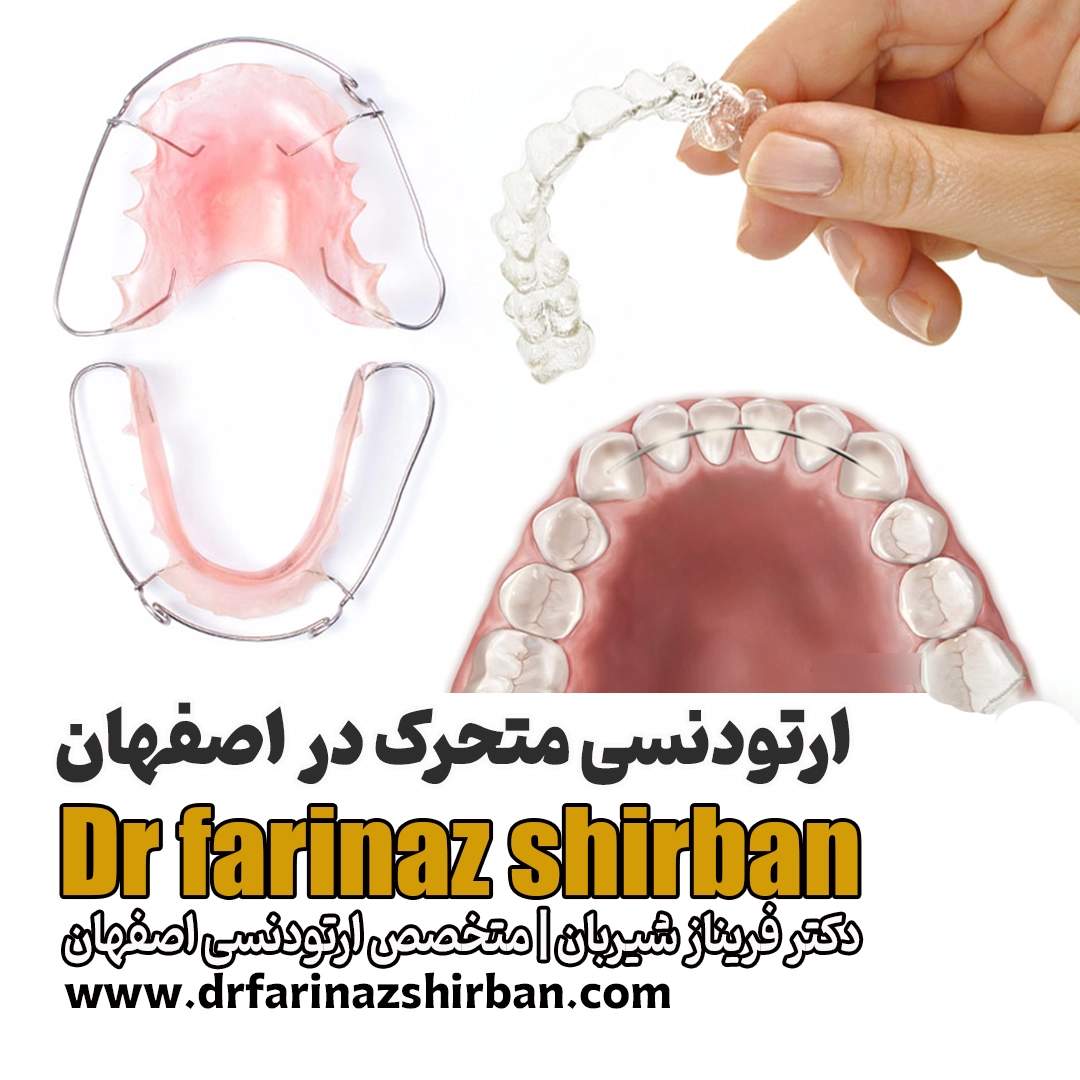
The difference between fixed and movable retainer; Which one is more suitable for you?
After finishing the orthodontic treatment, the most important decision to be made is choosing the type of retainer. Many patients do not know whether a fixed retainer or a removable one is better, while each has its own advantages, limitations and conditions. In the clinic of Dr. Farinaz Shirban, the type of retainer is selected based on the condition of the teeth, the risk of relapse and the patient's lifestyle.
Comparison table of fixed and movable orthodontic retainer
Dr. Farinaz Shirban's advice on choosing a fixed or wired retainer
If you wish to permanently prevent teeth from receding and are looking for a less troublesome option, a fixed retainer is the best choice. But if you are sensitive to oral hygiene and want to remove the retainer whenever you want, the removable type will be a more suitable option.

Conclusion and final guide to using fixed retainer
After finishing the orthodontic treatment, it is very important to maintain the treatment results and prevent the teeth from returning to their original position. Backwire, with its permanent placement behind the teeth and long-term fixation, is the best option for patients with sensitive front teeth or those seeking long-term stability of treatment. Its different types include simple wire, multi-wire braided wire and customized CAD/CAM, each of them has its own advantages and specialized applications, and their proper selection is based on the accurate diagnosis of the orthodontic specialist, the condition of the teeth, and the need for treatment.
Proper care, including hygiene with a toothbrush and floss, periodic examination by a specialist and paying attention to any changes in the wire or glue, increases the lifespan of the retainer and reduces the risk of breakage or fixed retainer side effects. At Dr. Farinaz Shirban's clinic in Isfahan, all installation steps, care training and periodical examinations are performed with the highest international standards so that patients have the best experience and lasting treatment.
Finally, regular use and adherence to expert recommendations are the keys to long-term success of orthodontic treatment. If you are looking to maintain the health, beauty and order of your teeth, fixed orthodontic retainer will be your best companion.