
Dependence or love? A narrow boundary that defines a fusion schema

Mohammad Pirizi
TehranCounselor and psychologist
Dependence or love? The narrow border that defines the fusion schema
Dependence or love? A narrow boundary that defines a fusion schemaMixing Schema: The Hidden Dependency That Takes Your Breath Away!
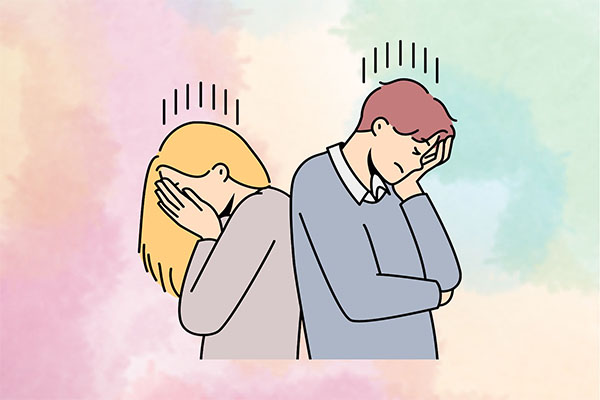
Instead of having a personal identity and clear psychological boundaries, some people experience their lives completely intertwined with others. They cannot imagine themselves apart from their parents, friends or romantic partner and feel helpless without these people. Such dependence is rooted in an immature pattern called fusion schema.
In this model, a person lives based on the wishes of others rather than his own inner desires. This issue makes it difficult for him to feel independent, express his opinion and make decisions. The fear of loneliness and the strong need for support stop the growth of personality and keep a person in an unhealthy coexistence.
In this article, we will fully examine the fusion schema, its characteristics and signs and provide ways to recognize and deal with it.


What is fusion schema?
Entanglement schema, or "entanglement" psychological trap, is a type of thought and behavior pattern in which a person is too immersed in his close relationships, especially in relation to family members. These people do not have a clear boundary between themselves and others, and instead of having an independent identity, they usually coordinate their feelings and decisions with the wishes and opinions of others.
People with this pattern usually depend on the approval or guidance of others for their life choices. The same dependence can

Common symptoms of fusion schema
Individuals who are involved in fusion schema usually struggle with a series of psychological and behavioral problems, which are mentioned below:
-
Difficulty in maintaining emotional stability
These people often have a restless interior and live with a constant sense of worry and restlessness. The smallest change in relationships or environmental conditions can make them emotionally upset.
-
Uncertainty in decision making
When faced with a situation that requires a choice or action, they remain confused and hesitant. Dependence on others makes them unable to act independently.
-
Fear of being judged
They care too much about other people's opinions and measure every move or choice with other people's eyes. This fear can be a big obstacle for their development and self-expression.
-
Extreme need for approval
Their behaviors are often formed with the aim of pleasing others. They rarely show their true selves and mostly show what they think others like.
-
Severe emotional dependence
Without the presence or emotional support of others, they feel insecure; It's as if their peace of mind depends only on the approval or companionship of their relatives, and in its absence, they get confused.

The Hidden Roots of Fusion Schema
The root of strong emotional dependencies often goes back to the early years of a person's life. Some of the reasons that make a person unable to define his personal boundaries and form an independent identity are:
-
Emotional control of parents
When parents, instead of raising an independent child, see him as a tool to meet their needs, the ground is created for the formation of unhealthy dependence.
-
Family environment without psychological boundaries
In families where everything is intertwined between members and there is no privacy, a person does not learn to be "himself".
-
Conditioning to get confirmation
If a child feels valued only when he pleases others, he gradually learns that he must be resolved in others in order to survive.
-
Emotional insecurity and fear of being alone
The feeling that being alone is dangerous or a sign of rejection can make a person always cling to others for a sense of security.

Key methods for treating fusion schema
People who are caught in the trap of fusion schema, usually they do not realize their dependence level and consider it a natural behavior; While this unhealthy dependence can affect their mental life. To help these people, therapists use a set of effective techniques:
1. Emotional methods
In this technique, a person gets a chance to recognize and experience his hidden and suppressed feelings in a safe space. Focusing on real emotions helps a person to accept them instead of denying or ignoring them, and through this acceptance, identify and adjust the unhealthy connection with others.
2. Interactive approaches
Establishing communication with others provides a platform for knowing yourself better. In this way, a person learns how to experience a healthy and balanced relationship by maintaining personal boundaries. In some cases, it is necessary to accompany close people such as an emotional partner or a family member in treatment sessions.
3. cognitive-analytical techniques
In this method, by examining and revising basic beliefs and automatic thoughts, a person can identify the roots of his unhealthy thinking. Guided conversations with the therapist allow the person to distinguish between distorted thoughts and reality and correct their mental framework.
4. Behavior-based methods
The purpose of this technique is to correct unhealthy behavior patterns and strengthen new coping skills. Practicing in real situations helps one adopt a more effective behavioral style. Teaching communication skills and practical exercises play an important role in this stage and make a person gain more psychological independence while maintaining healthy interactions.

Summary
The fusion schema can have profound effects on various aspects of a person's life, especially in the field of emotional relationships. This schema makes people feel extremely helpless, fear of rejection and insecurity, which may lead to extreme behaviors and problems in establishing healthy relationships. Fortunately, by recognizing this problem and using psychological treatment methods, it is possible to change these incorrect patterns and build healthier emotional relationships.
Managing the fusion schema in relationships requires persistence and follow-up in the treatment process; including identifying negative beliefs, applying calming solutions and focusing on establishing honest communication with respect for the privacy of both parties. By using these methods, it is possible to reduce the anxieties related to the fusion schema and form a relationship based on trust, respect and affection. In general, the more a person pays attention to this problem and takes steps towards treatment, the quality of his life and relationships will improve significantly.
Pirizi Clinic, with high expertise and experience in the field of treating schemas, including fusion schema, is ready to pave the way to recovery by providing professional services and help your mental health and relationships.
Make an appointment:
To receive individual advice from the specialists and consultants of Pirouzih Clinic, just call the following numbers:Yeproozi contact number:
 02177431649
Qaitariya contact number: 02126456903
02177431649
Qaitariya contact number: 02126456903
Working hours
days of the week 8:00 – 17:00 Thursday with coordination Friday Holidayhref="tel:+982177431649">021-77431649
Latest content
Behzadi2025-10-16T21:31:24+00:00 October 16th, 2025|no View
Why do some people avoid intimacy? Getting to know the avoidant attachment style is one of the behavior patterns that is rooted in the early life, the avoidant attachment style. The way people to establish [...]

The effect of forgiving betrayal on mental health and emotional relationships
amini2025-08-25T16:04:14+00:00 August 21st, 2025|No view
Can betrayal be forgiven? A psychological look at forgiveness of betrayal. Facing betrayal in an emotional relationship can be one of the heaviest and most complex experiences in life. When trust [...]
Daily visit: 3Register an appointment
You can set up a consultation session through this button...
make appointment amini2025-07-21T00:17:41+00:00Clinic Address
Tehran Province, Tehran, Piroozi St, MFVR+298, IranBranch 1:
Pirooz Branch
No. 1278, No. 1278, 3rd floor - Unit 7, at the beginning of Abuzar Blvd., Pirizi St., Tehran
Contact us
Saturday to Wednesday: 9 am to 9 pm
Yeproozi contact number:
02177431649
Qaitariya contact number: 02126456903
Andrezgo Blvd., between Kaveh Blvd. and Qaitarieh Blvd., in front of the Proud Mosque, No. 134, 2nd floor, unit 3

Pirouzi Clinic is always by your side to achieve your growth and mental health...
About Us
Piirozi Clinic is a center dedicated to personal growth and personal development and skilled psychologists here They play a very important role. This field is dedicated to training people to achieve goals and win in life. Using modern psychological techniques and their experiences, our psychologists provide solutions for the mental and social problems of the clients.





