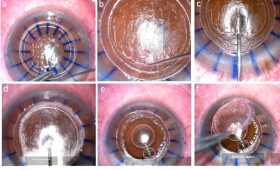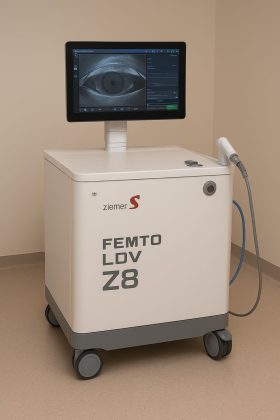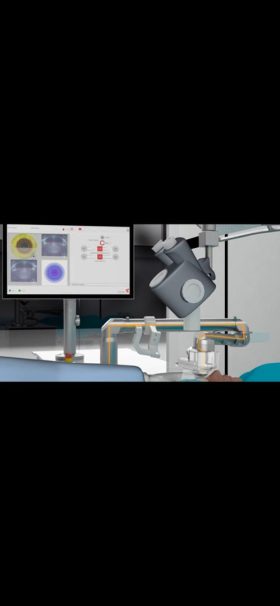

Smile is safer or femtolysic :
Let us examine these two propositions from the perspective of the latest academic findings:
1. Regarding biomechanics and criteria:
Theoretically, because of preserving the anterior stroma, which is the strongest part of the cornea, SMILE should have a biomechanical advantage. But in practice: Consensus: You are right; Currently, no accredited refractive surgeon recommends that a patient be selected for SMILE if he or she is not a good candidate for Femto-LASIK (e.g., because of a thin cornea or suspected ectasia).
• Margin of safety: We use SMILE to "enhance safety in standard patients," not to "develop an indication for high-risk patients." Therefore, considering it as the equivalent of femtolysis in patient selection (Screening), is completely in accordance with precautionary principles.
2. Regarding invasiveness:
The word "invasion" can be viewed from two perspectives:
• Tissue Invasiveness: From this perspective, SMILE is less invasive due to not creating a 270 degree incision (Flap) and preserving the corneal nerves (reducing the risk of Dry Eye).
• Procedural Complexity: Your statement is completely correct. SMILE is a surgeon-dependent surgery. Lenticule extraction requires high skill. Any additional maneuvers in the intra-stromal space or trauma to the edges of small incisions can be more invasive than a routine femtolysic.
• Special risks: complications such as suction loss in SMILE are far more complicated to manage than LASIK.
Conclusion:
It can be summarized as follows: SMILE is a technological advancement in the direction of "reducing side effects" (such as dry eyes), Not a license to "exceed the biomechanical boundaries of the cornea". Your description of using the same criteria as LASIK is the smartest way to maintain the long-term health of patients and prevent complications such as ectasia. Technology has changed, but the physiology of the cornea is still the same