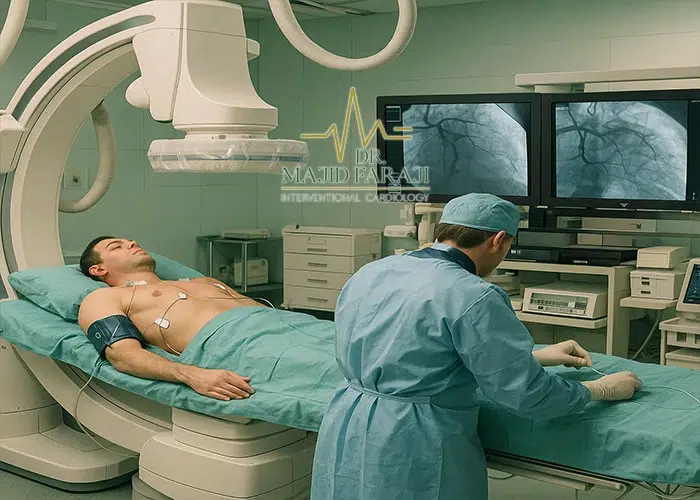


اقدامات مداخلهای قلب و عروق شاخهای پیشرفته از پزشکی قلب است که با استفاده از کاتتر و بدون نیاز به جراحی باز، انواع بیماریهای عروقی و قلبی را تشخیص و درمان میکند. درمانهای این حوزه با بهرهگیری از روشهای پیشرفته قلب و عروق مداخلهای انجام میشوند و معمولاً به بیمارانی پیشنهاد میگردند که دچار تنگی عروق، درد قفسه سینه، حمله قلبی یا برخی ناهنجاریهای ساختاری قلب هستند. These methods have a short recovery period, cause less risk and are considered a suitable alternative to heavy surgeries for many patients.
Physicians who perform these procedures often have fellowships in adult interventional cardiovascular procedures; That is, specialists like Dr. Majid Faraji who, after completing the cardiology course, have completed an advanced specialist course in the field of diagnostic and therapeutic catheterization so that they can perform minimally invasive heart treatments with high precision and skill.
Cardiovascular interventional procedures include a set of diagnostic and therapeutic procedures that are performed using a catheter and without a large surgical incision. These techniques can detect or treat narrowing or blockage of vessels, valvular disorders, congenital heart abnormalities, and some cases of resistant hypertension, and prevent the need for open heart surgery in many patients.
These methods are divided into two big groups:
- Diagnosis: like angiography
- Treatment: such as angioplasty, stenting, atherectomy and treatment of structural defects
In the following, we will examine each section in detail.
Methods Diagnostic (cardiac catheterization)
Diagnostic methods in interventional cardiology are the first step to accurately identify the type and severity of heart diseases. These methods evaluate the state of blood flow and heart function by inserting a catheter into the vessels and using advanced imaging.
Coronary Angiography
Angiography is the first step in diagnosing the narrowing or blockage of the arteries of the heart. In cardiovascular interventional methods, this method has a basic role and is usually performed before any interventional treatment.
In angiography:
- The catheter is inserted through a wrist or groin vein.
- Contrast substance is injected and X-ray imaging shows the state of the veins.
- This method is considered a prelude to subsequent treatments such as stenting.
Angiography has several uses, which include the following:
- Checking angina pectoris
- Evaluation of heart and valve function
- Evaluation of the severity of atherosclerosis
After the diagnosis, an experienced cardiologist like Dr. Majid Faraji decides whether medical treatment is sufficient or interventional measures such as angioplasty and stenting are needed, according to the degree of stenosis, the site of involvement, and the general condition of the patient.
Now it's time to introduce methods that use catheters to treat blockages and heart problems without open surgery.
1. Balloon angioplasty (PCI)
Balloon angioplasty is the most widely used treatment method in patients with coronary artery stenosis, which is used to open the vein and improve blood flow.
How to do it:
- After finding the place of stenosis in angiography, the balloon is placed on the catheter and directed to the place of obstruction.
- The balloon inflates and sticks the fatty plaque to the vessel wall.
- The path of the vein is opened and the blood flow returns to the heart muscle.
2. Stenting
To prevent the vessel from closing again, a stent is placed at the end of angioplasty.
Table of types Stent
| type of stent | Features | use |
|---|---|---|
| Pharmaceutical (DES) | coated with anti-scar tissue growth drug | Most patients require longer antiplatelet use |
| plain metal (BMS) | no medical coverage | People with high bleeding risk |
Note: regular use of antiplatelet drugs after stenting is very important.
3. Atherectomy
Atherectomy is another interventional treatment method used for hard, calcified or balloon-resistant plaques. In this method, the path of the vein is opened by shaving or removing the plaque.
Its types:
- Rotablator
- laser atherectomy
- Winning Atherectomy
Besides the three main methods above, there are more advanced methods that are used to treat structural problems of the heart or specific disorders:
- PFO Closure
- TAVR (Percutaneous Aortic Valve Replacement)
- Renal denervation for resistant hypertension
- Closing the left atrium to prevent stroke in atrial fibrillation patients
- Treatment of congenital heart abnormalities
Intervention measures are used for patients who have the following problems:
- Stenosis and blockage of coronary arteries
- ST-Elevation Heart Attack and Non-STEMI
- angina
- Resistant blood pressure
- structural defects of the heart
- Peripheral artery disease (PAD)
- Some valvular disorders
- clot in heart or lung vessels
In the introduction, it was also mentioned that these procedures are performed by specialists with a fellowship in interventional cardiovascular procedures. But what does interventional cardiovascular procedures fellowship mean?
This fellowship means a subspecialty course that doctors take after completing the cardiology course to learn advanced skills of catheterization, angioplasty, structural heart treatments, and complex interventional techniques.

Although these methods are minimally invasive, they also have complications:
Common:
- Bleeding or bruising at the catheter insertion site
- Slight reaction to contrast material
Uncommon:
- Re-stenosis
- Coronary vein damage
- clot formation on the stent
- stroke
- Arrhythmia
- Renal failure caused by contrast material
Preparation Before intervention measures
Before the operation, it is better to observe the following points:
- fasting for 4 to 6 hours
- Information about medications, allergies and background problems
- Do blood tests, ECG and chest X-ray
- Discontinuation of certain medications as prescribed by the doctor
- having a companion to return to
Post-operative care
After performing interventional treatments, it is necessary to observe the following points:
- Rest for 4 to 6 hours
- drinking a lot of fluids
- exact use of antiplatelet drugs
- Avoid lifting heavy objects
- Catheter insertion site care
- Participation in cardiac rehabilitation program
In the last part, we take a look at the differences between heart intervention measures and open heart surgery.
| property | intervention | open heart surgery |
|---|---|---|
| cut type | small, skin | opening chest |
| recovery period | How many days | How many weeks |
| Anesthesia | local or style | full anesthesia |
| use | bordered veins | Severe and multiple obstructions |
Conclusion
Cardiac interventional procedures are a turning point in the treatment of cardiovascular diseases and have been able to treat countless patients without the need for open surgery. However, these methods alone cannot eliminate the root of the disease, which is often caused by atherosclerosis and lifestyle risk factors.
For this reason, follow up treatment, control risk factors and Consultation with an experienced cardiologist like Dr. Majid Faraji is essential. Dr. Faraji, with years of experience in the field of cardiology and successfully performing a variety of interventional procedures, can help patients choose the best method of diagnosis and treatment and advance the path of recovery more confidently.
Source:





