
اختلال بیش فعالی در خانواده
مدیریت اختلال بیش فعالی در خانواده نیاز به آگاهی، صبوری و راهکارهای ارتباطی دارد. If your child is constantly on the move, doing dangerous things, not concentrating, and quickly jumping from one task to another, these symptoms may be part of attention deficit hyperactivity disorder (ADHD); A disorder that affects not only the child's life, but the whole family. This article discusses hyperactivity disorder in the family and provides a complete guide to understanding, management and support.
A legacy of dormant genius and untreated suffering
Read more:Article But here's the problem: "The receptors are not active enough to absorb dopamine."
This is exactly where ADHD medication works; They help receptors absorb dopamine and the brain receives the message of happiness and pleasure.
When everything is, but nothing is...
He has everything: intelligence, energy, imagination, analytical power, great motivation and achievable dreams.
But he is sitting in the corner of the room and staring at a point. He doesn't focus, he doesn't do something until the end, he regrets his past, and he doesn't see his future andFinally, they refer to their famous saying and say:
"So what? What does it want to be?"
This is the real picture of thousands of children, teenagers and adults with attention deficit hyperactivity disorder (ADHD); A disorder that, if not treated on time, drags the path of life downhill.
Attention deficit hyperactivity disorder (ADHD) is not a psychiatric disorder!
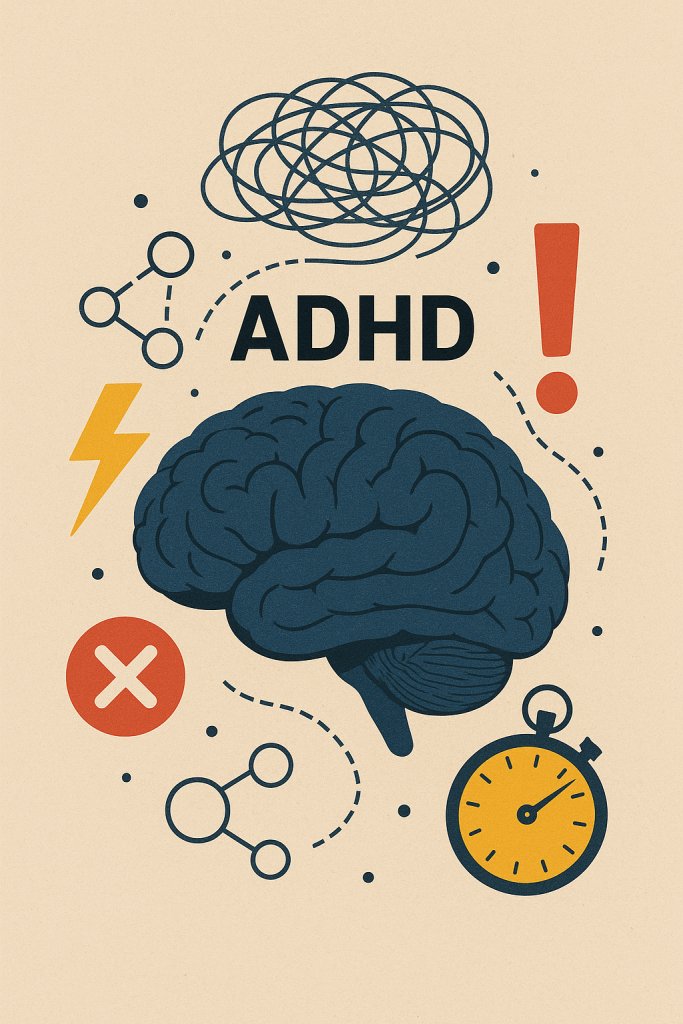
The first misconception that needs to be corrected is this. Attention deficit hyperactivity disorder (ADHD) is neither madness nor a classic psychiatric disorder. Attention deficit hyperactivity disorder (ADHD) is a genetic and developmental disorder of the brain; A disorder in the brain's system of receiving and responding to the hormone dopamine, the hormone responsible for feelings of satisfaction, motivation and happiness.
In these people, the brain produces dopamine and there are even receptors for its absorption, but the receptors are not active to receive dopamine. It's as if the brain is standing behind the glass and cannot reach the pleasure
The people around are saying:
"Why don't you enjoy your life?" You have everything?"
Drugs: the only bridge between the brain and pleasure
This is where the drug comes in, not to shut down, not to put you to sleep, not to get addicted, but to activate dopamine receptors.
The drug helps the brain hear the message of satisfaction, calm down, focus, live, and stop looking for fake pleasures.
But this is where many families, out of fear, ignorance or social pressure, say:
“Drug? Never!”
And finally, a child who is a child, a child who is a teenager, a child who is an adult, and a child who is always running in old age, but never gets anywhere!!
What does attention deficit hyperactivity disorder (ADHD) look like at different ages?
-
childhood
- Constant restlessness, inability to sit still
- Dangerous behaviors: playing with knives, fire, electricity
- jumping from a height
- Destroying things, being forgetful, doing homework half and half in ninety minutes
- Strange imaginations, fear of the dark, extreme mischief
- Reprimand, humiliation and punishment by parents, teachers and others
- interest in harming animals
Here the child wants only one thing and screams for it:
“Help me calm down!”
Read more:article "He doesn't want to read", "He doesn't clean his room", "He hangs out with bad friends", "He smokes"
While the problem is in his brain, not in his will.
-
Adulthood: Living with a brain that is not yet healed
When hyperactivity disorder runs in the family reaches adulthood and goes untreated, the results can be devastating:
- Jumping from one branch to another, job instability Addiction, depression, risky behaviors such as dangerous driving
- Unstable relationships, betrayal, not understanding the feelings of spouse and children
- Inability in social interaction, knowing the environment and feeling safe
- Experience of emptiness, longing for the past, tired of life
- Focusing on the past: "Why am I here now with that intelligence?"
- lack of financial management, career failures, and self-defeat
- Tendency to superstitions, prayer writing, fruitless metaphysics
- Physical diseases of psychological origin (psychosomatic)
- Lack of boundaries in life and relationships, chronic restlessness
We explain all the above to the parents and again the family asks:
“Drug?!! Never!!!!", "Is he going to take medicine for the rest of his life? I searched, it's addictive."
And the brain keeps screaming:
“Give me dopamine!”
Parents, are you building or destroying your child's future?
You who are afraid of medicine, are you from:
- academic failure Addiction
- Antisocial personality disorder
- risky relationships
- Depression, suicide, or even prison
- Lack of success in emotional life
- Financial problems
- Lack of identity and personality formation
Aren't you afraid?
Many parents with personality problems such as gossip, trusting Google rumors, unscientific advice, or false advertising of medical devices, abandon the path of real treatment.
They spend, but not for real improvement, but to justify their belief that says:
“I do not give medicine to my child!”
While the same genius child, his intelligence of 140, is dying in the next room, and his parents don't know what bright future they are burying. In contrast, most families with children with normal intelligence are spending money to show the society how smart and capable their children are.
Why does the brain with attention deficit hyperactivity disorder (ADHD) look for trouble?
When the brain cannot absorb natural dopamine, it looks for fake dopamine:
- Fight, vandalism, disorder
- Aimless excitement
- Harmful relationships and activities Addiction, destruction, escape from responsibility
- Personal destruction to temporarily calm the brain
So the only way to save the brain is to activate the dopamine receptors in the right way and absorb and receive the dopamine that is made.
Medicine: treatment, not a symptom of the disease
Let's be honest:
Most people who have a negative opinion about medicine are taking medicine themselves, for blood pressure, diabetes, depression, migraine...
But when it comes to hyperactivity disorder in the family, suddenly everyone becomes an expert and says:
“Drug? No! My child is not sick!"
While this drug is the only way to help the brain to function normally.
medicine means a second chance
Hyperactive brain (ADHD) has a simple sentence:
"I'm smart, but my brain doesn't cooperate."
And the only way to activate the brain is the right drug under the supervision of a specialist psychiatrist.
There is no alternative method that can activate dopamine receptors.
So if you want:
- Your child has the opportunity to use his genius May your family rest in peace
- The society does not lose an elite
By accepting the reality and accompanying in the treatment of hyperactivity disorder in the family, you can pave the way to success, peace and mental health for your child and family.
Accept that treatment begins with accepting reality and medicine.
Resources
American Psychiatric Association (2022). Diagnostic and Statistical Manual of Mental Disorders (DSM-5-TR). American Psychiatric Publishing
Barkley, Russell A. (2015). Attention-Deficit Hyperactivity Disorder: A Handbook for Diagnosis and Treatment. Guilford Press
Hallowell, Edward M., & Ratey, John J. (2011). Driven to Distraction: Recognizing and Coping with Attention Deficit Disorder from Childhood Through Adulthood. Pantheon Books
Faraone, S. V., & Larsson, H. (2019). Molecular Psychiatry, 24(4), 562–575
Pliszka, S. R. (2007). Pharmacology for attention-deficit/hyperactivity disorder. Clinical Neuropharmacology, 30(2), 65–76
Wilens, T. E., & Spencer, T. J. (2009). Understanding ADHD in adults: a critical review of the literature. Dialogues in Clinical Neuroscience, 11(4), 386–402
I am Mohsen Derakhshan Nasab, Your companion on the path to mental health, the article I wrote was influenced by the experience Deep in years of clinical work, it reflects the real pain of many children, adolescents, and even adults with attention deficit hyperactivity disorder (ADHD) and their families. Hopefully a light will turn on. If you need clinical advice, you can contact the office, so that a meeting can be arranged as soon as possible. (Date: 5/9/1404)
Read more:Article Clinical consultation | Evaluation, diagnosis and specialized treatment
diagnostic tests free community children and adults hyperactive and lack of concentration in Iran
If you have any doubts or questions about the article "Hyperactivity disorder in the family", please raise your doubts or questions at the end of this page (comment section). They will respond to you as soon as possible.