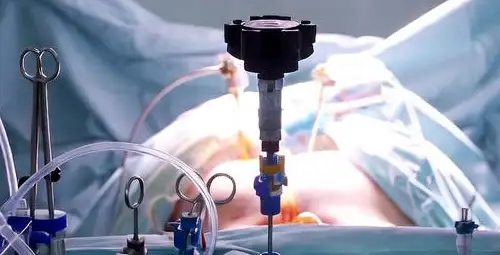

Laparoscopy hysterectomy; When is it recommended
Laparoscopy hysterectomy is one of the minimally invasive methods to remove the uterus, which is recommended in special circumstances and with the diagnosis of a gynecologist. This method is usually proposed when medical or conservative treatments have not been effective and the patient has symptoms such as heavy and continuous bleeding, chronic pelvic pain, symptomatic fibroids, advanced adenomyosis or endometriosis. In some selected cases of early uterine or cervical cancer, this method can also be used. The choice of laparoscopic hysterectomy depends on factors such as the size of the uterus, the history of previous surgeries, the general condition of the patient and the skill of the surgeon, and its main goal is to reduce complications, less pain and faster recovery after the operation. To get comprehensive information about the article Table of Contents Laparoscopy hysterectomy is a minimally invasive procedure to remove the uterus, which is performed through several small incisions in the abdomen. Unlike open surgery, in this method, there is no need for a large and long incision in the abdominal area, and therefore the postoperative pain is less and the recovery period is shorter. Also, compared to vaginal hysterectomy, laparoscopy allows the surgeon to see all parts of the pelvis directly and helps to diagnose and fix associated problems such as adhesions. This procedure is usually chosen for patients with heavy bleeding, symptomatic fibroids, or adenomyosis. It should be said that diagnosing the need for this surgery is within the expertise of a gynecologist. He takes action by examining the tests and clinical conditions of the patient. The main goal of laparoscopic hysterectomy is to reduce complications, recover faster and have a safer experience for the patient. The gynecologist usually recommends performing laparoscopic hysterectomy when the treatments Non-surgical or drug treatments do not have an adequate response and the patient still faces significant symptoms. The doctor chooses the best option by controlling all conditions, including the patient's clinical condition and tests. If the uterine bleeding is continuous or severe and cannot be controlled with hormonal drugs or other treatment methods, the doctor may perform laparoscopy. suggest a hysterectomy to reduce bleeding and improve the patient's quality of life. Large or symptomatic fibroids that cause pain, pelvic pressure, or disruption in daily functioning are other reasons for the doctor to recommend laparoscopy. They are hysterectomy. The goal is to reduce the symptoms and maintain the general health of the patient. Some patients have chronic pelvic pain. Among these people, common treatments such as drug treatments have no effect. In many cases, these pains disrupt the patient's life. To solve these problems, the doctor may use the laparoscopic hysterectomy option. Advanced endometriosis can involve the uterine tissue, in this case, other treatment methods are mostly ineffective. In this situation, the doctor solves the problem by means of hysterectomy laparoscopy. Also, by using this method, the damaged tissues will also be repaired. In some limited cases of primary uterine or cervical cancer, according to the patient's conditions and accurate diagnosis, laparoscopy hysterectomy can be a safe and effective option. be minimally invasive to remove the uterus and reduce possible complications. Although laparoscopy hysterectomy is a minimally invasive and safe method to remove the uterus, but not all patients are a suitable option for it. The final decision is made by the doctor based on the clinical conditions, surgical history and general condition of the patient to ensure the safety and effectiveness of the operation. There will be a limit. In this situation, the doctor will most likely choose a gynecological solution. Some people have larger uteruses than normal, in these people laparoscopic option is not considered a safe choice. On the other hand, this option is not a suitable option for patients who have problems with difficult masses. In this situation, the doctor examines the option of open or vaginal surgery. Some underlying diseases such as heart problems, pulmonary or coagulation disorders, as well as limitations of anesthesia can make laparoscopy inappropriate. In this situation, the doctor chooses the best surgical option based on the patient's risk and safety. Laparoscopy hysterectomy, as a minimally invasive procedure, has certain clinical benefits for patients, which are proven based on scientific evidence. The main goal of this method is to significantly reduce complications and recover faster for the patient. One of the main advantages of this method is the reduction of pain after surgery compared to open hysterectomy. Smaller incisions result in less bleeding and inflammation and help speed up the healing process. This feature is very important for patients who want to have a shorter and more comfortable recovery period. With laparoscopy, patients usually do not need a long hospital stay and can return to daily activities faster. come back This advantage, especially for women with family or work responsibilities, creates significant clinical value and provides a safer and more comfortable recovery experience. Choosing the right method for hysterectomy depends on several factors such as: It depends on the clinical conditions of the patient, the size of the uterus, the history of surgery and the doctor's diagnosis. Compared to the open procedure, laparoscopic hysterectomy uses smaller incisions, which usually results in less pain, less bleeding, and a faster recovery. Instead, in the open method, the recovery period is longer and the patient has to endure more complications. But in the open method, the recovery period is longer and the complications are more. However, when the disease has a difficult course, the doctor uses open hysterectomy. Compared to vaginal hysterectomy, the laparoscopic method provides a direct and more accurate view of the pelvic space and allows the doctor to simultaneously evaluate and treat accompanying problems such as adhesions or endometriosis. However, vaginal hysterectomy is a suitable choice in some patients and can be performed without an abdominal incision. Laparoscopy hysterectomy is usually performed under general anesthesia and includes several specific and standard steps. is First, after anesthesia, the surgeon makes several small incisions in the abdomen to insert the laparoscopic instruments and camera. Then, by injecting gas, the space inside the abdomen is opened to provide sufficient vision for the surgeon. At this stage, the uterus and the surrounding structures are carefully examined. Then, using delicate instruments, the surgeon separates the vessels and connections of the uterus in a controlled manner. Depending on the patient's condition, the uterus is removed through the vagina or through one of the small incisions. At the end, the bleeding is controlled, the instruments are removed, and the incisions are sutured or bandaged. This whole process is done with the aim of reducing tissue damage, reducing post-operative pain and speeding up the healing process. The patient will usually be able to walk and start post-operative care shortly after the operation. The recovery period is usually shorter than the open surgery method, but its exact duration depends on the patient's individual conditions, the type of operation performed and the doctor's recommendations. Most patients are discharged from the hospital within 24 to 48 hours after surgery and can resume light daily activities. Pain and discomfort are usually mild to moderate and subside within a few days to a week. Full return to normal work and activities often takes 2 to 4 weeks, while strenuous activity or vigorous exercise may take longer. Adhering to post-operative care, taking prescribed drugs and following up on medical visits play an important role in shortening the recovery period and preventing possible complications. After laparoscopic hysterectomy, medical follow-ups play an important role in ensuring a safe recovery process and preventing possible complications. It is necessary to visit regularly according to the schedule determined by the doctor, but in some situations, it is necessary to visit the doctor without delay. Fever, increased abdominal pain that is not controlled by regular pain relievers, abnormal bleeding, or foul-smelling discharge can be signs of infection. Also, redness, swelling or discharge from the incision site, shortness of breath, severe pain in the legs, or a sudden feeling of weakness require immediate investigation. Visiting the doctor on time in this situation helps to diagnose the problem early and prevent serious complications, and makes the patient's recovery process safer. class="faq-question">Can laparoscopic hysterectomy be done for all women? No. This method is not suitable for all patients, and its selection depends on factors such as the size of the uterus, history of previous surgeries, the presence of adhesions, and the patient's general health status. The final decision is made by the gynecologist.What is laparoscopy hysterectomy and how is it different from other methods
In what circumstances does the doctor suggest laparoscopic hysterectomy
Severe or long-term bleeding that has not responded to drug treatment
Symptomatic uterine fibroids that have negative effects on the quality of life
Adenomyosis or chronic pelvic pain resistant to treatment
Advanced endometriosis with uterine involvement
Some selected cases of primary uterine or cervical cancer
Which patients are not a suitable option for laparoscopy hysterectomy
Large uterus and difficult masses
Specific underlying diseases and limitations of anesthesia
The advantages of laparoscopic hysterectomy from a clinical point of view
Reduce postoperative pain and less bleeding
Shorter hospital stay and faster return to daily activities
Comparison of laparoscopic hysterectomy with open and vaginal methods
Laparoscopy hysterectomy steps in simple language
What is the recovery period after laparoscopic hysterectomy
When to go to the doctor after surgery
How much rest is required after laparoscopic hysterectomy?
Most patients can start light activities within a few days, but full return to normal activities usually takes 2 to 4 weeks. It is very important to follow the doctor's recommendations during this period.
Does hysterectomy laparoscopy have complications?
Like any surgery, this procedure can also be associated with complications, but in general, its complications are less than open surgery. Infection, bleeding or damage to the surrounding tissues are rare but possible side effects.
After removing the uterus with this method, are the ovaries also removed?
Removing or preserving the ovaries depends on the doctor's diagnosis and the patient's condition. In many cases, the ovaries are preserved unless there is a medical reason to remove them.
conclusion
Laparoscopy hysterectomy can be a convenient and safe option for some patients, but its choice always depends on individual circumstances. Factors such as the type and severity of symptoms, response to previous treatments, uterus size, history of surgeries and general health status play a decisive role in this decision. More important than the procedure itself is careful medical evaluation and informed choice based on benefits and limitations. Note that the choice of treatment method is definitely within the scope of a doctor's and gynecologist's decision. The ultimate goal is to achieve the best treatment result with the least risk and the greatest improvement in the quality of life. rel="nofollow noopener"> Guide to choosing the right hysterectomy method from a scientific point of view





