

In recent decades, the family structure and emotional relationships have undergone fundamental changes throughout the world and also in Iran One of the phenomena that has been heavily discussed in scientific and social circles is "cohabitation" or what is commonly called white marriage. Many young couples turn to this lifestyle with various motivations, including escaping legal responsibilities, economic problems, or the desire to know more. But the question that arises in the deeper layers is: What is the definition of white marriage from the point of view of psychology and can it be considered a platform for emotional growth or a prelude to a painful failure?
Examining white marriage from the point of view of psychology shows that this type of relationship is more than simple housemates and brings certain psychological complications. The lack of formal commitment, although on the surface it gives a feeling of freedom, but on the inside it can be the source of hidden anxieties and emotional insecurities. In this article, without prejudice and relying on the principles of psychological science, we examine whether this lifestyle is a response to modern needs or a path that ends in an emotional dead end.
What is white marriage? 3 shocking legal and emotional risk!"
White marriage from a psychological perspective: escape from commitment or fear of failure?
When we analyze white marriage from the perspective of psychology, the first concept we encounter is "commitment". In the psychology of love (Sternberg's theory), perfect love has three sides: intimacy, passion, and commitment. In white marriage, the third side, commitment, is often limp or vaguely defined.
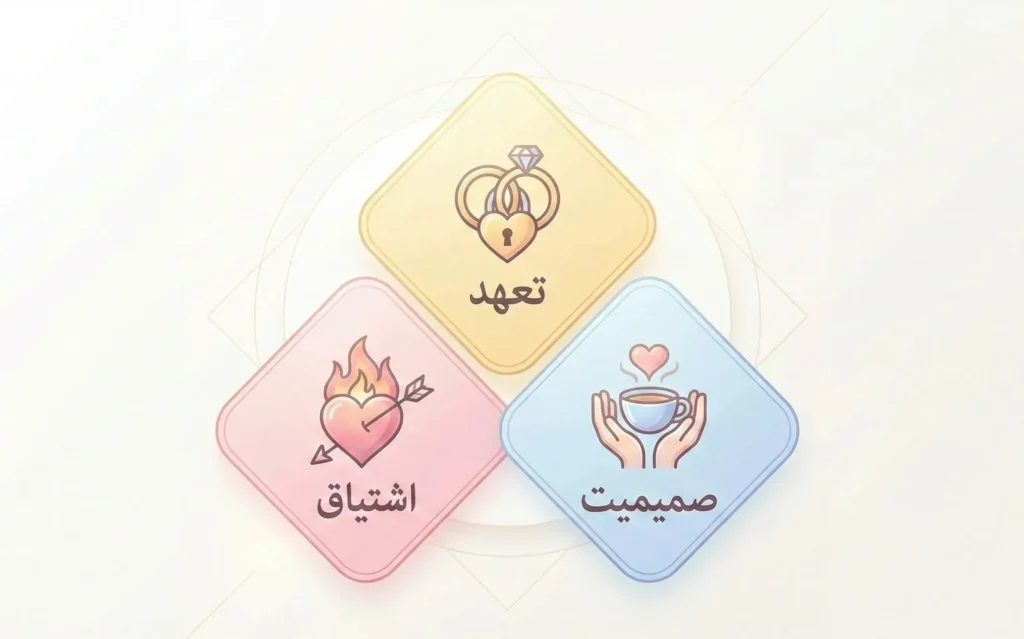
From the perspective of psychoanalysis, the tendency to white marriage from the perspective of psychology can be rooted in "gamophobia" or the fear of marriage. People who witnessed their parents' divorce or strained relationship as a child may unconsciously fear any official registration of the relationship. They see white marriage as an emergency exit that they can leave without legal costs whenever the pressure of the relationship becomes too much. But the paradox of the story is here: the presence of the open exit door prevents people from building the house with all their heart.
The feeling of psychological security, which is necessary for the flourishing of the relationship, is formed in a context where the parties are confident that their partner will not simply leave the scene in the storms of life; Confidence that is often distorted in white marriage.
The effect of gliding versus deciding
One of the key concepts in examining white marriage from a psychological perspective is the distinction between sliding and deciding. Psychologists believe that many couples in white marriage do not enter into this relationship knowingly and by examining all aspects; Rather, over time and due to convenience, cost savings or sexual dependence, they fall into this lifestyle.
When we examine why white marriage is psychologically risky, we see that this slippage leaves fundamental issues and unresolved differences. stay Instead of resolving conflicts, couples ignore them because "it's not serious yet." But when time passes and emotional attachment is formed, separation becomes more difficult and people remain in a relationship that they neither dare to formalize nor have the strength to end. This situation creates severe psychological erosion.
Difference between the experience of women and men in white marriage

Is white marriage psychologically the same experience for both sexes? Research shows that the answer is no. Although it is impossible to give a general verdict, women usually experience more vulnerability in these relationships.
- Biological clock and need for security: Women often seek emotional stability and family formation. In white marriage from the perspective of psychology, uncertainty about the future of the relationship can cause chronic anxiety in women.
- Social pressure: In societies with traditional fabric, the stigmatization pressure on women is much higher. Hiding the relationship from the family and society imposes a heavy psychological burden on the woman, which leads to depression and low self-esteem.
- A different interpretation of the relationship: Sometimes men see white marriage as a way to postpone commitment, while women see it as a prelude to commitment. This difference in attitude is a ticking time bomb in the heart of the relationship.
Psychological and emotional consequences of white marriage
An examination of white marriage from a psychological perspective is incomplete without addressing its deep emotional implications. One of the most important consequences is hidden separation anxiety. Since there is no legal or religious bond, any argument can be seen as a warning sign for the end of the relationship. This makes the parties (usually the more dependent party) afraid to express their true needs and engage in emotional blackmail to maintain the relationship.
Censoring yourself and suppressing resentments leads to accumulated anger and emotional outbursts in the long run. In addition, if the relationship ends, people experience a form of bereavement. Society and people around them may not recognize the pain of their separation because this relationship has never been official. This loneliness in suffering can make the healing process very slow and painful. Therefore, white marriage from the point of view of psychology can be a platform for lasting psychological damage that even casts a shadow on a person's future relationships.
Psychological reasons for the tendency to white marriage

To better understand white marriage from a psychological point of view, we must analyze the roots of the tendency towards it. Beyond economic issues, negative perfectionism is one of the main reasons. Young people today want to make sure they make the perfect choice and see white marriage as a trial period. They think that by living under the same roof, they can know all the hidden angles of their future spouse and avoid divorce. But psychologists warn that testing a relationship is different from living it.
In testing mode, you always have one foot out of the loop, and this complete lack of emotional investment changes the nature of the relationship. Also, the lack of trust in the institution of marriage due to seeing the high number of divorces among people around has made many consider alternative forms such as white marriage safer, unaware that real security lies in internal and external commitment, not in eliminating the issue of marriage. Visiting counselors Raha Roshan can help couples better understand their unconscious motivations.
Comparison of formal marriage with white marriage
To understand the differences more clearly, the following table provides a comparison between these two relationship styles based on psychological components:
| psychological component | official marriage | white wedding |
|---|---|---|
| Feeling safe | Top (the presence of exit barriers gives a sense of security) | bottom (constant fear of easy cracking) |
| Quality of emotional investment | full (building a common future) | conditional (living in the present with doubts about the future) |
| Social support | Get support from family and community | isolation and pressure caused by concealment |
| conflict resolution | trying to solve the problem (because separation costs money) | Inclination to leave the relationship or ignore the problem |
Does white marriage lead to failure?
The answer to this question is not absolute; But the evidence weighs heavily towards failure. If the purpose of the relationship is to create deep intimacy, stable growth and peace of mind, the structure of white marriage is often incapable of providing these needs.
Of course there are exceptions, but in general, global statistics show that couples who cohabited for some time before getting married have higher divorce rates and report lower marital satisfaction. Psychologists call this phenomenon "coexistence effect". In fact, the habits that are formed in white marriage (such as extreme independence and commitment avoidance) are in conflict with the nature of solidarity and self-sacrifice in official marriage. Therefore, for many, this path leads not to a happy ending, but to a sense of emptiness and emotional failure.
What is the solution?

If you are in such a relationship or thinking about it, psychologists recommend that:
- Be transparent: State your goals clearly. Will this relationship end in marriage or not?
- Set a time: Don't let the relationship remain in a state of eternal limbo.
- Get counseling: Seeking help from a professional can help you recognize your subconscious motivations and make decisions that will benefit your mental health in the long run.
Last word
Examining White Marriage from a Psychological Perspective reminds us that humans need security and commitment to thrive emotionally. White marriage may seem attractive and inexpensive in the short term, but its hidden psychological costs can be very high in the long run. The choice of lifestyle is the right of every individual, but it is a valuable choice based on full knowledge of the consequences. If you are in a dilemma, counseling with caring professionals can be the way to protect your mental health and emotional future.
FAQ
1. Can white marriage lead to better recognition and a more successful marriage?
Research shows that this is not necessarily the case. A life without commitment is not the same as a life with commitment. People behave differently when they know they can easily leave than when they are committed to staying.
2. What is the most important psychological damage of white marriage for a person?
Feeling insecure and temporary. The feeling that "I'm not good enough for my partner to make a lifelong commitment to me" can take a serious toll on one's self-esteem. Also, anxiety caused by concealment and fear of social judgment creates mental exhaustion.
3. Why is the rate of depression higher in white marriages?
Lack of social and family support, uncertainty in the future and the absence of specific frameworks to resolve conflicts raise the level of stress. Chronic stress and loneliness in managing relationship problems are one of the main causes of depression.