

افرادی که دچار آسیب جدی به قاعده جمجمه میشوند سریعا به بیمارستان انتقال داده شده و نیاز به جراحی فوری دارند. Some people think that it is a simple procedure and will soon heal; But it is important to know that any surgery has risks. Some of these risks include blood clots, anesthesia, bleeding problems, and other complications.
Neurosurgery is one of the complex medical surgeries, because it treats and rehabilitates disorders of the nervous system, brain, spinal cord, nerves and cerebrovascular system. In the meantime, one of the most sensitive and difficult brain surgeries is skull base surgery. This surgery, called a craniectomy, is performed with the aim of reducing the swelling, bleeding and pressure that the brain is facing. This pressure usually occurs as a result of an accident, trauma, or an underlying disease.
The most difficult brain surgery should be performed under the supervision of expert and experienced doctors like Dr. Mahmoud Yazdan Panahi in order to prevent unwanted side effects during and after the surgery. Of course, apart from the skill and expertise of the doctor, it is also very important to observe the care before and after the surgery and it can greatly help to reduce the risks and complications after the surgery.
“Neurological deficits after craniotomy to remove deep tumors occur in about 10 to 25 percent of cases. Complications after craniotomy include wound infection, cerebrospinal fluid leakage, hematoma, seizures, and onset or exacerbation of neurological disorders.
Investigation of types of neurosurgery
Injury and damage to the brain, brain abnormalities, genetic problems, etc., require surgery for treatment in case of acute conditions. The types of neurosurgery that are considered for patients according to the type of disease and injury are as follows:
- Craniotomy surgery
- Sampling or biopsy
- Neuroendoscopy
Laminectomy surgery- Thrombectomy and brain aneurysm repair
- Deep brain stimulation (DBS)
- Awake brain surgery
- endonasal endoscopic surgery
- Stereotactic brain surgery
- removal of posterior cavity or pituitary pressure
What is craniotomy and how is it performed?
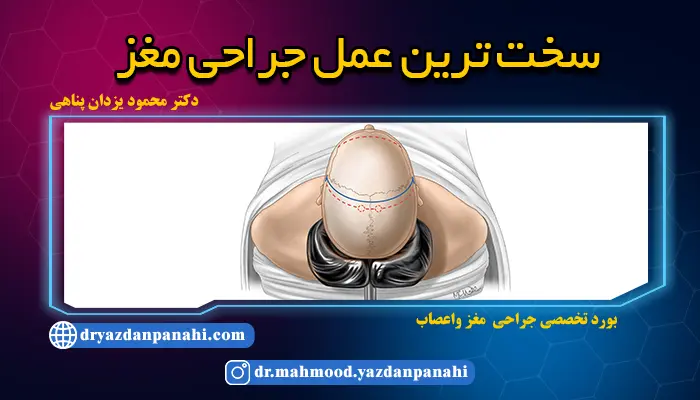
craniotomy is the temporary removal of a small part of the skull bone. A neurosurgeon may perform a craniotomy to access the brain to treat brain problems and abnormalities. Sometimes, due to severe damage to the skull, a bone graft may be needed.
Frontal, parietal, temporal, occipital, and suboccipital describe a number of regions of the skull. Therefore, sometimes these words are placed after craniotomy to indicate the exact purpose of the treatment. For example, a frontal craniotomy shows that a hole is made in the frontal region of the skull.
How to perform craniotomy surgery
The most difficult brain surgery is performed by an open method, which means that a part of the skull is removed so that the doctor has better access to the brain.
At the beginning of the surgery, anesthesia is used so that the patient does not feel discomfort or pain during the surgery.
The neurosurgeon makes an incision on the scalp and removes the skin and muscle to expose the skull. The location of the cut on the scalp and the length of the cut are different according to the needs of each patient.
With the skull exposed, the neurosurgeon removes a small piece of skull bone called a bone flap and sets it aside. The bone flap will be replaced at the end of the operation.
The surgeon makes holes in the skull that are as small as possible. The size of the hole varies depending on what the neurosurgeon has to do inside the skull. Normally, chainsaws and other special medical tools are used to pierce the skull.
Neurosurgeons use the most complex surgical techniques and technologies when performing craniotomy. Since the skull contains delicate brain tissue, blood vessels and nerves and has little empty space, neurosurgeons use microscopes and other advanced technologies very precisely. Stereotactic techniques, which use computer technology and imaging studies to create three-dimensional images of the brain, are often helpful.
After accessing the brain tissues, the surgery begins to correct the abnormalities and repair the vessels and tissues.
When is the most difficult brain surgery performed?
Doctors who visit brain-damaged patients face a challenge and a difficult decision to perform craniotomy. Any type of surgery on the brain or skull is sensitive and dangerous. The most difficult brain surgery is performed when the patient is in an acute and dangerous condition due to brain injuries; so that it cannot survive without surgery. Sometimes, before proceeding to the most difficult brain surgeries, brain tumor radiation therapy is also discussed and helps the doctor to make a decision.
Actually, craniotomy is performed when the treatment of epilepsy, tumors, blood clots, aneurysm, arteriovenous malformation, brain abscess, hematoma, trigeminal neuralgia, hydrocephalus and other issues that affect the brain is not possible other than surgery. This is one of the most dangerous surgeries that are often performed on the skull and brain. This type of surgery requires a specialist doctor who can remove part of the skull to release the swelling, bleeding and pressure that the brain is experiencing. When the doctor is sure that the swelling is reduced, he completely closes the skull. This is a time-consuming surgery and may require the use of artificial bone.
Due to the time-consuming nature of this surgery, the doctor must also make sure about the person's ability to undergo anesthesia or long-term anesthesia. Therefore, the decision to perform this surgery will depend on the doctor's diagnosis and the severity of the patient's symptoms. On the other hand, the long duration of this operation may affect cost of brain tumor surgery.
Important points before the most difficult brain surgery
Before performing the most difficult brain surgery, the patient should be aware of the details of the surgical process, the level of risks, the anesthesia method, the conditions of the recovery period and the possibility of complications. Since craniotomy is one of the most difficult brain surgeries, familiarity with preoperative care such as discontinuing certain medications, performing necessary tests and imaging, following nutritional tips and mental preparation play an important role in the success of the surgery. Also, choosing an expert and experienced surgeon, checking the history of diseases and informing the doctor about the symptoms are essential things that can reduce the risks and make the recovery process faster and more reliable.
Recovery and recovery period after performing the most difficult brain surgery
After performing the most difficult brain surgery, the patient will be admitted to the intensive care unit. After surgery, the patient may not wake up immediately; Because it takes some time for the brain to heal after swelling and damage; Therefore, the result of surgery may not be clear for some time. The patient may need to stay in the hospital for days or weeks. The outcome of the surgery depends in part on whether the pressure caused the brain damage or not.
The function of the brain after a stroke is very sensitive and complex due to the severity of damage caused by bleeding vessels. It is clear that the length of time the patient will have to stay in the hospital for full recovery will also be longer. During this period, the patient's signs of consciousness, oxygen levels, blood pressure, and neurological symptoms are regularly checked to ensure the results of the surgery.
When the patient regains consciousness, he can slowly start his activities. Necessary recommendations are given by the doctor about the diet and the level of activities. It is normal to feel pain after the operation, and painkillers will be prescribed to control these conditions. After surgery, a special helmet must be used to protect the area where the skull bone was removed. Using a hat helps prevent head injury.
What are the side effects of the most difficult brain surgery?
As with any surgery, complications may occur after craniotomy. The risk of brain surgery depends on the specific location of the brain being operated on. For example, if an area of the brain that controls speech is operated on, speech may be affected. Some of the more common complications include:
- infection
- Bleeding
- Blood clotting
- Pneumonia (lung infection)
Unstable blood pressure- Seizures
- Muscle weakness
- Swelling of the brain
- leakage of cerebrospinal fluid (the fluid that surrounds and protects the brain)
- Risks associated with the use of general anesthesia
The following side effects are rare and generally involve specific locations in the brain, so not everyone will experience them. These complications include:
- Paralysis
- Coma
- Speech problem
- Memory problems
- Abnormal balance or harmony
Depending on your specific medical condition, there may be other risks. Be sure to discuss any concerns with your doctor before the procedure.
Is brain surgery also done to treat Parkinson's?
Parkinson's disease is caused by a decrease in the release of dopamine in the brain and can be accompanied by symptoms such as tremors, slowness of movements and stiffness of limbs. If drug treatments are not effective in controlling the condition, brain surgery will be performed to treat Parkinson's. To perform this surgery, weak electrodes are used inside the brain to help reduce symptoms. This is also considered a difficult and sensitive act.
What was discussed about the most difficult brain surgery
The brain is one of the vital organs of the body. Swelling, blood clots, bleeding and other disorders may occur in the brain as a result of various diseases or injuries. In cases where these symptoms become acute, brain surgery is performed. The most difficult brain surgery is related to skull base surgery. This surgery, which is called craniotomy, begins with the removal of a part of the skull so that access to the tissues becomes easier and corrections and tissue restoration can be performed.
Depending on the extent of the surgery, the patient may be hospitalized for several days or weeks. Complications of surgery include convulsions, muscle weakness, brain swelling, brain bleeding, etc. Of course, if the surgery is performed by skilled and capable doctors like Dr. Yazdan Panahi, the possibility of complications will be greatly reduced and the patient can experience an excellent and successful surgery.





